
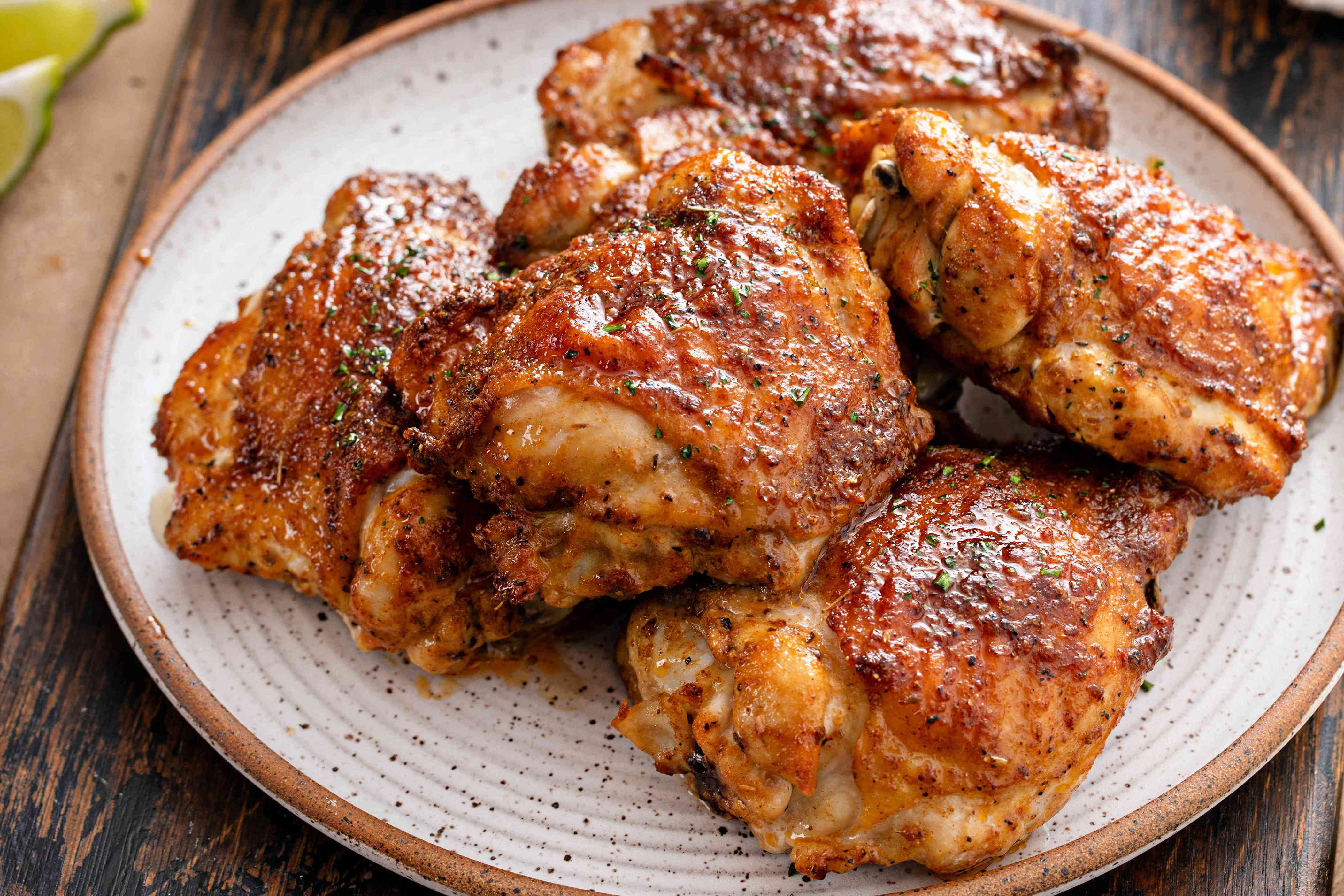
Try this method for juicy, tender chicken every time.
Key Takeaways
- Experts say pan-searing followed by oven-roasting creates juicy chicken thighs with crispy skin.
- Bone-in, skin-on thighs provide the best texture, flavor, and moisture retention.
- Cooking the thighs to 175°F or higher breaks down connective tissue for extra tenderness.
While chicken breasts are the most popular of the chicken cuts, I personally find them a little tricky to work with. With higher amounts of fat and connective tissue (both of which melt down while cooking, resulting in a moist and flavorful bite), the bird’s thighs are more forgiving than its breast. Even though there are plenty of great methods to avoid dry chicken breast, I always gravitate towards thighs over breast.
That being said, I occasionally find chicken thighs to be rubbery or bland. Because I’ve developed a habit of consulting culinary experts when I’m lost in the kitchen (whether that be a little or a lot), I decided to reach out to some trusty sources for their insights on the best way to cook chicken thighs in order to nail the protein every single time.
The Chicken Thigh Aficionados
- Jim Giberson: Chef and Chief Culinary Officer at Tamarind Heads
- Dennis Littley: Chef and recipe expert at Ask Chef Dennis
- Maricel Gentile: Culinary educator, chef, and owner of Maricel’s Kitchen
- Barry Miles: Cargill Senior Strategic Account Chef
The Preferred Thigh-Cooking Method
All four of the chefs I spoke to favored the same method. They all recommend pan-searing to start, then popping the thighs in the oven to finish them off. “While there are plenty of ways to cook chicken thighs,” says Littley, “one of the absolute best methods is pan-searing followed by oven-roasting. It gives you crispy skin while keeping the inside moist and packed with flavor.’’ Miles agrees, saying “the pan-sear to oven combination locks in moisture while achieving a golden skin on the chicken thigh that holds up beautifully.”
Why? “Pan searing renders the fat in the skin,” explains Gentile, “which allows it to crisp up instead of becoming rubbery, and finishing in the oven allows the meat to cook through gently without drying it out.”
For this cooking method, the chefs agree that bone-in, skin-on chicken thighs have the best texture and flavor retention. Miles explains, “The bone helps maintain moisture, and the skin crisps beautifully when cooked properly.”
Easy Steps for the Ultimate Chicken Thighs
Start with the sear: “Season the thighs well,” says Littley. “Sear them skin-side down in a hot cast iron pan until the skin is crisp, then transfer the whole pan to the oven.” After searing, Giberson (who always marinates the thighs overnight) says, “Place in the oven at 350°F, until the internal temperature reaches 160°F. Let them stand uncovered for 5 minutes and serve.”
While 160°F is the minimum, Gentile opts for 165°F and Giberson sometimes lets them get to 185°F. Littley, who removes them at 175°F, explains: “Unlike chicken breast, which is best cooked to 165°F, thighs have more connective tissue, so cooking them a little longer breaks down that tissue and makes them even more tender.’’
In other words, 160°F is a safe temperature for consumption, but how long you cook the thighs will depend on personal preference in terms of texture.
Read More: The 16 Best Chicken Thigh Recipes
Read the original article on Simply Recipes