BERLIN—German officials shrugged off President Trump’s decision to withdraw 5,000 U.S. troops from the country as symbolic, but analysts warned the broader trans-Atlantic rift risks leaving Europe’s economy and security dangerously exposed.
Trump’s latest increase in tariffs on European cars, his apparent U-turn on plans to station long-range missiles in Germany and the economic and military fallout from the war in Iran will have a bigger impact on the region, they warned.
“All of these are a bigger deal than a symbolic 5K-troop reduction,” said Thorsten Benner, director of the Global Public Policy Institute, a Berlin security think tank. “So is the rapid depletion of U.S. arsenals due to wasting enormous amounts of precious assets in the Iran war.”
Senior U.S. defense officials said Friday the Pentagon would withdraw an army brigade from Germany within six to 12 months, days after German Chancellor Friedrich Merz said the U.S. didn’t seem to have an exit strategy in Iran and described Tehran as humiliating America in negotiations.
A senior U.S. official said Saturday that Trump, U.S. adversaries and the world were watching what European nations like Germany do—including in the Middle East—adding that their actions and words matter to the president.
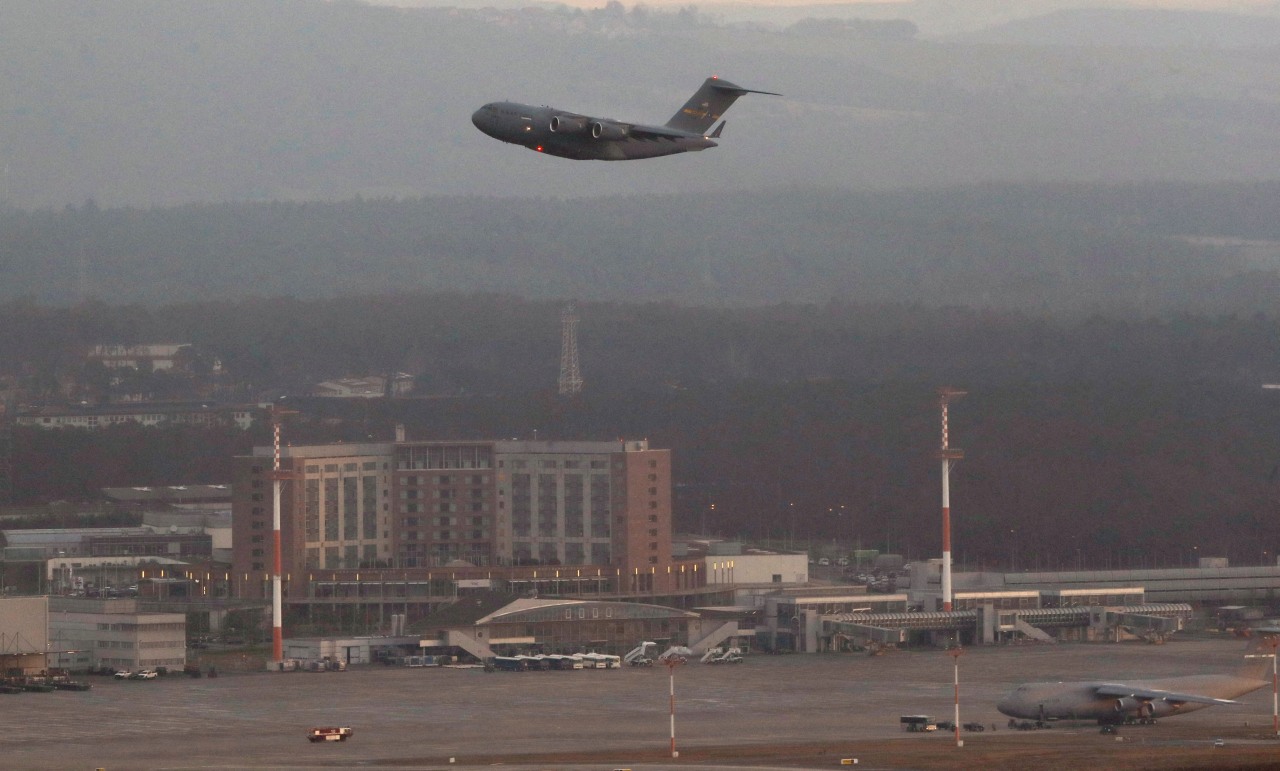
Germany is the nerve center of the 85,000-strong U.S. troop presence in Europe, where a dense network of bases helps Washington project power around the world. The vast Ramstein Air Base in southern Germany has been a key logistics hub for U.S. military operations in Afghanistan, Iraq and, this year, Iran.
The announced withdrawal would represent about 14% of the roughly 36,000 troops currently in the country—not much more than the normal fluctuation and much smaller than the 12,000 reduction Trump tried to implement in his first term. Most of these troops serve U.S. military operations around the world and aren’t there to protect Germany in case of an attack.
It was “foreseeable that the U.S. would withdraw troops from Europe, including Germany,” German Defense Minister Boris Pistorius said Saturday, adding that Europe was already investing to fill the gap. “Germany is on the right track,” he said.
Germany and allies in the North Atlantic Treaty Organization “are working with the U.S. to understand the details of their decision on force posture in Germany,” said the NATO media service on X. The military alliance said the move “underscores the need for Europe to continue to invest more in defense and take on a greater share of the responsibility for our shared security” but NATO can still “provide for our deterrence and defense.”
A bigger concern is the news that the U.S. has decided not to deploy a battalion to operate Tomahawk cruise missiles and Dark Eagle hypersonic missiles in Germany, a deal struck in 2024 by the Biden administration in an effort to deter Russia from an attack on NATO after its invasion of Ukraine two years earlier.
Officials in Berlin had anticipated that the Trump administration wouldn’t honor the deal, having never committed to do so, said Nico Lange, director of Germany’s Institute for Risk Analysis and International Security and a former senior German defense ministry official.
“Still, the fact that now, when we’re facing such a serious threat level in Europe, this conventional deterrence gap isn’t being closed—that is a real problem,” said Lange. “We have troops of our own, but no one in Europe possesses this specific capability yet.”
In Washington, members of Congress from both parties criticized the announcement as potentially hurting U.S. interests.
“Based on Congressional reaction, the announcements have not been fully coordinated and will have an impact on NATO deterrence,” said retired U.S. Army Maj. Gen. Gordon Davis, a former senior NATO official. The U.S.’s ability to respond rapidly to potential conflict in Europe or adjacent regions would also be affected, he added.
Polish Prime Minister Donald Tusk said Saturday, “The greatest threat to the transatlantic community are not its external enemies, but the ongoing disintegration of our alliance.” In a post on X, Tusk, a former president of the European Council, wrote, “We must all do what it takes to reverse this disastrous trend.”
Another reason to worry: Withholding the battalion is the latest signal of a detente between the Trump administration and Russian President Vladimir Putin. It follows the suspension of oil sanctions against Russia after Iran closed the Strait of Hormuz. European leaders think the moves are undermining efforts to reach a cease-fire between Ukraine and Russia.
Under Merz’s government, Germany has been ramping up military spending and speeding up procurement with the goal of becoming Europe’s largest conventional military force by 2029. It has also entered an agreement with France to supplement the U.S. nuclear umbrella.
Military analysts said Berlin was well on the way to becoming less dependent on America’s military protection but that the Merz-Trump spat was a useful reminder of the urgency of this effort.
Yet the rapid depletion of the U.S. arsenal during its offensive on Iran has created a dilemma for Europe, whose rearmament remains slow and dependent on purchases from America, particularly in crucial areas such as antiaircraft systems and long-range missiles.
“All of this translates into a heightened security risk for Europe,” said Lange.
Economic headwinds from an array of Trump policies that have undermined Germany’s ability to support its huge defense investments are a bigger worry.
German exports to the U.S.—a crucial lifeline to offset a long-term loss of market share in China—have collapsed since Trump started a trade war with Europe last year. An EU-U.S. trade deal agreed last summer has offered little relief to many German manufacturers because separate U.S. steel and aluminum tariffs have hit their products.
Government officials and economists had hoped that Berlin’s defense splurge and a separate public-infrastructure investment offensive would bolster growth this year but a sharp uptick in energy prices following the attack on Iran shattered those expectations.
The government has since slashed its sputtering growth forecast for this year and business confidence hit a six-year low this month. Trump’s announcement that he was raising tariffs on European cars from 15% to 25% this week will add to the burden for Germany’s long-suffering flagship industry.
Germany’s continuing economic malaise is also sapping Merz’s political margin of maneuver at home. After a gradual collapse in ratings since he came to office last year, the chancellor has become one of the least popular in postwar history.
Write to Bertrand Benoit at bertrand.benoit@wsj.com