The war in Iran has lifted U.S. gasoline prices to more than $4 a gallon, the highest average price in four years.
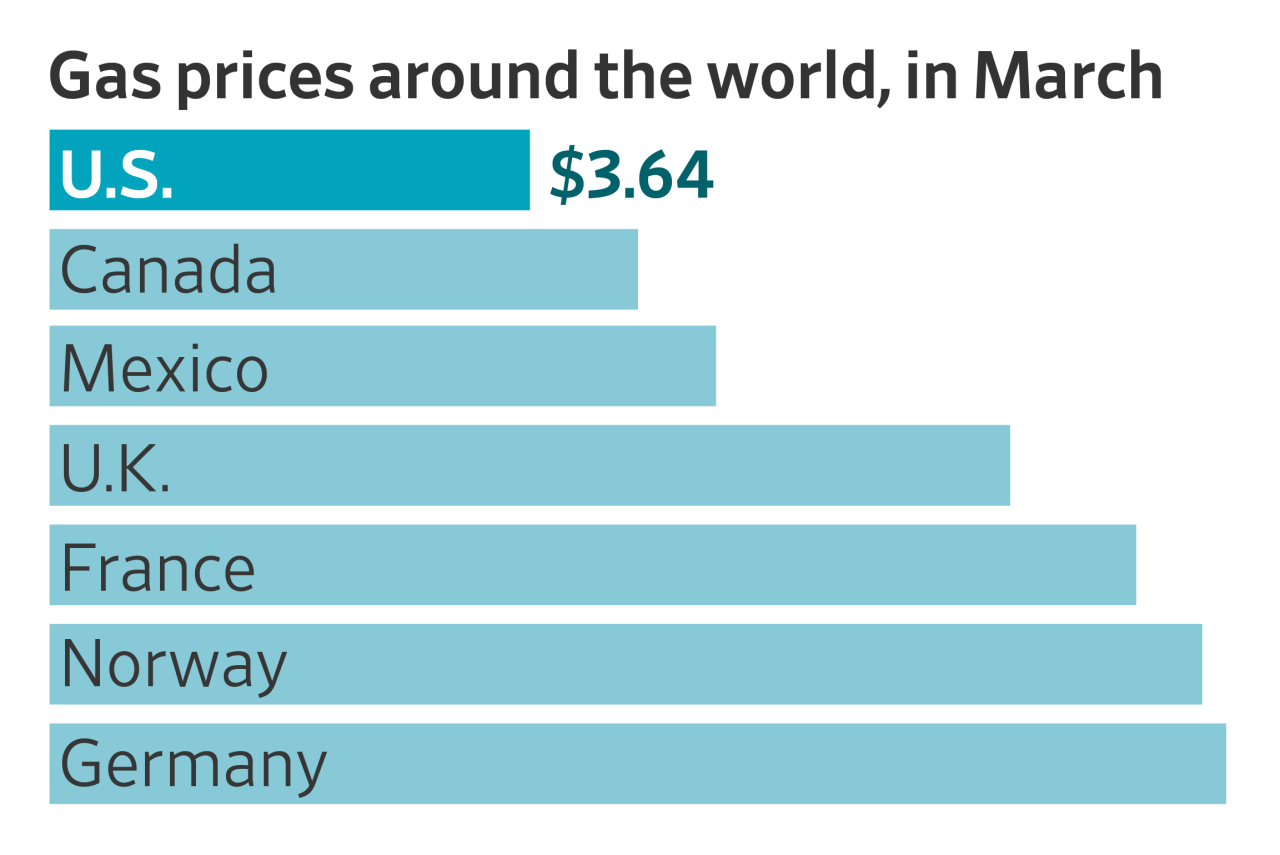
Yet U.S. prices are still lower than they are in Germany, South Korea and most other developed countries.
The U.S. produces more oil than any nation in the world, and far more than it did during the oil crisis of the 1970s. So it is more insulated from global supply shocks than many nations are.
Americans are sensitive to gas prices—the average American drives 13,000 miles a year, according to the federal government. Yet for years, U.S. consumers have paid lower gas prices than consumers in many other nations.
Much of the discrepancy owes to taxes. According to S&P Global Energy, the U.S. government charges one of the lowest rates in the world. American consumers paid an average $3.64 a gallon in March, with only about 60 cents of that made up of federal and state taxes. The average hit $4 a gallon at the end of that month.
In most places in Europe, tax composes 50%-60% of the retail price of fuel, according to Rob Smith, S&P Energy’s director of global fuel retail. Germans paid an average of $8.75 a gallon in March, more than half of which stemmed from value-added taxes and fuel excise duties.
In Mexico, gas averaged $5.07 a gallon in March, of which nearly $2 was tax. Mexicans near the U.S. border often fill up their gas tanks in El Paso and Brownsville in Texas to take advantage of cheaper rates there.
While the U.S. primarily channels fuel taxes into maintaining roads and highways, other countries have historically used it for that and much more, from funding public transportation systems to government spending at-large, according to S&P’s Smith. Only more recently have states like California added carbon- and environmental-related charges and regulations on gasoline to discourage use of fossil fuels. Such policies still remain limited in the U.S. and generally less extensive than those in Europe.
Write to Chao Deng at chao.deng@wsj.com and Alana Pipe at alana.pipe@wsj.com