There are real costs to short-term optimizations, while set-asides offer a way to reap superior economic returns in the medium term.
A useful rule of thumb is that when a problem persists for decades despite serious effort, the failure is usually not one of effort or intelligence, but of framing. Climate change sits squarely in this category. We have poured talent, capital, policy, and good intentions into solving it, and yet the core dynamics continue to worsen. This suggests that something foundational is off in how we are thinking about the problem.
One of the clearest illustrations of that deeper issue sits far from financial centers and climate summits, in the Arctic.
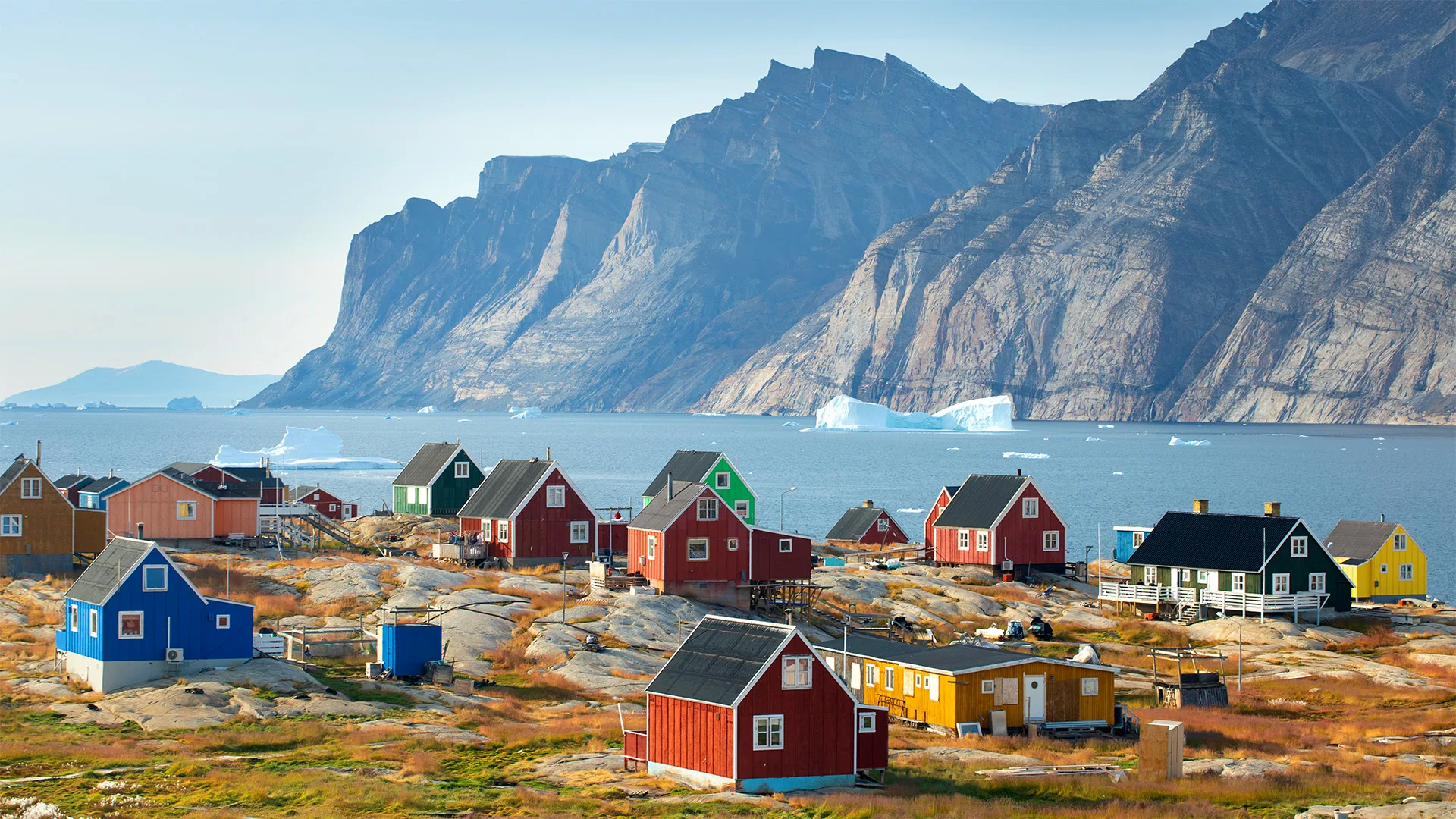
About 50 years ago, Denmark made a decision that looks increasingly unusual by modern economic standards. It removed around 40 percent of Greenland — nearly one million square kilometers — from economic use. This was not a marginal conservation effort. It was the largest protected land designation on earth, an area over 100 times the size of Yellowstone. The land remains a functioning Arctic ecosystem, supporting polar bears, seals, walruses, musk oxen, Arctic foxes, wolves, and vast seabird populations.
From a narrow economic lens, this choice appears irrational. Greenland contains valuable mineral resources. It also holds growing geopolitical importance as Arctic shipping routes open and strategic competition intensifies. By standard economic logic, leaving that much land “unused” looks like a forfeited opportunity.
But Denmark’s decision reveals something important: Not everything that can be monetized must be. And, more important, not everything should be exposed to economic optimization.
In today’s dominant economic framework, nature is treated primarily as an input. Land, minerals, forests, water, and even stable climate conditions are framed as raw materials for industrial activity. Protection, when it occurs, is often justified as a temporary or charitable act — acceptable only until a more profitable use emerges. Under this logic, conservation survives only as long as it loses less money than extraction.
This is not an accident. It is a direct consequence of how we have structured the economy.
The Limits of Capital
Capitalism functions through optimization. It compares assets, allocates resources, and directs effort toward whatever produces the highest returns under the current rules. But to be optimized, something must first be defined as capital. Once that conceptual conversion happens, it becomes tradable, comparable, and expendable.
Over the past century, we have steadily expanded what qualifies as capital. People became “human capital.” Ecosystems became “natural capital.” Social systems became “social capital.” Each step made it easier for the economic algorithm to operate, but it also stripped away dimensions that are essential to long-term stability.
The problem is not that capitalism is malicious. The problem is that it is literal. It has no intrinsic sense of restraint, sufficiency, or long-term system health. It follows the math it is given. When nature is framed as capital, the system will exploit it until the marginal costs exceed the marginal returns. By the time that happens at planetary scale, the damage is already locked in.
When the human population was smaller and the gift of the historically accumulated health/wealth of nature was much greater, it was an economically workable assumption to pretend that nature was effectively infinite.
It is no longer plausible to maintain that assumption. Every habitable corner of the planet has been explored and settled. According to global wildlife assessments, monitored populations have declined by roughly 70 percent in just the past half-century. Today, almost all mammalian biomass on planet earth is livestock and humans. The living systems that support clean air, stable water cycles, fertile soil, and biodiversity are being eroded faster than they can regenerate.
Diminishing Returns
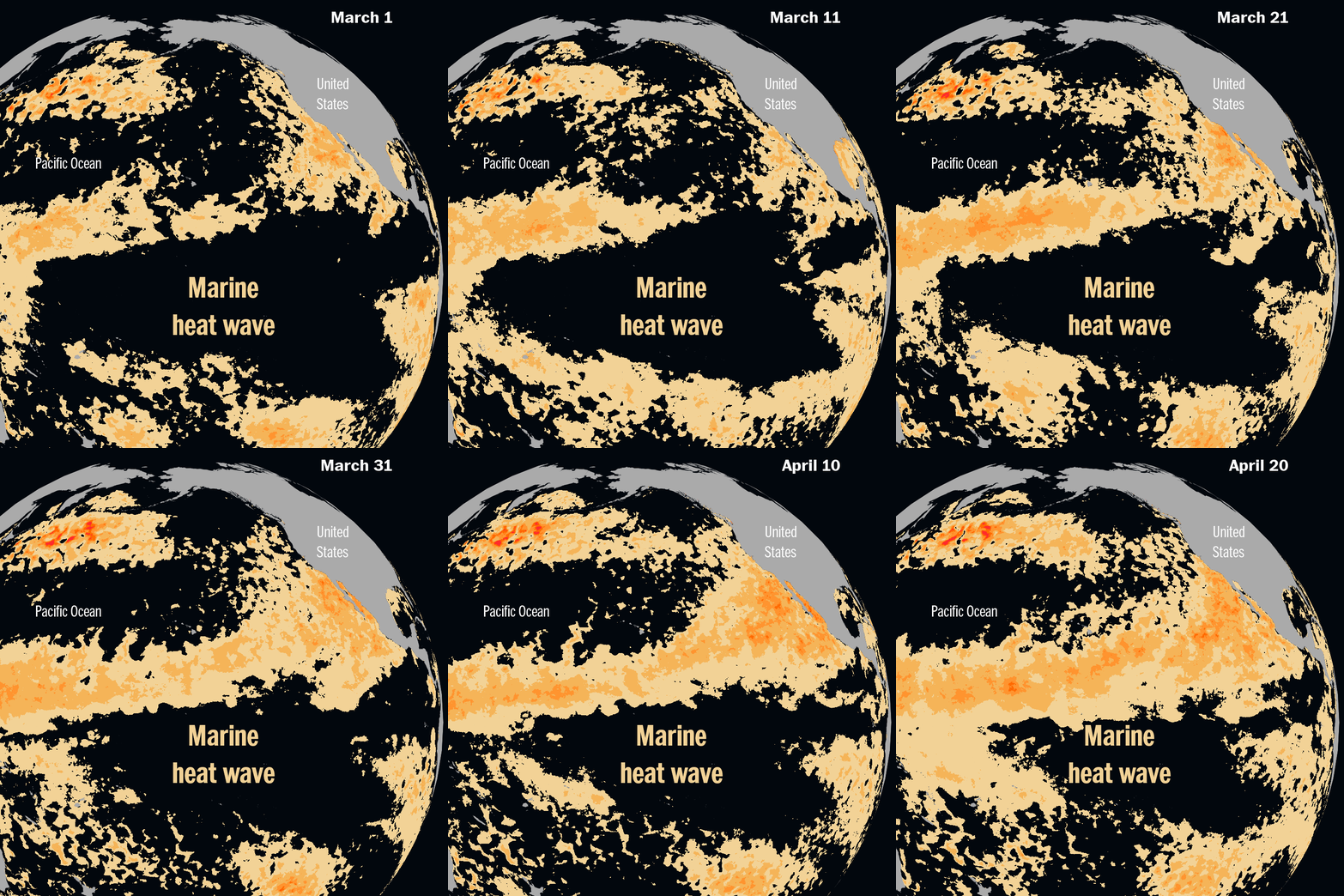
In economic terms, we have reached diminishing returns. The gains from continued exploitation are now smaller than the costs imposed by destabilized ecosystems. Floods, fires, heatwaves, water scarcity, crop failures, and forced migration are not externalities anymore. They are direct expenses, borne by all.
This exposes a core misconception: that the economy and ecology are separate domains that must be balanced against each other. In physical reality, the economy is a subset of ecology.
If you look around, you’ll see that everything in the economy is either mined or grown, which means it came directly from nature. Even digital businesses use real metal, stone, water, and vast amounts of electricity to construct and run data centers, a reality that is becoming apparent to more and more people who live near data centers. In other words, even our virtual economy is physical, and comes directly from mined and grown resources.
Once this is acknowledged, the Greenland decision looks less like charity and more like sound systems thinking. Denmark implicitly recognized that some portions of the biosphere function as critical infrastructure. Arctic ecosystems regulate climate patterns, ocean circulation, and planetary albedo. They are not interchangeable with financial assets. Exposing them to short-term economic optimization would undermine their long-term value — not just to Greenland, but to the global system.
This is where modern economic thinking struggles. When everything is treated as capital, the only protection mechanism available is pricing. Carbon markets, biodiversity credits, and ecosystem service valuations all attempt to make nature “visible” to the market. While well-intentioned, this approach contains a structural flaw: If a higher-value use emerges, the same pricing logic can justify destruction.
We have seen this dynamic repeatedly. Forests preserved for carbon value are later logged when timber prices rise. Wetlands protected for ecosystem services are drained when development yields higher returns. The algorithm is doing exactly what it was designed to do.
The alternative is not to abandon markets, but to place boundaries around them.
The Effectiveness of Boundaries
We already do this in other domains. The global ban on the sale of human organs is a clear example. We collectively decided that allowing organs to be traded as capital would produce outcomes that were morally unacceptable and socially destabilizing — even if the market demand were real. History offers darker reminders of what happens when human beings themselves are fully converted into capital.
The same logic applies to essential ecological systems. Some functions are so foundational to life and long-term prosperity that they must be categorically excluded from economic tradeoffs.
Once those boundaries are set, economic optimization can resume within them, and often performs better as a result. Land that is managed in alignment with ecological regeneration tends to retain productivity longer. Agricultural systems that invest in soil health reduce dependence on external inputs. Landscapes that preserve biodiversity lower long-term operational risk.
Take, for example, palm oil plantations in Southeast Asia. They start by clear-cutting a landscape, trucking out all the timber, and planting vast monocultures of oil palms. Within 25 years, these monocrop plantations end their commercial life, leaving the communities and land in a degraded state.
To maximize the long-term economic value of the land, say they instead set aside 20 percent of it to maintain proximity to biodiversity, which substantially reduces the recovery time from deforestation. Corporate yield per managed acre would be slightly less for the short term, but would be economically superior even in the medium term.
When you use up a landscape, you need to incur the additional cost of procuring new land, training new people, setting up new supply-chain lines. These are costs that would be avoided or reduced with more thoughtful land planning and set-asides. A nation that wanted to optimize its long-term prosperity would get interested in the exact set-aside percentage that gives the optimal blended return, factoring in long-term economic value and natural resource value.
Greenland’s Smart Play
Greenland’s protected lands are not idle, they are performing climate regulation services that would be prohibitively expensive, if not impossible, to replace technologically.
The path forward begins with a simple shift: Stop assuming everything should be capital. Decide, consciously and explicitly, which systems constitute our planetary life support infrastructure. Protect them by design, not by pricing gymnastics. Then allow markets to operate vigorously everywhere else, informed by the true physical constraints of the world they depend on.
The economy is paying the price for ignoring this distinction. The longer we delay making it explicit, the higher that price will climb.
This post originally appeared at inc.com.
“Click here to subscribe to the Inc. newsletter: inc.com/newsletters"