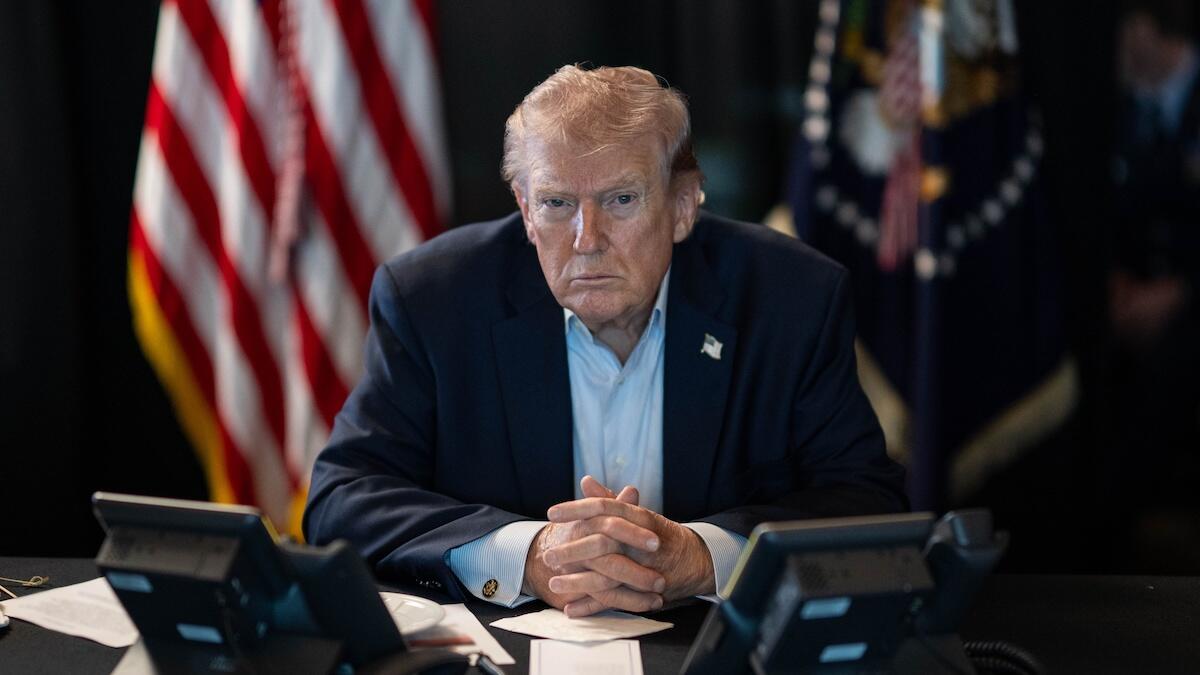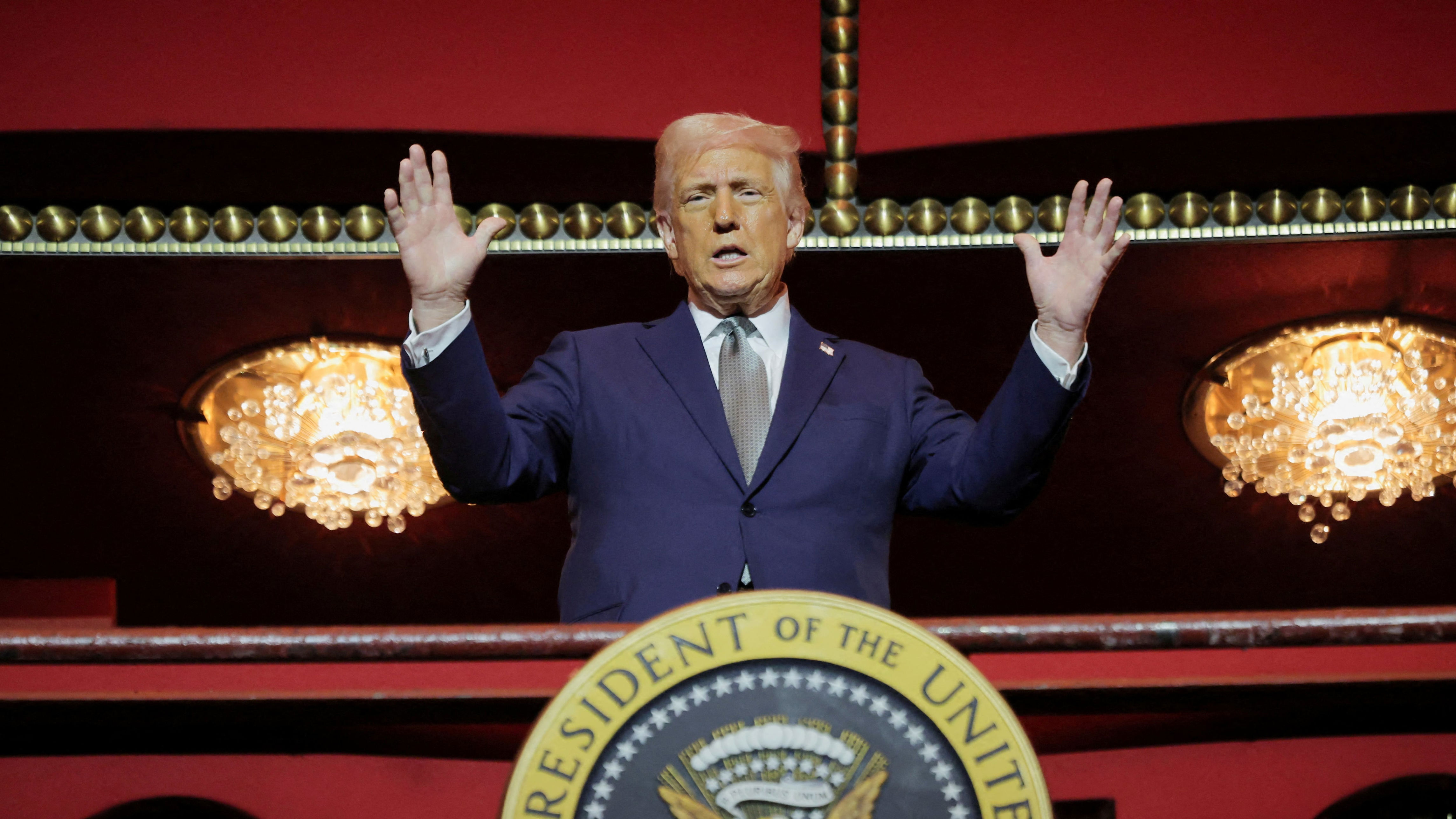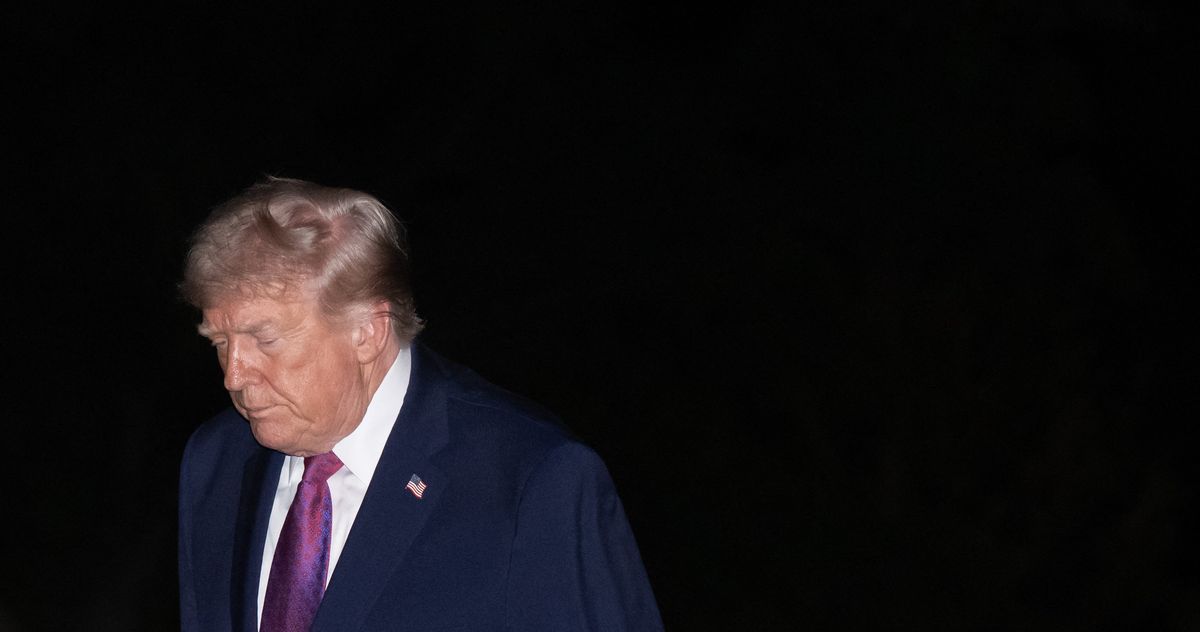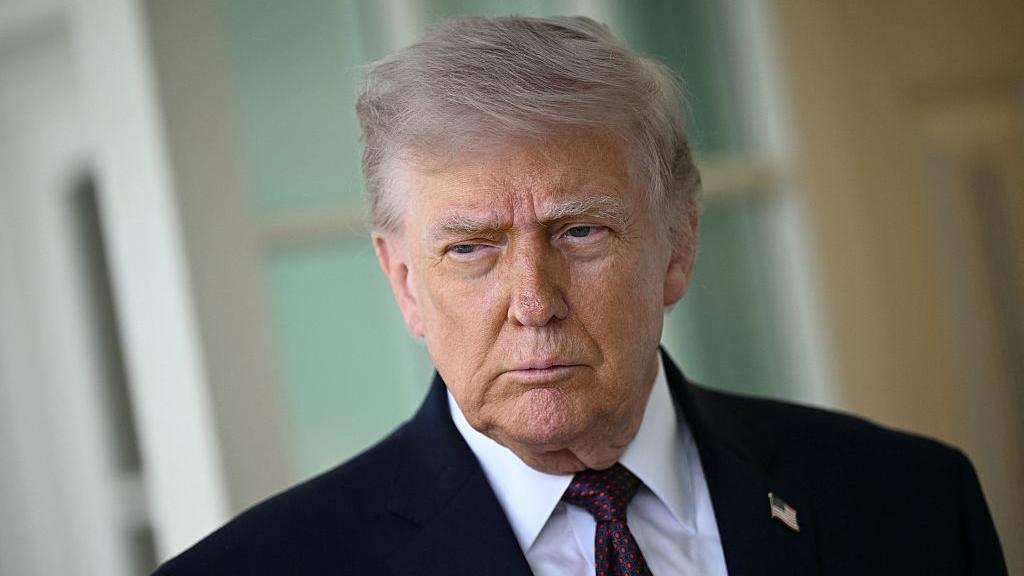
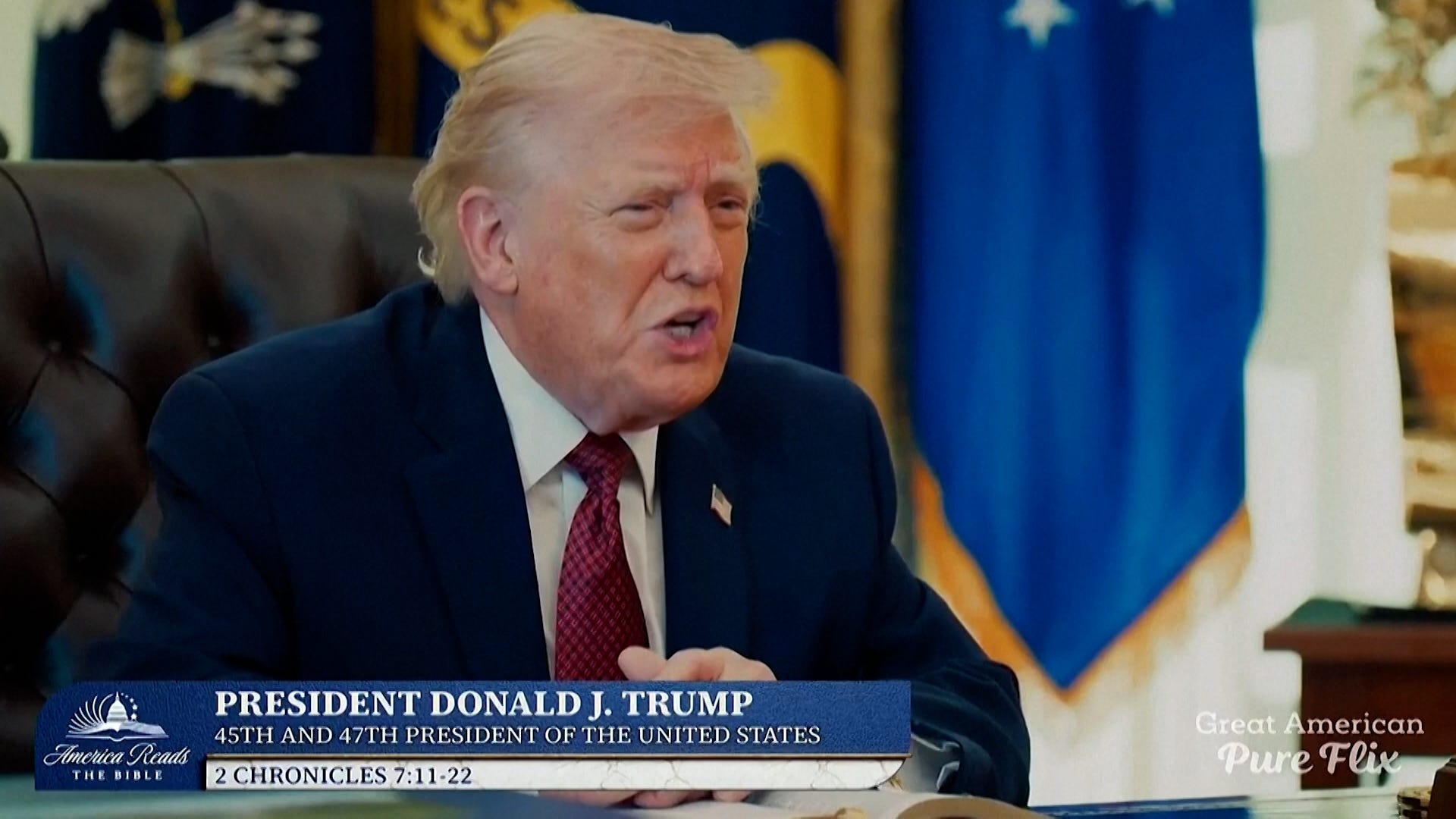
President Donald Trump read aloud from the Bible in a national broadcast on April 21 for America Reads the Bible, a weeklong event. It was 2 Chronicles 7:11-22, a passage about God's people humbling themselves, praying and turning from wicked ways so that God might heal their land.
Under different circumstances, a politician reading from the Bible might not warrant much attention. But this particular passage, in this particular context, is worth examining ‒ not as a matter of partisan politics, but as a case study in how the sacred gets stripped from texts when they get used and misused as props for political agendas.
Before anything else, it's worth understanding what Trump's chosen Bible passage actually includes: “If my people, which are called by my name, shall humble themselves, and pray, and seek my face, and turn from their wicked ways; then will I hear from heaven, and will forgive their sin, and will heal their land.”
Start the day smarter. Get all the news you need in your inbox each morning.
The verse is not a universal promise floating free in history, available to be downloaded by any nation at any moment in time. It is a specific communication, addressed to specific people, at a specific historical juncture.
The Bible is not being read. It is being brandished.
In this story, God is speaking to King Solomon after the dedication of the first Temple of Jerusalem. The audience is ancient Israel. When God says "if my people" in that verse, the antecedent is clear: It refers to Israel, a community defined by a particular covenant history. It is not a blank check made out to any nation that invokes the right words.
This is not a controversial theological point. It is basic reading comprehension. Context determines meaning. A letter written to one person does not become a letter to everyone simply because someone else picks it up and reads it aloud.
But there is a greater concern here than interpretation and comprehension.
When Scripture enters political theater, something shifts. The text stops functioning as sacred and starts functioning as a signal.
A signal of moral seriousness. A signal of religious alignment. A signal designed to resonate with a particular base, to communicate "I am one of you" without having to make an explicit argument. The Bible, in these moments, is not being read. It is being brandished.
This is not a new phenomenon, and it is not unique to Christianity. Sacred texts have been wielded as political props across traditions and throughout history. The Quran has been cited to justify things its scholars vigorously contest. The Torah has been pressed into service for arguments that its rabbinical tradition would certainly contend against.
What makes the current American moment notable is the scale and the sheer brazenness of it. The Bible has become a stage prop so routinely that many people have stopped noticing. It shows up at rallies, in legislation and in executive ceremonies. It is there to signal, not to instruct. To perform, not to transform.
Unintentionally honest moment of Trump reading the Bible
There is a sharp irony embedded in this particular moment that deserves attention.
The passage Trump read aloud was written about the reign of King Solomon. And Solomon, for those familiar with the story, is not a figure of unambiguous virtue. He is the king whose moral failures ‒ his accumulation of wealth, his disregard for the ethical limits placed on Israel's kings, and his relationships with women who introduced other forms of worship ‒ would tear the nation of Israel apart. The civil war that fractures the kingdom after Solomon's death is, in the biblical narrative, a direct consequence of Solomon's inability to live by the very principles the passage describes.
God tells Solomon to humble himself, to pray and to turn from wickedness. And Solomon does not. The nation suffers for it.
That this passage was chosen for a president who has made the Bible a recurring prop in his political imagery might be the most unintentionally honest moment of the entire event.
One might argue this is harmless theater, that politicians have always invoked religion and always will. But the instrumentalization of sacred texts carries real costs.
It degrades public discourse by substituting symbolic performance for substantive argument. When a verse from an ancient text is invoked as justification for a contemporary political agenda, it short-circuits the kind of reasoning a democracy actually requires. It says: This is settled by authority, not open for debate.
It also, paradoxically, hollows out the tradition it claims to champion.
The Jesus of the Gospels was not particularly interested in national influence. He did not live to pursue a political agenda, but rather lived to help those who were left out of the political agenda of the day. His most pointed critiques were reserved not for outsiders, but for the religious establishment of his own time, people who had learned to use the language of faith as a tool for social control.
None of this is to say that religion has no place in public life, or that people of faith should leave their convictions at the door when they engage with politics. The narrower question here is simpler: What does it mean when a powerful figure picks up a text revered by millions, strips it of its context and deploys it in service of a political moment?
It means the text is being used. Not read. Not wrestled with. Not allowed to challenge the one holding it.
There's a telling detail in the passage Trump chose to read. The call in 2 Chronicles is directed at the king as much as anyone. Humility. Prayer. Turning from wickedness. These are not just instructions for the crowd. They are also instructions for the person in power.
Solomon read them, too. And then, according to the story, he missed the point entirely.
It is worth asking whether history is on repeat yet again.
Steven Kim is pastor at Selah Church in Suwanee, Georgia.
This article originally appeared on USA TODAY: What the Bible passage Trump read unintentionally reveals | Opinion