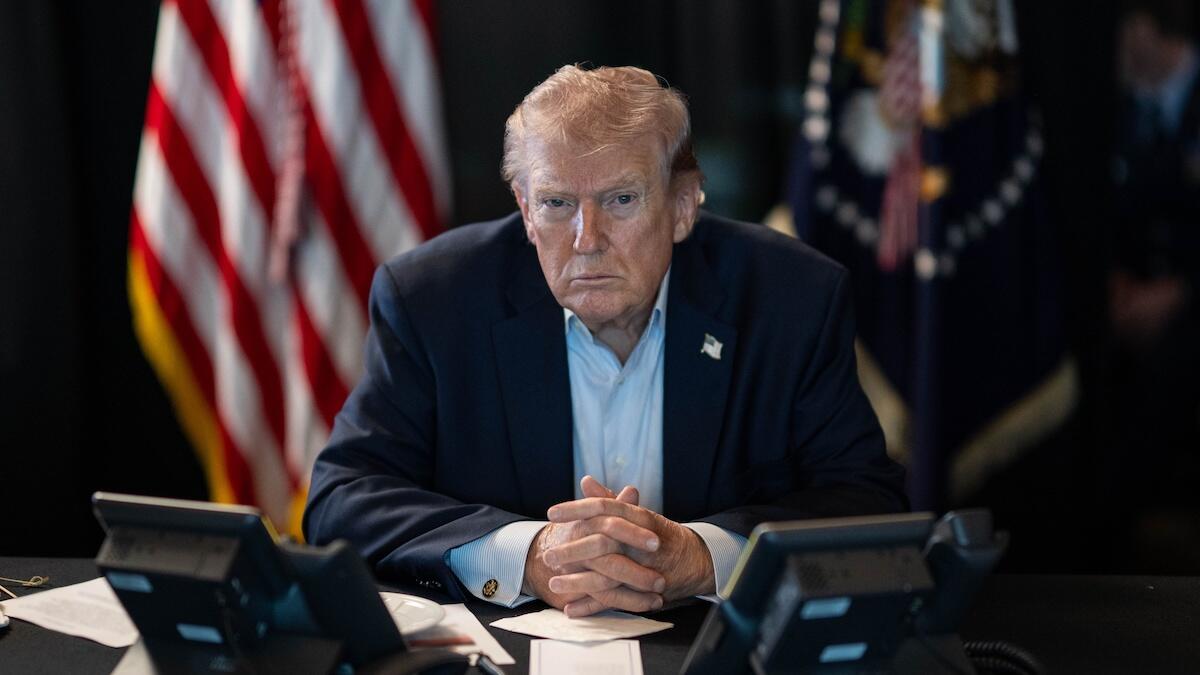
President Donald Trump has announced that large pharmaceutical company Regeneron has signed a new and extensive drug pricing agreement, as part of the administration’s initiative to lower the cost of drugs for Americans.
Regeneron will cut the price of its cholesterol-lowering treatment Praluent to $225, down from $537, for patients buying on the TrumpRx website, according to a White House fact sheet on the announcement.
It also means that any new medicines manufactured by Regeneron will receive Most Favored Nation (MFN) prices—rates that match drug prices to those in other countries.
Newsweek has contacted Regeneron outside of regular working hours via email for comment.
Why It Matters
Last July, Trump said he had sent letters to executives at 17 major pharmaceutical companies about lowering the cost of drugs and implementing MFN rates for medications. Sixteen of the deals had been made by the end of January 2026, with this latest deal marking the 17th.
As Americans pay almost three times more for prescription drugs than patients in other wealthy nations, the Trump administration made tackling the cost of many popular drugs one of its key focuses.
The Drugs Regeneron Has In The Pipeline
Per the White House fact sheet on the deal, all new Regeneron medicines will receive MFN prices for U.S. patients. According to the Regeneron database, below are all the drugs in the pipeline, at various clinical stages, that could eventually have price cuts for Americans.
Drugs in Phase 1 Clinical Trials:
- 27T51, an immune cell therapy for ovarian cancers
- ALN-5288, a gene silencing therapy for Alzheimer’s Disease
- ALN-APOC3, a gene silencing therapy for people with the metabolic disorder dyslipidemia
- ALN-CFB, a gene silencing therapy for the rare blood disorder Paroxysmal Nocturnal Hemoglobinuria (PNH)
- ALN-CIDEB, a gene silencing therapy for the serious liver condition Metabolic dysfunction-associated steatohepatitis (MASH)
- ALN-F1202, a gene silencing therapy to evaluate the safety and tolerability of an experimental drug in healthy participants
- ALN-HTT02, a gene silencing therapy for the genetic neurodegenerative disorder Huntington’s disease
- ALN-PNP, a gene silencing therapy for Metabolic Dysfunction-Associated Steatotic Liver Disease (MASLD)
- ALN-SNCA, a gene silencing therapy for Parkinson’s Disease
- ALN-SOD, a gene silencing therapy for SOD1 mutations of the neurodegenerative disorder, amyotrophic lateral sclerosis (ALS)
- DUPILUMAB / LINVOSELTAMAB, an experimental drug for patients with severe IgE-mediated food allergy
- NEZASTOMIG (REGN5678), an antibody for the kidney cancer, renal cell carcinoma
- NEZASTOMIG (REGN5678) / CEMIPLIMAB, an antibody for prostate cancer and Renal cell carcinoma
- NEZASTOMIG (REGN5678) / REGN4336, an antibody for prostate cancer
- REGN5837, an antibody for B-cell non-Hodgkin lymphomas (B-NHL)
- REGN7041, an antibody for non-infectious Uveitis, an inflammation of the middle layer of tissue in the eye
- REGN7945, an antibody for multiple myeloma, a type of cancer that affects the blood and bone marrow
- REGN9533, an antibody to evaluate the safety and tolerability of an experimental drug in healthy participants
- REGN10597, an antibody for solid tumors
- REGN13335, an antibody to evaluate the safety and tolerability of an experimental drug in healthy participants
- REGV131-LNP1265, a gene editing therapy for Hemophilia B, a rare inherited bleeding disorder
- VONSETAMIG (REGN5459), an antibody for transplant desensitization in patients with chronic kidney disease and lupus nephritis
Drugs in Phase 2:
- ALN-ANG3, a gene silencing therapy for diabetic kidney disease
- CEMIPLIMAB, an antibody for neoadjuvant cutaneous squamous cell carcinoma (CSCC), a malignant tumor of skin cells
- DAVUTAMIG (REGN5093), an antibody for MET-altered advanced non-small cell lung cancer, the most common type of lung cancer
- DB-OTO, a gene therapy for hearing loss due to variants of the otoferlin gene
- FIANLIMAB, an antibody for first-line advanced non-small cell lung cancer
- ITEPEKIMAB, an antibody for chronic rhinosinusitis without nasal polyposis (CRSsNP), a condition characterized by prolonged inflammation of the sinuses
- LINVOSELTAMAB, an antibody for multiple myeloma
- MARLOTAMIG (REGN7075), an antibody for solid tumors
- MIBAVADEMAB, an antibody for functional hypothalamic amenorrhea, the absence of menstruation in a female who has reached reproductive age
- NEZASTOMIG (REGN5678), an antibody for prostate cancer
- ODRONEXTAMAB, an antibody for B-cell non-Hodgkin lymphoma
- RAPIROSIRAN (ALN-HSD), a gene silencing therapy for metabolic dysfunction-associated steatohepatitis (MASH)
- REGN5668, an antibody for platinum-resistant ovarian cancer
- REGN7508, an antibody for thrombosis
- REGN7544, an antibody for Postural orthostatic tachycardia syndrome (POTS) and sepsis-induced hypotension
- REGN7999, an antibody for iron overload in beta-thalassemia, an inherited blood disorder
- REGN9933, an antibody for thrombosis
- SARILUMAB, an antibody for systemic juvenile idiopathic arthritis (sJIA)
- TREVOGRUMAB (REGN1033), an antibody for the treatment of obesity
- UBAMATAMAB (REGN4018), an antibody for platinum-resistant ovarian cancer
Drugs in Phase 3:
- CEMDISIRAN, a gene silencing therapy for myasthenia gravis, a chronic autoimmune disorder
- CEMIPLIMAB, an antibody for early-stage cutaneous squamous cell carcinoma
- DUPILUMAB, an antibody for asthma in pediatrics (2 to 5 years of age)
- FIANLIMAB, an antibody for first-line metastatic melanoma, an advanced form of skin cancer
- GARETOSMAB, an antibody for Fibrodysplasia ossificans progressiva (FOP), a rare genetic disorder
- ITEPEKIMAB, an antibody for chronic obstructive pulmonary disease (COPD)
- LINVOSELTAMAB, an antibody for multiple myeloma
- MIBAVADEMAB, an antibody for generalized lipodystrophy, a rare condition characterized by the near-total loss of body fat
- NEXIGURAN ZICLUMERAN (NEX-Z, NTLA-2001), a gene editing therapy for transthyretin amyloidosis with cardiomyopathy (ATTR-CM), a progressive condition that can lead to heart failure
- ODRONEXTAMAB, an antibody for follicular lymphoma (FL), a slow-growing type of non-Hodgkin lymphoma
- POZELIMAB + CEMDISIRAN (REGN3918), a gene silencing therapy for myasthenia gravis, paroxysmal nocturnal hemoglobinuria (PNH), a rare autoimmune disease
- REGN1908-1909, an antibody for the treatment of cat allergy
- REGN5713-5715, an antibody for the treatment of birch allergy
- REGN7508, an antibody for venous thromboembolism after total knee replacement surgery
Previous Drug Price Deals
This deal with Regeneron is the 17th Trump has made with major pharmaceutical companies. Here are the other 16 drug producers Trump has signed deals with, meaning each of these manufacturers have agreed to participate in the TrumpRx website, offering discounted medications to Americans, while also offering MFN deals on drugs.
- Pfizer (September 2025)
- AstraZeneca (October 2025)
- EMD Serono (October 2025)
- Eli Lilly and Company (November 2025)
- Novo Nordisk (November 2025)
- Amgen (December 2025)
- Bristol Myers Squibb (December 2025)
- Boehringer Ingelheim (December 2025)
- Genentech (December 2025)
- Gilead Sciences (December 2025)
- GSK (December 2025)
- Merck (December 2025)
- Novartis (December 2025)
- Sanofi (December 2025)
- AbbVie (January 2026)
- Johnson & Johnson (January 2026)
What RFK Jr Has Said On Trump’s Drug Price Cuts
Health and Human Services Secretary Robert F. Kennedy Jr. said Wednesday that Trump uses a “different way” of calculating percentages when speaking about drug price reductions, after the president vowed to bring down the price of prescription drugs from between 30 to 80 percent last year.
Trump has also since said that drug prices are falling by “300, 400, 500, even 600 percent,” and Kennedy offered an explanation for the president’s claims during a U.S. Senate hearing earlier this week.
Kennedy said Trump has described that TrumpRx, a federal government website designed to provide Americans with discounted prices on brand-name prescription drugs, cuts the price of a $600 drug to $10 as a “600 percent reduction.”
He added: “President Trump has a different way of calculating, there’s two ways of calculating percentages. If you have a $600 drug and you reduce it to $10, that’s a 600 percent reduction.” He acknowledged that Trump’s math departs from standard calculations.
Related Articles