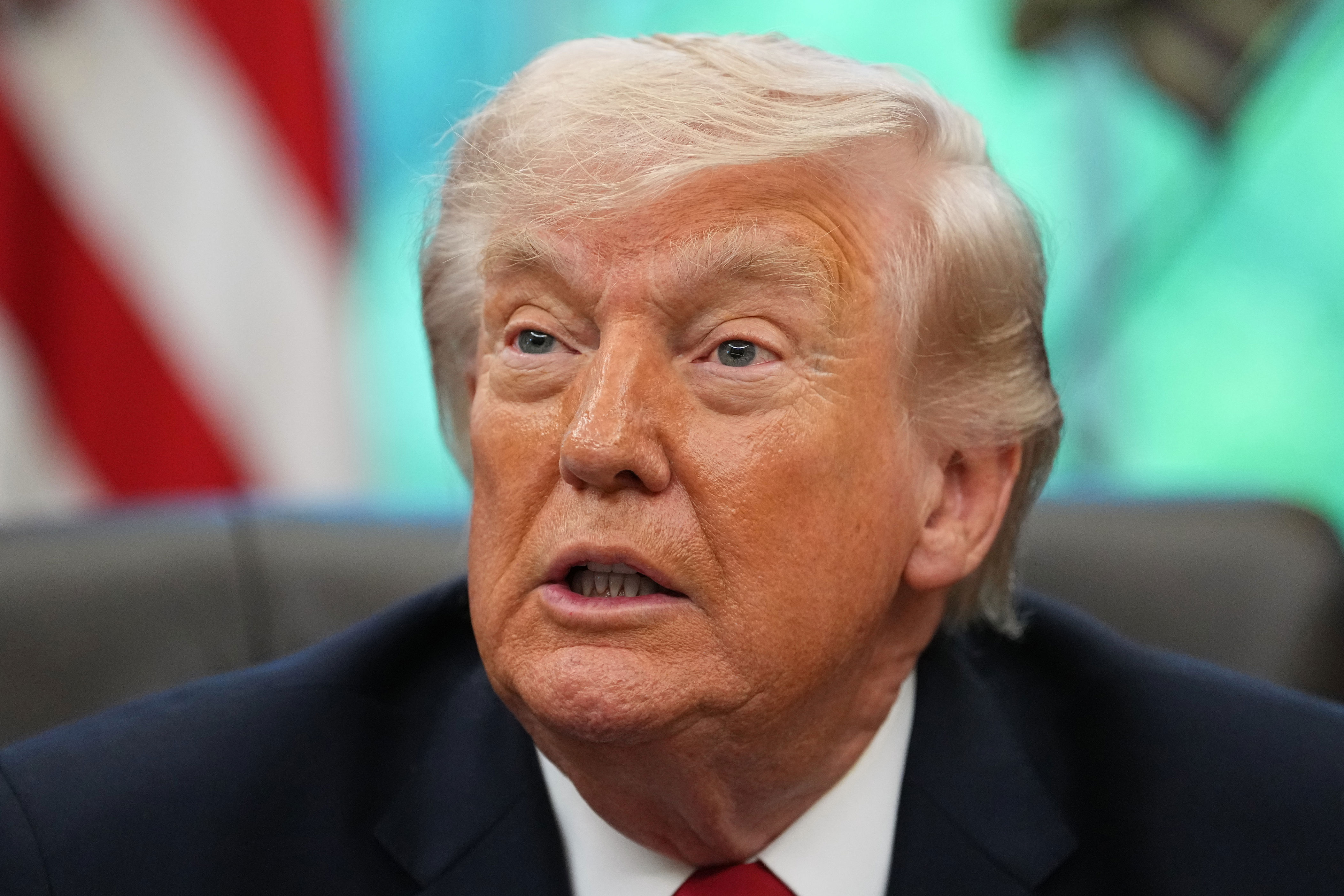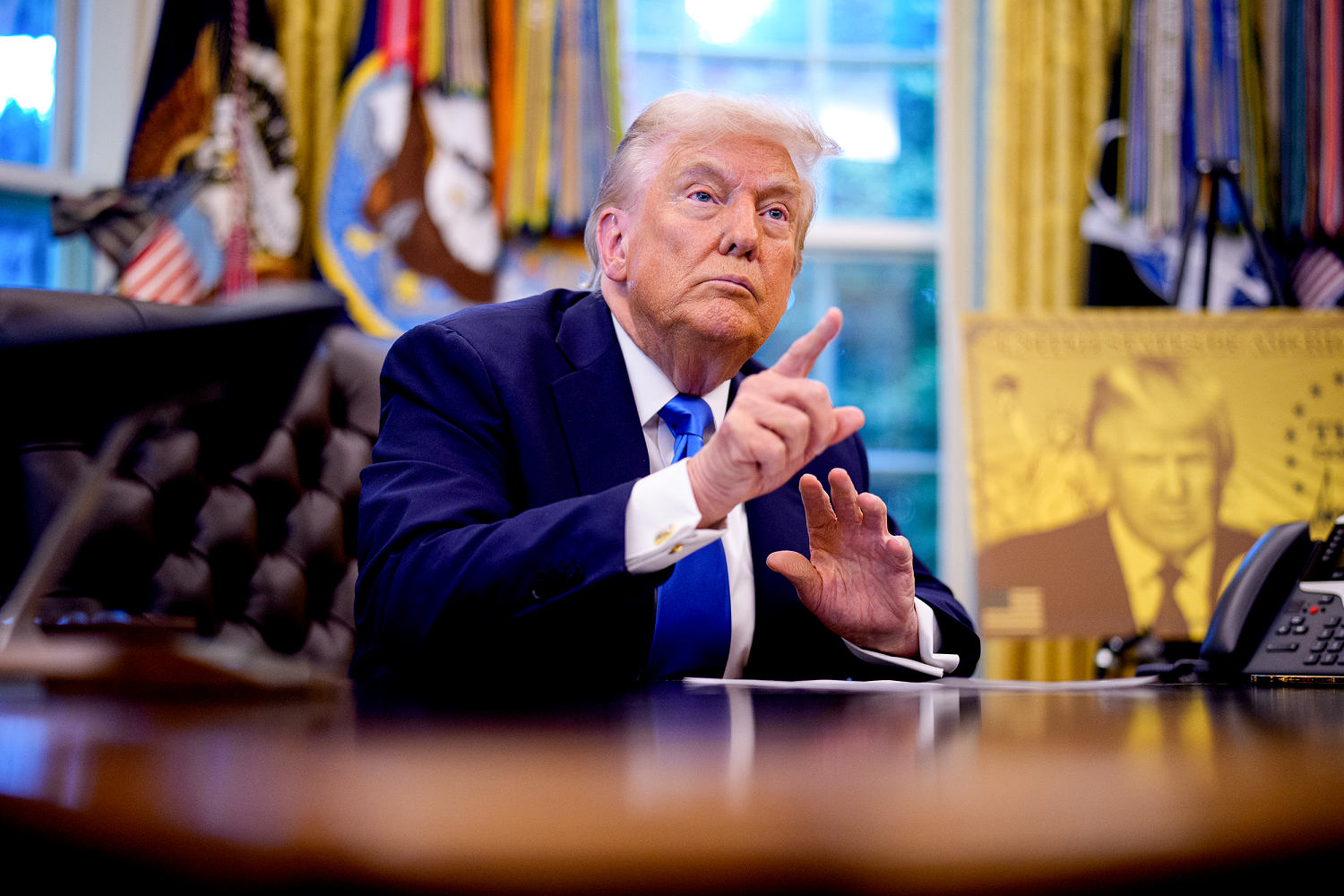
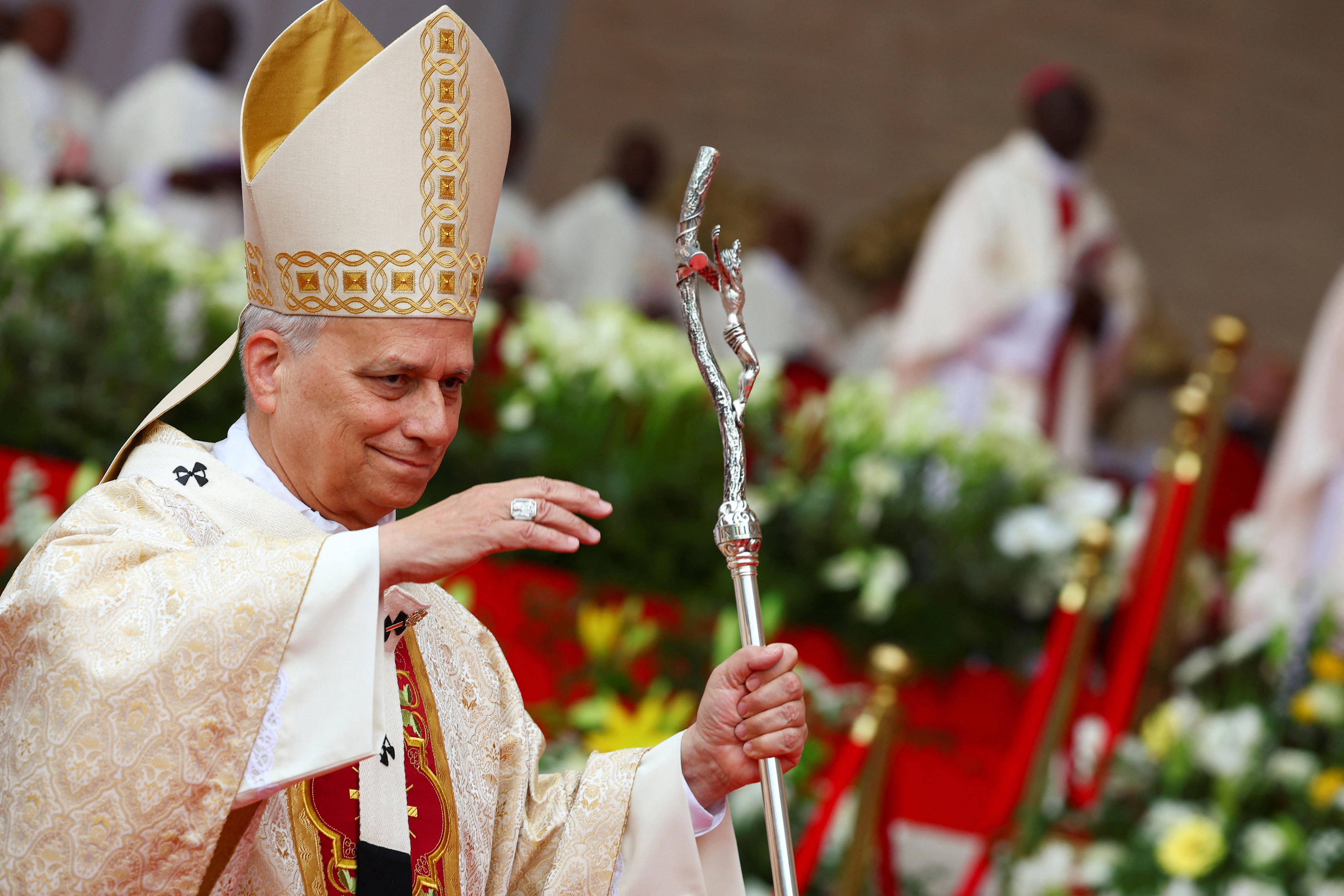
VILLANOVA, PA – It's been nearly 1,000 years since King Henry IV stood barefoot in the Italian snow to beg forgiveness after clashes with Pope Gregory VII and over two centuries since Napoleon imprisoned Pope Pius VII in France. Now, a new battle is underway between a pope and a world leader, this time in America.
It's the war of words between President Donald Trump and Pope Leo XIV. And for dozens of U.S. Catholics interviewed by the USA TODAY Network across the nation, it's Leo who has the upper hand in the crusade. A year into his historic papacy he has given them hope for the future of the Catholic Church.
At Villanova, where Leo graduated in 1977, Catholic convert Jacob Adams, 25, said outside the campus' St. Thomas Church that young people don’t have much appetite for war. Hence, they appreciate Leo's strong words in defiance of Trump's recent comments about destroying “a whole civilization” in the Iran war.
Start the day smarter. Get all the news you need in your inbox each morning.
“Right or left, there are people calling for peace,” said Adams, a former evangelical who supported Trump in 2020 and 2024. “I like what (Leo) is doing to hold (Trump) accountable.”
With the pontiff about to finish year one in his papacy, the USA TODAY Network spoke with Catholics nationwide about their views of Leo and found their responses overwhelmingly upbeat. Many say Leo is palpably different from Pope Francis, with an everyman affability they believe is helping fuel a global resurgence in Catholicism - especially among the young.
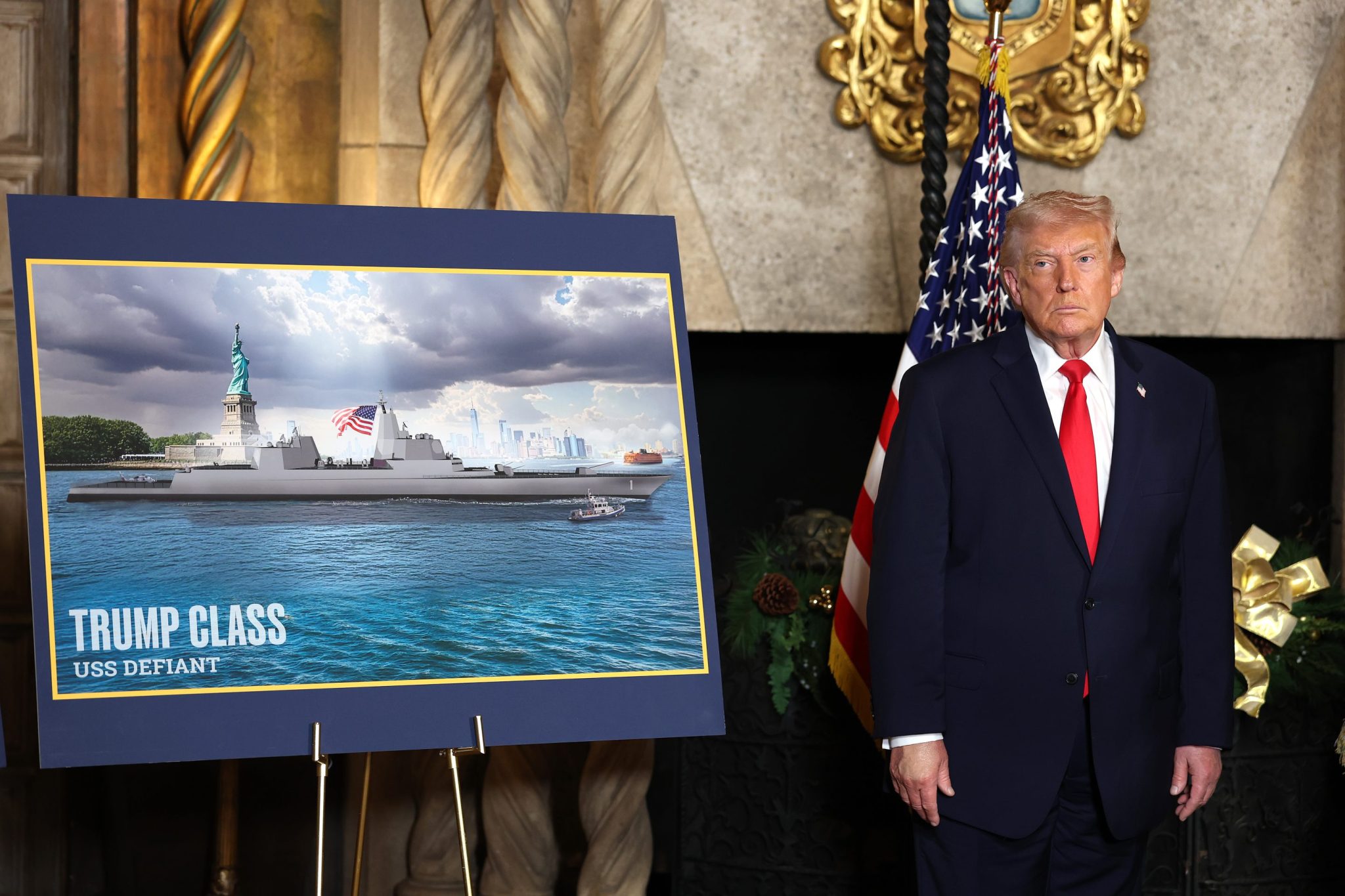
The pope’s firm push for peace amid the U.S.-Israeli war with Iran has rankled the president, igniting sparks at times that have tested the loyalties of conservative Catholics. The rhetoric has also pulled others into the fray, including Vice President JD Vance and the U.S. Catholic Conference of Bishops.
At one point, Trump called Leo weak on crime and "terrible on foreign policy," though he later said he wasn't fighting with the pontiff. For his part, Vance, a Catholic convert, urged the pope to "be careful" when talking about theology.
While Leo’s statements have triggered some backlash, his forcefulness hasn’t diminished his standing. “It hasn’t undermined his credibility because most feel it comes from a place of pastoral sincerity,” said John Cavadini, director of the McGrath Institute for Church Life at the University of Notre Dame in South Bend, Indiana. Leo’s statements, he said, reflect gravitas and precision, leaving little room for misinterpretation or divisiveness.
“He’s got a kind of presence that I find edifying and elevating,” said Cavadini, a professor of theology. “His articulations tend to be unifying. They’re not stated in ways that are alienating or dismissive.”
As parishioners poured from churches across the country on April 26, those who spoke with USA TODAY agreed that Leo has deftly handled the discord, leaning into the gospel to strike a moral rather than political tone.
“He’s done a beautiful job of showing us how to respond in nonviolent ways to very harmful and degrading language,” said Margaret Sebern, 74, a retired nursing professor who attended Mass at St. Paul the Apostle Church in Manhattan’s Upper West Side.
Many view the pope as a unifying and revitalizing force who, like Francis, has advocated for the world’s marginalized while treading cautiously around more prickly Catholic issues such as ordination of women and the blessing of same-sex unions. They praised Leo’s support of immigrants and refugees in the United States and noted his appointments of bishops reflecting such backgrounds in California, Florida and Louisiana.
Gallup International’s 2025 end-of-year survey found Pope Leo XIV its most positively viewed leader by far. In the United States, a survey conducted in November found more than two-thirds of American Catholic voters hold a favorable opinion of the pope, while a poll conducted this month by Reuters/Ipsos showed 60% of Americans overall approve of Leo.
For U.S. Catholics, the pope’s relatability is heightened by a sense that Leo, a Chicago native who loves Peeps and the White Sox, is one of them. The pope is no longer an obscure Vatican figure but a homegrown reality.
Catholic schoolteacher Elizabeth Baldacci, 55, has a framed newspaper article about Leo’s announcement as pope on her classroom wall. “It’s really fun and nice for the kids,” Baldacci said after Mass at Chicago’s Saint Mary of the Lake and Our Lady of Lourdes Catholic Church. “He’s more real to them because he’s from here, so he’s more human – like, ‘Wow, this man grew up in Chicago like I did.’”
At the University of Wisconsin-Milwaukee, freshman Teresa Iannitello was among the students who packed into a cramped basement for free brunch after Sunday Mass at the school’s Newman Center ― a visual reminder that Gen Z is flocking to the faith. For many college-age Catholics, Leo’s election in the May 7-8, 2025, conclave was the first they were old enough to understand and follow.
“It was so funny to hear him speak the first couple weeks, hearing his voice,” said Iannitello, 19. “I remember thinking, 'oh my gosh ― he sounds like me.'”
At Manhattan’s St. Paul, Christopher Browner, 31, said “it’s been an exciting time to be an American Catholic, with an American pope. [It’s] something I never thought I would see in my lifetime.”
Robert L’Europa, a chiropractor and longtime parishioner attending Mass at St. Mary’s Catholic Church in Cranston, Rhode Island, agreed, saying Leo’s papacy has given him reason for optimism. “It’s become more personal to me now,” he said.
Pope Leo 'bringing us back to true north'
In Washington, DC, Henry Huot was among the many who’d filled the pews for Mass beneath the massive, shimmering domes of the Basilica of the National Shrine of the Immaculate Conception, North America’s largest Roman Catholic Church.
The Arlington, Virginia, retiree said he’s been glad to see Leo adhere to Francis’ teachings and priorities. “We need a voice like Pope Leo’s that will remind everyone, especially those on the world stage, that there are values that need to be upheld,” Huot said.
Catholic observers say Leo has indeed largely embraced Francis’ vision while charting his own path. Nicholas Hayes-Mota, a social ethicist and public theologian at California’s Santa Clara University, said Leo, like Francis, has embraced the collaborative practice of synodality, favoring “a church that moves by listening to its members rather than unilaterally.”
“It was clear that he was going to continue much of the substance of Francis’ papacy but with a different style and priorities,” Hayes-Mota said. As Francis did, Leo has stressed the church’s mission to care for the poor and marginalized, but he’s done so “more uncompromisingly than any of his predecessors. … He not only picked it up but carried it further.”
While maintaining continuity, Leo’s more deliberate leadership style and manner have served as a sort of rebalancing, Hayes-Mota said. Francis’ off-the-cuff nature often endeared him to people ― such as his viral selfies with young Catholics or his well-known “who am I to judge?” remark regarding gay priests ― but also alienated some put off by such spontaneity.
“One of the ongoing tensions in Francis’ papacy with traditional members of the church was a fear that he was changing too many things too fast,” Hayes-Mota said. “Leo has tried to extend olive branches to those alarmed by that, saying this is your church as well.”
At the basilica in Washington, that view was echoed by Brian Dimatteo, who was visiting from New Jersey. While Francis “took us a little bit away from biblical standing,” he said, Leo is “bringing us back to true north.”
At St. Martin de Porres Catholic Church in Jensen Beach, Florida, retired computer scientist Mark Gooley praised both the pope’s recent visit to several nations in Africa, where the church is rapidly expanding, and his rebuke of German bishops who’ve pushed for the church to formally bless same-sex unions.
“He does seem to be holding to church tradition,” said Gooley, 64. “He’s been firm with the German bishops. Africa is a big area of growth, and he’s been very sympathetic to Africans and their views. The Africans tend to be traditional.”
Others said they weren’t clear about the new pope’s stance beyond continuing Francis’ work. In Boca Raton, Florida, Eric Knight, a 27-year-old graduate student at Florida Atlantic University, sees Leo as “a continuity of Pope Francis, rather than a rupture… I’m still kind of waiting to see what’s distinctively Pope Leo and not just the greater church tradition.”
Appealing to young Catholics
Jonathan Tan, a professor of Catholic studies at Case Western Reserve University in Cleveland, said while Leo lacks the flair and flamboyance of predecessors like Francis and Pope John Paul II, he’s revived hope for many U.S. Catholics who’ve lost faith in the political process and previously saw the church as detached from everyday realities.
In Worcester, Massachusetts, Celeste Mahaney, of nearby Charlton, echoed that point, saying she feels the pope is plugged in.
“It’s nice to see our pope having a real interest in the day-to-day issues that affect people, not only in America but across the globe,” she said at Christ the King Church. “He really has a finger on the pulse.”
In the greater Cincinnati area, interior decorator Abby Jahnigen said she believes Leo can fill “a God-sized hole” in the United States, bringing people back to the Catholic faith.
“He feels more casual and more approachable,” said Jahnigen, 46, as she left Mass at St. James of the Valley Church in Wyoming, Ohio. “He has, like, a ‘regular guy’ vibe.”
Some said that vibe has helped Leo appeal to young Catholics. One of them is Iris Le, a 14-year-old freshman at Xavier College Preparatory in Phoenix, who was attending a Saturday evening Mass at Saints Simon and Jude Cathedral Church in north Phoenix with her mother, Kim Tran.
"I believe he was the right choice," Iris said about the 70-year-old pope's selection. "He seems like he has a very good moral compass."
In Westerville, Ohio, a bleak, chilly Sunday morning had brought gray skies to what had been a welcome early spring for the greater Columbus region, but that didn’t keep Kristi Lethenstrom, 48, from attending early Mass at St. Paul the Apostle Catholic Church.
The church’s young population has grown, she said, and as a kindergarten teacher personally invested in her community’s littlest parishioners, Lethenstrom enjoys Leo’s more youthful style of leadership. “I just think his message resonates more," she said.
At St. Paul Roman Catholic Church in Philadelphia, Kayleen Bodnar, 34, said she’s found the pope's leadership inspiring.
“I think for a lot of people my age, Catholicism had become very polarizing,” Bodnar said. “He’s doing a great job of bringing young people back to church with the way that he leads.”
Meanwhile, as he spoke outside Saint Anastasia Roman Catholic Church in Teaneck, New Jersey, retired engineer Jacque Alexandre said Francis' successor is reaching a cross-section of generations, genders and cultures.
The new pope “makes me feel the future of the Catholic Church is very bright,” said Alexandre, 71. “The younger generation are seeing a resurgence because they’re seeing what’s going on all over the world, and they see a relatability and relevance in Pope Leo.”
Advocating for those on the margins
At St. Vincent de Paul Church, the only historically Black parish in the Diocese of Nashville, the seven-member women’s choir led parishioners through hymns infused with gospel sound. Deacon Bill Hill spoke about local Catholics’ role in school desegregation and the Civil Rights Movement, reflecting the church’s founding principle of social justice.
A floor below, a pantry brimmed with food donated by parishioners and nearby churches, a sign of the community engagement central to St. Vincent’s identity throughout a 94-year history that has seen nine popes come and go. Last year, St. Vincent hosted a “Know Your Rights” training with an immigrant rights group and more recently helped organize a rally protesting U.S. Immigration and Customs Enforcement actions.
With Leo exhibiting many of the same values they hold dear, church members say this moment is especially exciting. “It’s a reassurance,” said deacon Harry Guess. “I take from all of that that there is this hope for us to do the right thing and to help others do the right thing. But we won’t get there if we don’t say anything. And he is saying something.”
Tan, of Case Western Reserve, said Leo’s background as bishop in an impoverished rural area of northern Peru and his visits to Augustinian communities around the world “have made him more attuned to the life experiences of those living in the margins.”
That’s an important factor for people like Catherine and Bill Odell, of South Bend, Indiana, who were leaving late morning Mass at St. Therese Little Flower Catholic Church. The couple said it’s important that the new pope is carrying on Francis’ legacy of environmental advocacy and addressing poverty.
“We’re in a country in which the poor are seen as kind of in the way,” said Bill Odell, 83. “I think he’s going to be a voice for the poor. He’s going to be a voice for the very people that Jesus talked to and about in the Sermon on the Mount. ... I hope he lives a long life.”
'He's exactly what we need'
Many Catholics are awaiting the imminent release of Leo’s first major encyclical, expected to address moral questions surrounding artificial intelligence, while Hayes-Mota of Santa Clara University is curious to see how Leo will address the complicated relationship between the United States and the Americas.
“He’s seen by many in the Latin American Catholic church as someone who understands them very well,” he said. “Especially given the tensions surrounding migration, and the geopolitical challenges raised by the Trump administration’s intervention in Venezuela, the question of how the U.S. relates to the Americas as a whole is an important one.”
Hayes-Mota said Leo has successfully straddled a line between conservatives unhappy with his views on immigration and war and progressives hoping to see quicker reforms.
“There will be frustrations and tensions, but so far he has remained a popular and less polarizing figure,” Hayes-Mota said. “There will be more opportunities for consensus-building and deescalating tensions, but so far he has managed to keep most of the church behind him, and that’s no easy task.”
But the quality most of those interviewed by the USA TODAY Network said they appreciated about Leo is his commitment to pursuing peace, especially as the conflict with Iran has raged on. The pope's firm push to end hostilities, some said, has provided a counterbalance to Trump, even as their exchanges have fueled a divide believed to be the most contentious between the papacy and a secular leader since medieval times.
“He’s exactly what we need,” said engineer Anthony Zamorro, who attended Mass with his two sons at Christ the King in Worcester. Though Zamorro leans politically conservative, he said, “we need someone who stands up for people and says war is bad for humanity. … If your pope isn’t speaking out against war, you don’t have a very good pope.”
Caroline Zengel, 44, who’d attended Mass at the Church of the Immaculate Conception in Knoxville, Tennessee, said the pope is “a strong, quiet presence for our church.”
“He’s outspoken when he needs to be, but he’s very wise when he speaks,” said Zengel, a stay-at-home mom and former nurse. “We’re neither Democrat nor Republican. We’re Catholic, and that’s what comes first. I think his statement that he’s not afraid of the Trump administration was so powerful, and I loved that.”
In Boston’s South End, organs thrummed as incense filled the cavernous nave of the Cathedral of the Holy Cross. As her 7-year-old daughter tugged at her dress after a 90-minute-long Mass, Boston lawyer Abigail Hemnes, 43, said she admired how Leo has responded to the situation.
“I really appreciate the way that Pope Leo has handled it, just staying true to the core beliefs of Catholicism, which is that Jesus lives in peace,” Hemnes said.
Boston musician Jon Ryan, 55, agreed.
“I feel like Pope Leo hasn’t really ‘taken the bait,’” Ryan said. “People want to politicize what the pope does. But the pope’s job is to evangelize the gospel and be a leader of the church, not to be a political figure. The Church and the pope are not Democrat or Republican.”
Besides, he said, those “little tiffs” have made people more aware of Leo ― “and that’s a good thing.”
Contributing: Keith Burbank, Treasure Coast News; Rayleigh Deaton, South Bend Tribune; Jose Gonzales, Arizona Republic; Hope Karnopp, Milwaukee-Journal-Sentinel; Amethyst Martinez, USA Today; Keenan Thomas, Knoxville News Sentinel; Scott Wartman, Cincinnati Enquirer; Emma Wozniak, Columbus Dispatch; Deena Yellin, The Record; Kinsey Crowley, USA Today; Kaitlyn McCormick, USA Today; Sarah Perkel, USA Today; Jonny Williams, Providence Journal; Paris Barraza, USA Today, Shane Brennan, News Journal; Marissa Meador, Indianapolis Star; Eileen Zaffiro-Kean, Daytona Beach News-Journal.
This article originally appeared on USA TODAY: An American pope, a presidential clash and what it means in the pews