
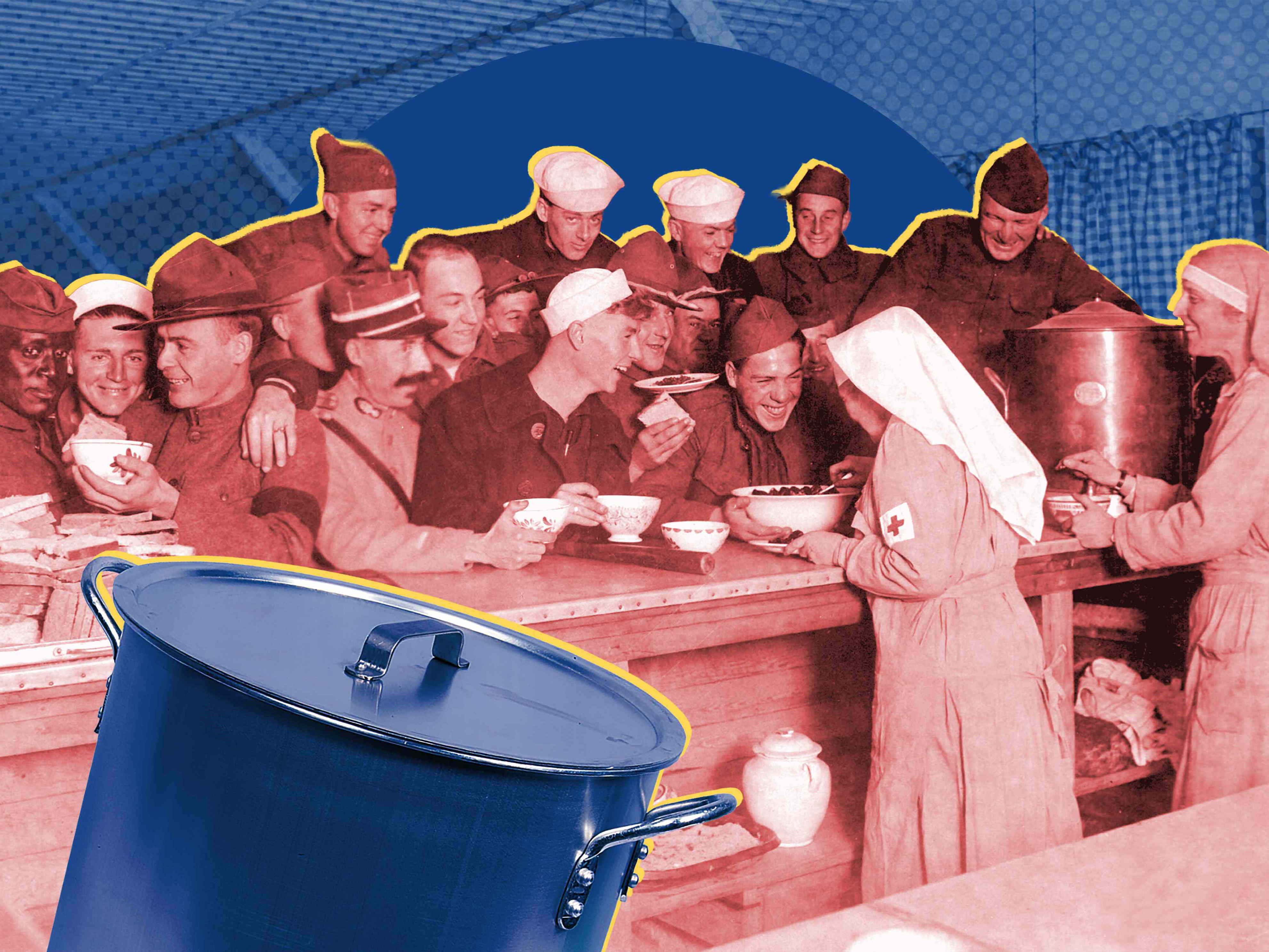
Make this controversial stew at home.
During World War I, British soldiers ate canned rations that traveled easily, didn't expire, and offered sustenance after a long day. One such ration was called Maconochie Stew—a canned beef and vegetable mixture manufactured by brothers Archibald and James Maconochie in Scotland. According to the BBC, the company won a giant contract to supply the British Army with stew during the Boer War and World War I.
Maconochie Stew was "universally used by the troops," per the BBC. It contained beef, carrots, onions, turnips, navy (haricot) beans, and a stew gravy—and it could be eaten hot or cold.
While the stew was indeed hearty—many soldiers reported that it was "an inferior grade of garbage," according to reporting by the BBC. One person even shared "there were some who would have said you needed a medal to eat a Maconochie, it was so vile." Others thought the stew was "brilliant," and "a glorious meal."
"In 1917, the army was aiming to provide 4,193 calories per man that was in a front-line soldier," said The Yorkshire Trench, a YouTuber who makes videos sharing trench recipes and sharing the history of WWI. That included 1 pound fresh or frozen meat or 9 ounces tinned meat; 1 pound of bread; 10 ounces of biscuits, 4 ounces of bacon; two ounces of cheese; 8 ounces of fresh vegetables; 5/8 of an ounce of tea; 3 ounces of jam, and 3 ounces of sugar.
"One of the main problems with Maconochie Stew was not the stew itself, or how it was made. The problem was the quality of the ingredients that were used," he said. "It was said that there were some black bits in the potatoes, and there was an awful lot of gristle and fat to the meat."
The stew, however controversial, shares the foundational ingredients of many stews enjoyed to this day. Beef, vegetables, and some flour to make a gravy—count us in. The Yorkshire Trench shared his recipe for the hearty stew—no can needed. It's a basic recipe, ready for adjustments and personalizations to make it your own. Here's how he did it.
How To Make Maconochie Stew
While the Yorkshire Trench did not share a definitive recipe with amounts, the following is an approximation—feel free to adjust to your preferences:
Ingredients:
- 1 pound carrots, peeled and cut into a small dice
- 2 pounds yellow potatoes, cut into small dice
- 1 pound turnips, peeled and cut into a small dice
- 3 pounds of stew meat, cut into a medium dice
- 1 large onion, sliced
- Oil for frying
- Flour for dredging
- 2 to 4 beef bouillon cubes
- 1 can navy beans
Directions:
- Dredge the onion and meat in flour (we suggest adding salt and pepper), then brown the mixture in a stockpot on medium with a good amount of oil until a crust forms.
- Add the rest of the vegetables to the pot and start to soften them, stirring for a few minutes.
- Add enough water to just cover the mixture, then crumble in the bouillon cubes to make a stock.
- Cook until the stock thickens, the water reduces, and the vegetables are cooked through.
- When the stew is thick enough to your liking, add in a can of drained navy beans and gently stir. Keep on low heat until ready to serve.
Make It Your Own
This recipe is "simple and tasty," according to the creator, and we agree. It's hearty, filling, and incredibly comforting. But if it's a little too pared down for your liking, there's plenty you can do to add a little pizzazz.
- Add more aromatics: Garlic, shallots, chili peppers, and leeks would make tasty additions to this hearty supper.
- Incorporate herbs: Add your favorite herbs and spices. Thyme, rosemary, or oregano would be lovely, but feel free to adjust to your preferences. Stick a bay leaf in the stew while it cooks.
- Serve it up: Serve with crusty bread, some crackers, or top with cheese, sour cream, or a squeeze of lemon to add some dynamic flavor.
Read the original article on Allrecipes