Scientists at Penn State University tried using an incredibly powerful tool to help unearth clues about Amelia Earhart’s doomed flight around the world: a nuclear reactor.
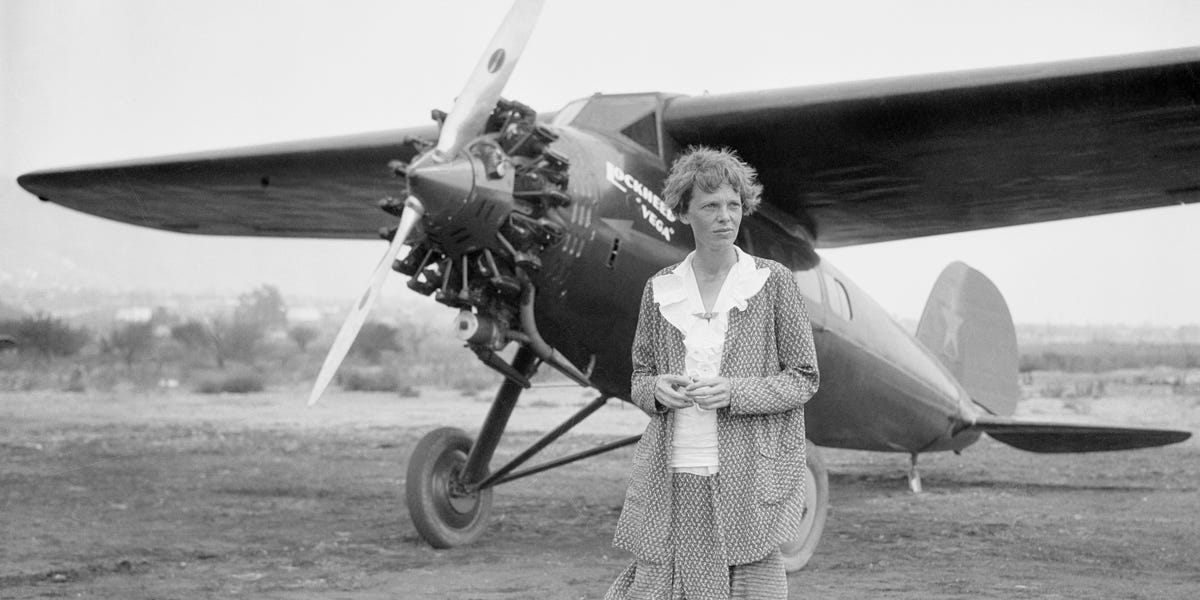
On July 2, 1937, Earhart and her navigator, Fred Noonan, were en route to Howland Island in the Pacific, about 1,700 miles southwest of Honolulu. They were six weeks and 20,000 miles deep into their trip around the world. By then, Earhart had already become the first woman to fly solo across the Atlantic and from Hawaii to the U.S. Mainland; her globetrotting trek would simply be the latest in a line of incredible accomplishments for the aviation pioneer.
But Earhart and Noonan never made it to Howland. Somewhere along the way, Earhart’s Lockheed Model 10-E Electra failed to reach the tiny, two-and-a-half-square-mile island as the plane became too heavy and short on fuel. No one knows exactly what happened next.
People have long searched for any sign of the Electra in a huge swath of the Pacific Ocean, and there’s an entire cottage industry of Earhart theories and hoaxes out there. Skeletons, crabs, firsthand accounts of of people who might be Earhart, and even suspected pieces of debris emerge and are considered in the public eye.
In 2024, Deep Sea Vision found a sonar image of a plane-shaped object roughly 100 miles from Howland Island. Later that year, the company said the target was not Earhart’s Electra, but rather, a natural rock formation. In 2025, Purdue Research Foundation and the Archaeological Legacy Institute announced a new Nikumaroro expedition built around an anomaly in the island’s lagoon, but Purdue later said the mission had been postponed to 2026.
For years, the buzziest developments in the search for Amelia Earhart included one particular piece of metal that enthusiast Ric Gillespie found in 1991 in a location 300 miles from Howland Island. (In global terms, and with our limited understanding of Earhart’s distressed flight, that’s really just a stone’s throw.)
In 2021, the corroded, ocean-battered piece of metal was promising enough that Penn State scientists wanted to inspect it with neutron beams. Daniel Beck, the manager of the engineering program for the Penn State Radiation Science and Engineering Center (RSEC), home to the Breazeale Nuclear Reactor, invited Gillespie and the famous piece of metal to the university. The plan was to use neutron radiography and neutron activation analysis to look for traces that ordinary visual inspection could miss.
Using neutron beams, which operate like an X-ray, Beck’s laboratory could look beneath the panel’s corroded surface for faint traces of paint, stamped marks, serial numbers, or other chemical clues that have worn off to the naked eye.
“A sample is set in front of the neutron beam, and a digital imaging plate is placed behind the sample,” Penn State said in a statement. “The neutron beam passes through the sample into the imaging plate, and an image is recorded and digitally scanned.”
The original plan included studying the panel’s edges for clues about how it had been removed, including whether one side carried marks consistent with an axe. But Penn State later followed up with something different: possible stamped or painted marks revealed through improved neutron imaging.
The follow-up took longer than expected. In November 2022, Penn State researchers completed a final analysis and reported possible markings that looked like “D24” and “335, or maybe 385,” but Penn State said the meaning of the marks are still unknown.
While the test didn’t solve Earhart’s disappearance, or even settle the panel’s origin, it did help Penn State refine its neutron-imaging facility, and researchers later applied the techniques to research in microplastics.
In 2024, Pop Mech reported that Gillespie had acknowledged that his panel belonged to a Douglas C-47 cargo plane; a TIGHAR forum post attributed the shift to a late-2023 rivet-pattern match on the upper wing surface of a C-47 at the New England Air Museum, and Gillespie accepted the conclusion.
Still, the nice thing about the Penn State collaboration is that even failing to find “proof” related to Earhart has scientific and cultural value; knowing something didn’t belong to her plane, for example, is helpful. That’s how an investigation is supposed to work: a clue survives testing, or it doesn’t.