Emergency room visits for tick bites have climbed to the highest levels for this time of year since 2017 in every U.S. region except the South Central states, the Centers for Disease Control and Prevention said in a recent warning.
The agency urged people to take steps now to avoid bites that can transmit illnesses including Lyme disease, Rocky Mountain spotted fever and alpha-gal syndrome in a release at the end of last month.
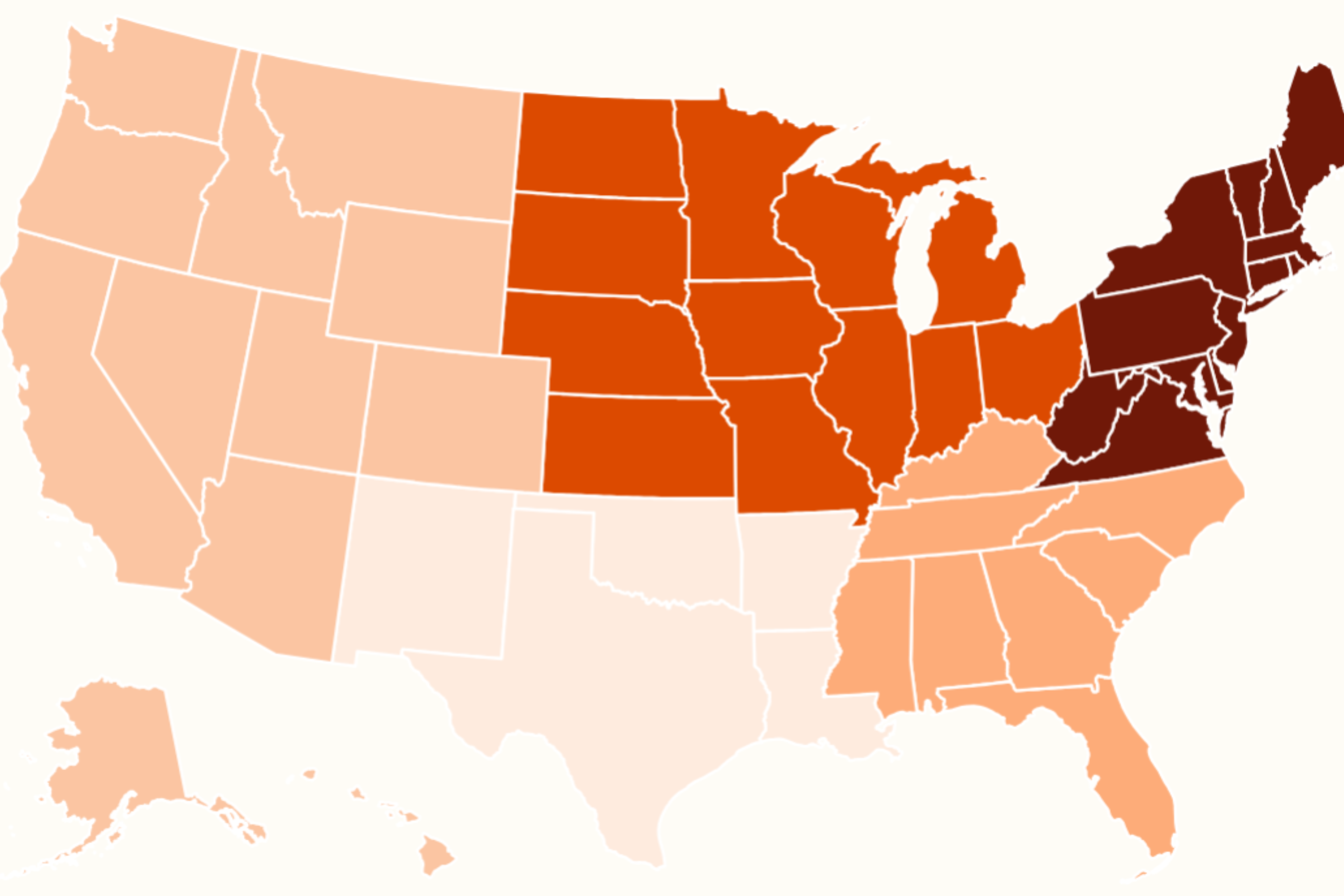
Newsweek has mapped out where the highest rates of emergency visits for tick bites have been this year, according to CDC data.
The Northeast region has recorded the highest rate of emergency department visits for tick bites in 2026, with 58 per 100,000 ED visits, followed by the Midwest at 40. The Southeast reported 21 visits per 100,000, while the West and South Central regions saw lower rates of 16 and seven, respectively.
What To Know
CDC’s Tick Bite Tracker shows weekly ER visit rates for tick bites running higher than usual for this point in spring in all regions except the South Central U.S., prompting a national call to use repellents, treat clothing with permethrin, check for ticks and remove attached ticks promptly.
The agency estimates 31 million people are bitten by ticks in the United States each year, and an estimated 476,000 patients are treated for Lyme disease annually.
CDC cautions that removing attached ticks within 24 hours can help prevent Lyme disease, and people who develop fever or rash after a bite should seek medical care.
Why Are Ticks So Bad This Year?
Experts say a combination of mild winters, wetter weather and booming wildlife populations has created ideal conditions for ticks to thrive this year.
Warmer temperatures have allowed more ticks to survive through winter and emerge earlier than usual, while a surge in white-footed mice—one of the primary hosts for blacklegged ticks—helped fuel population growth, according to PestWorld, the consumer education website of the National Pest Management Association.
Climate trends are also extending tick season in many parts of the country. Researchers say ticks remain active for longer periods when winters are less severe and humidity levels stay high, increasing the chances of human exposure. Areas in the Northeast and Midwest are expected to see some of the heaviest activity, particularly for blacklegged ticks that can carry Lyme disease.
How to Protect Yourself From Tick Bites
The CDC advises treating clothing and gear with 0.5 percent permethrin, using EPA-registered repellents such as DEET, picaridin, IR3535, oil of lemon eucalyptus, para-menthane-diol, or 2-undecanone and walking in the center of trails to avoid brush and tall grass.
After being outdoors, the CDC recommends checking clothes, gear and pets; drying clothes on high heat for at least 10 minutes; showering within two hours; and removing any attached ticks as soon as possible.
Where Ticks Live
The CDC has mapped out where different types of ticks live—but it stressed that the maps show general tick distributions and are not direct disease-risk maps, and also that populations may exist outside shaded areas.
American dog tick
The American dog tick (Dermacentor variabilis, D. similis): D. variabilis is widely distributed east of the Rockies and in limited areas west; D. similis is found west of the Rockies.
Blacklegged ticks
Blacklegged ticks (Ixodes scapularis): Widely distributed across the eastern United States.
Brown dog ticks
Brown dog ticks (Rhipicephalus sanguineus): Found worldwide; established in the U.S. and occurs in Hawaii.
Gulf Coast ticks
Gulf Coast ticks (Amblyomma maculatum): Primarily in the Southeast, with focal populations in the Northeast, Midwest and Southwest.
Lone star ticks
Lone star ticks (Amblyomma americanum): Widely distributed in the Northeast, South, and Midwest.
Rocky Mountain wood ticks
Rocky Mountain wood ticks (Dermacentor andersoni): Rocky Mountain states and southwestern Canada.
Western blacklegged ticks
Western blacklegged ticks (Ixodes pacificus): Along the Pacific Coast, especially northern California.
Related Articles