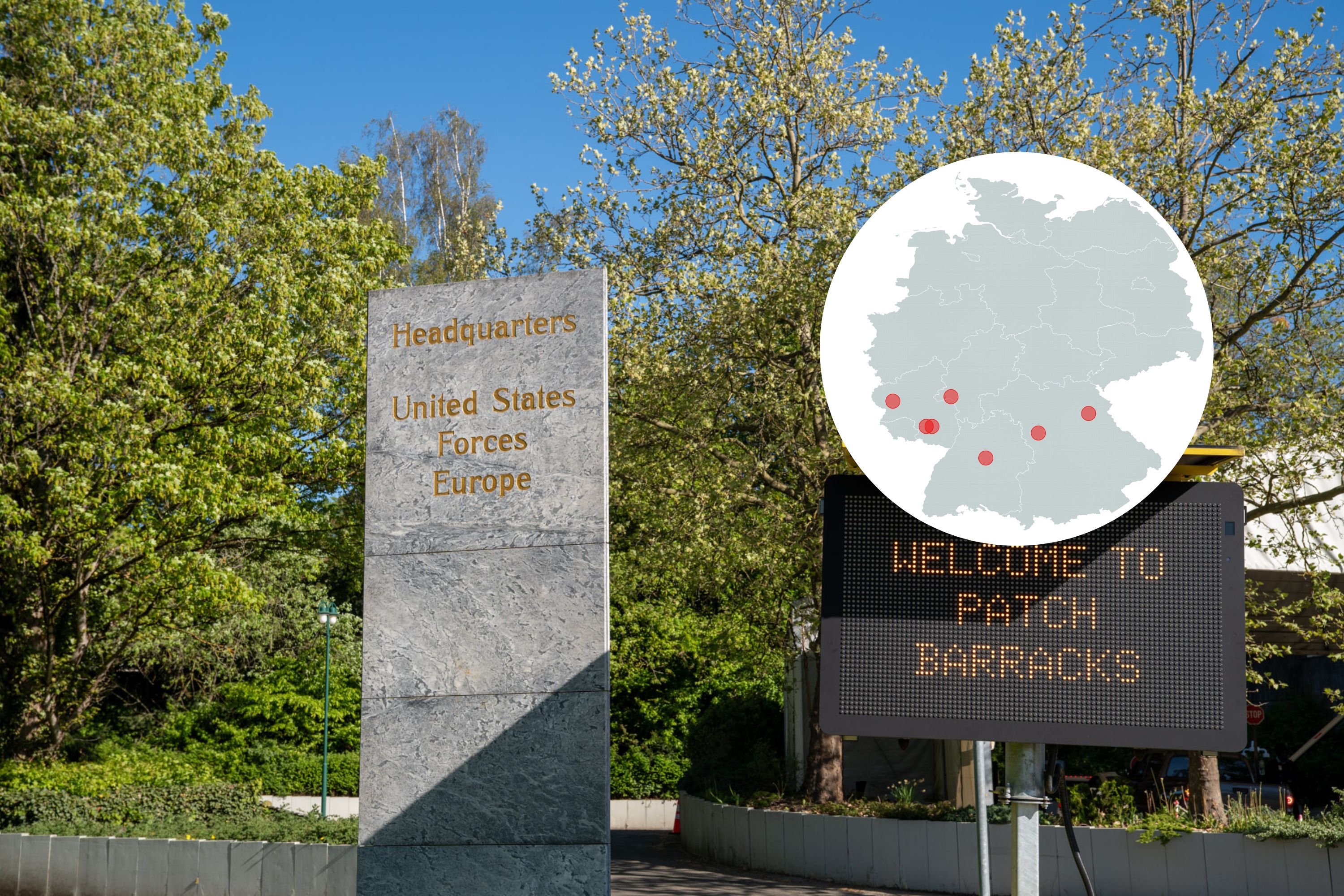
Newsweek has mapped U.S. military installations across Germany, after a plan from the Trump administration to withdraw roughly 5,000 personnel was announced, amid tensions over the Iran war.
A statement from the Pentagon obtained by Newsweek said about 5,000 personnel would be pulled from bases in Germany due to the country’s lack of support for the U.S. war in Iran and “follows a thorough review of the Department’s force posture in Europe and is in recognition of theater requirements and conditions on the ground. We expect the withdrawal to be completed over the next six to twelve months.”
German Federal Minister of Defense, Boris Pistorius, told Newsweek that the “presence of American troops in Europe, particularly in Germany, serves the interests of both the U.S. and ourselves”, citing collaboration in Ramstein, Grafenwöhr, Frankfurt.
Friedrich Merz, the German chancellor, had previously raised concerns about the administration’s approach to Iran and ongoing negotiations related to the Strait of Hormuz. Trump indicated he could cut American troops in Germany in response. Merz downplayed tensions on Wednesday, saying his relationship with Trump was “as good as ever.”
US Army Installations in Germany
As of December 31, the U.S. Defense Manpower Data Center (DMDC) reported 36,436 active‑duty U.S. service members assigned in Germany. That DMDC total included 22,727 Army, 12,628 Air Force, 435 Navy, 424 Marine Corps, 212 Space Force, and 10 Coast Guard.
U.S. Army Garrisons in Germany include USAG Ansbach, Bavaria, Rheinland-Pfalz, Stuttgart, and Wiesbaden.
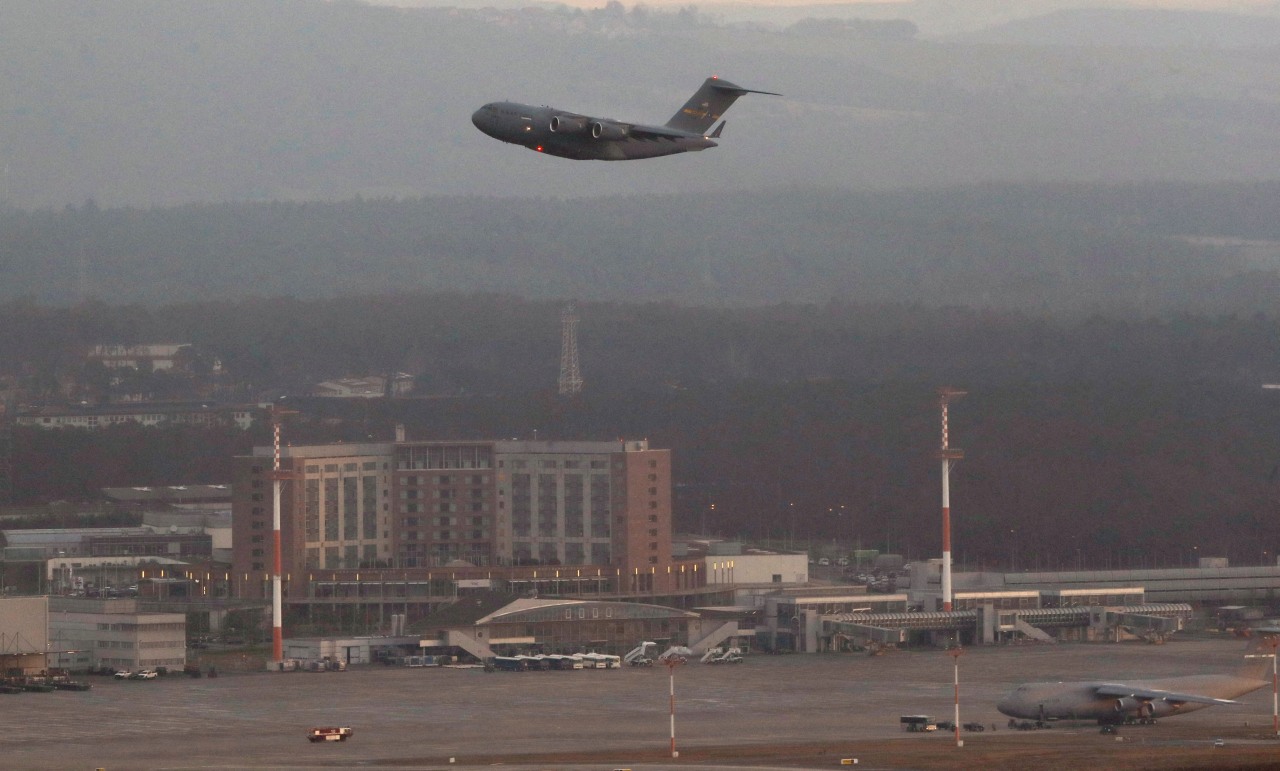
The country also hosts the Ramstein Air Base—headquarters for NATO’s air and space forces and key for coordinating missions such as air defense—as well as major multinational training facilities. Its bases, along with other U.S.-used facilities across Europe, also serve as operational hubs for U.S. missions in the Middle East, Newsweek reported previously.
USAG Ansbach
U.S. Army Garrison Ansbach is comprised of nine installations in Germany’s Franconia region: Barton Barracks, Bismarck Kaserne, Bleidorn Kaserne, Franken Kaserne, Katterbach Kaserne, Oberdachstetten Training Area, Shipton Kaserne, Storck Barracks and Urlas Kaserne.
It supports over 12,000 Soldiers, civilians, family members, and retirees in the Ansbach area according to the Army.
USAG Bavaria
The installation consists of two installations and two communities: Tower Barracks in Grafenwoehr, Rose Barracks in Vilseck, Hohenfels military community and Garmisch military community.
A recent official garrison fact sheet, using ASIP data as of July 2024, lists the active duty military personnel as about 16,240.
USAG Rheinland-Pfalz
USAG Rheinland-Pfalz covers communities in nine different areas: Kaiserslautern, Landstuhl, Baumholder, Sembach, Germersheim, Grünstadt, Miesau, Mannheim and Pirmasens, and the garrison is made up of 26 sites and installations.
According to officials it supports some 8,000 military personnel.
USAG Stuttgart
It is composed of five installations spread throughout the greater Stuttgart metropolitan area: Patch Barracks, Panzer Kaserne, Kelley and Robinson Barracks and Stuttgart Army Air Field.
The joint service military community is made up of over 20,000 U.S. military personnel, U.S. federal agencies, civilians, and family members, according to the Army.
USAG Wiesbaden
USAG Wiesbaden serves as the home of U.S. Army Europe and Africa Headquarters. It services 15 installations and housing areas in and around Wiesbaden, to include the Clay Kaserne, Dagger Complex in Darmstadt, a housing area and training site in Mainz and McCully Support Center in Wackernheim.
According to Military.com it serves some 56,000 soldiers, family members, retirees, and civilian employees.
‘Strengthening the European Pillar Within NATO’
Pistorius said that we “collaborate closely with our U.S. partners in Ramstein, Grafenwöhr, Frankfurt and elsewhere–to foster peace and security in Europe, to support Ukraine and to uphold joint deterrence. The U.S. presence in Europe also serve its own security interests in Africa and the Middle East.
“It was anticipated that the U.S. might withdraw troops from Europe, including Germany. Latest reports speak of 5,000 of a total of almost 40,000 US soldiers stationed in Germany,” he added.
“One thing is clear: if we are to remain transatlantic, we must strengthen the European pillar within NATO. In other words: as Europeans, we must take on more responsibility for our own security. Germany is on track. We are building up our defence: our armed forces are expanding, we are procuring equipment faster and in greater quantities, we are focusing on innovation, and we are building more infrastructure.”
Related Articles