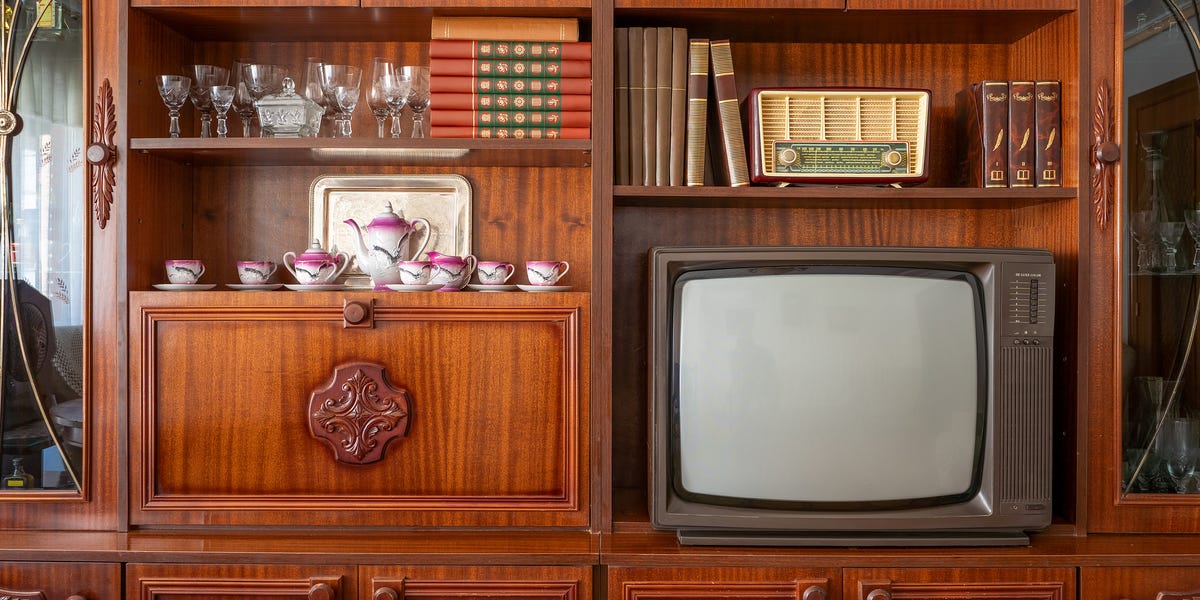
Interior design is always evolving; what feels new and inspiring one moment can feel tired not long after. Trends tend to reflect larger changes in culture, how we live, and even economic conditions. Still, some ideas don’t fade out gracefully. They linger past their prime and start to feel overdone.
While scrolling social media can spark inspiration, many of the looks we see have already hit their high point. Rather than repeating what’s been done over and over, it can be more fulfilling to try something original. And it’s worth noting that even seasoned designers sometimes get caught up in passing trends.
To help us avoid what’s worn out for good, we turned to six interior design experts to weigh in on the trends they’re ready to leave behind. From overused aesthetics to choices that never quite worked or simply haven’t aged well, these are the design elements they believe it’s time to move on from.
All-Over Midcentury Modern
Before you get miffed that midcentury modern furniture is on this list of regrets, just know that the two designers who said this both recognize that the midcentury modern (MCM) aesthetic has its place—as long as there are other elements mixed in.
"About a decade ago, the resurgence of MCM design was everywhere, and for our generation, it felt somewhat nostalgic as we grew up with our grandparents' homes being MCM time capsules," Mark Schubert of Phillip Harrison Interiors says. However, the design market was oversaturated by the look. Vintage pieces were everywhere, and then the aesthetic turned up in new collections by high-end and fast-furniture companies alike.
Designer Allison Handler agrees. "As my style and aesthetic have evolved, I really cringe at going all in on this style/trend a few years back." However, she says that she'd still include midcentury modern pieces as long as she was able to mix in other design styles and transitional pieces, like warmer fabrics and textures, to soften the lines.
Chevron-Patterned Upholstery
Anyone alive and coherent in the 2000s likely had a very close relationship with the chevron trend. Designer Amy Elbaum of AE Design sure remembers it.
"Looking back on the trend, I completely regret the style because chevron is such a bold pattern and usually includes high-contrast colors that make this type of fabric tire very quickly over time due to its intensity," she explains. She also points out that chevron fabric doesn't easily transition into other design styles because it's such a modern and dominant pattern.
Ikat Fabric
Mikel Welch says that a trend he "dove into with full enthusiasm was Ikat fabric." No vintage piece he found was safe from reupholstery in this bold, intricate fabric.
"Today, I can’t help but cringe when I see photos of that phase—those loud, busy designs don’t resonate with me anymore," he adds. With his more minimalist approach today, the ikat material simply feels too chaotic and less sophisticated than his preferred aesthetic now.
Buddha-Accented Furniture
Welch adds that another trend he got swept up in early in his design career was Buddha-inspired furniture, including a red Buddha chair he used in a model home project.
"Back then, I thought it was a cool, artistic statement, but I didn’t fully understand the cultural weight behind it," he explains. "Reflecting on it now, I realize how shallow that choice was, and I can’t help but laugh at how misguided it was." Welch is parting ways with that project, which he recognizes was probably for the best. "It was a design choice that lacked depth and respect, and I’ve learned so much from that experience."
Cheap Chrome Pieces
Designer Ali Budd looks back with regret on the phase in which she used low-quality chrome pieces in clients' homes. Rather than the items' general price, though, what bothers her most now is that they were typically knock-off versions of iconic furniture. "It’s not about trends—it’s about integrity," she says.
Over-the-Top Glam Furniture
Excessively glam furniture pieces have fallen out of favor with designer Kristy Turner of Melanie Turner Interiors. "It used to be the go-to for adding instant luxury, but now it feels a bit dated and heavy-handed," she says. The over-the-top shine and ornamentation aren't in style anymore—people are generally turning to more understated elegance instead, with sleek lines, natural materials, and a timeless vibe.
Jewel-Toned Velvet Sofas
It may be a bit controversial, but designer Alicia Held-Morris of Morris Lare Interior Design says that these once-beloved couches have not stood the test of time. "We love a good jewel-tone moment in the right interior, but not all velvets are created equal," she explains. "Some velvets, particularly cotton, crush easily, show wear rapidly, and don’t hide any stains." Those issues, combined with a rich tone, show every little bit of wear and tear.
Button-Tufted Chesterfields
While Held-Morris agrees that the Chesterfield sofa is beautiful and classic, the button-tufted versions are frankly a mess. "The button areas can get snagged easily, catch every little bit of dirt and dust, and aren’t that comfortable to sit on," she says. Rather than the button-tufted backs, she suggests a cushion instead, or putting a button-tufted version in a place that doesn't get a lot of traffic, like an entry hall or at the foot of a bed.