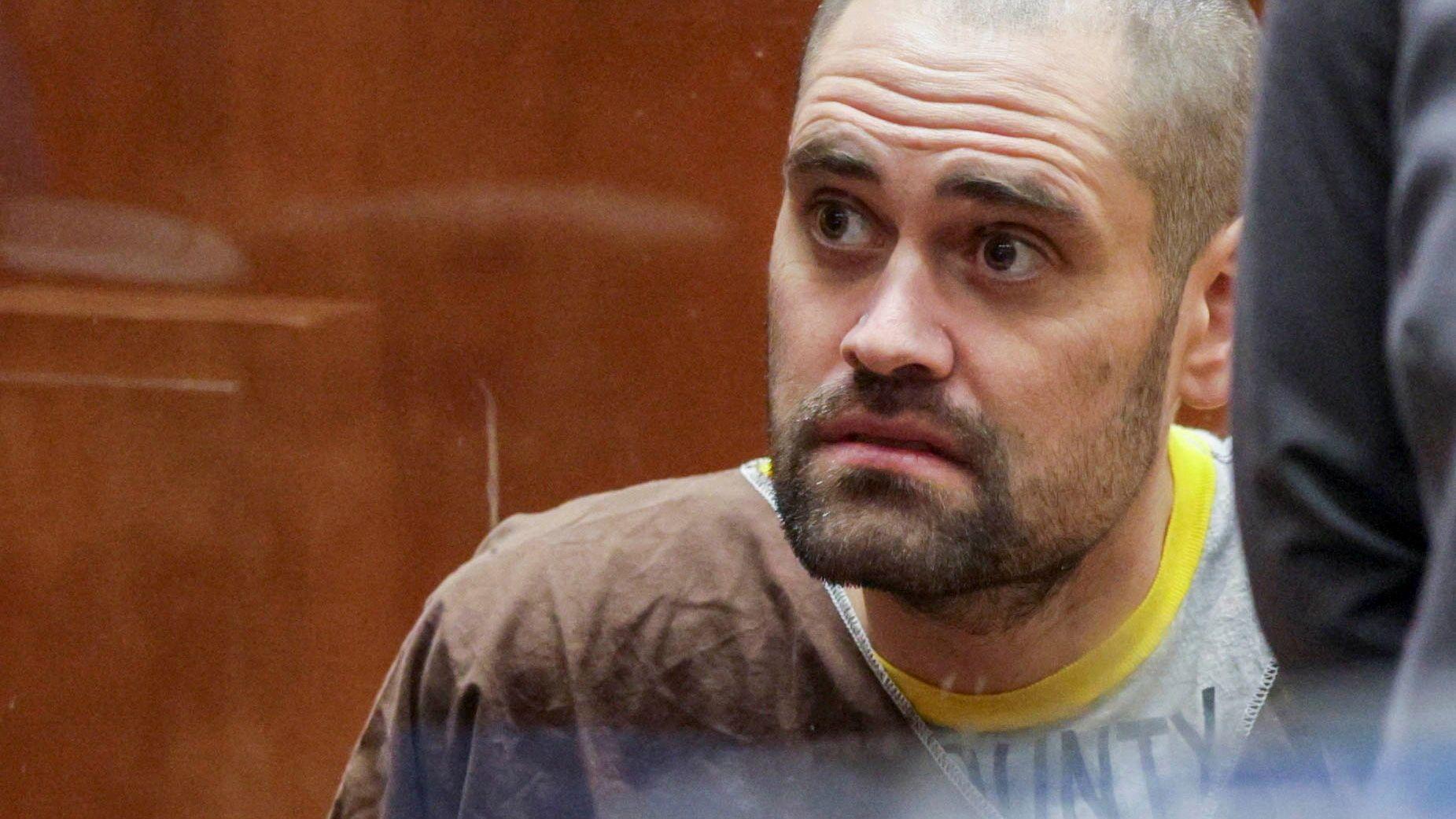
ALBANY - Corey Young was reaching for some ice cream when a police officer grabbed him from behind and threw him to the ground inside a convenience store in Winston-Salem, N.C.
It was November 1996 and Young, then 29, was especially bewildered by the encounter because two Albany detectives that he recognized, Tony Ryan and Kenneth P. Wilcox, were standing by watching as he was taken into custody. He was handcuffed and sitting on a curb outside the store when Wilcox walked over and began reading him a Miranda warning.
"I said, 'I know my rights, but why I'm being arrested? ,'" Young recalled in a recent interview. "He said, 'Those two cops you tried to kill are some friends of mine.' I said I never tried to kill no cops - I never tried to kill nobody."
Young, who had left Albany months earlier to be with his family in North Carolina, was apparently telling the truth. But it didn't matter.
He would spend the next two years in jail before an Albany County jury - after hearing evidence in a case that was built on coerced witness statements and questionable police testimony - convicted him in 1998 of attempting to murder two Albany police officers following a robbery.
Young was ultimately sentenced to 32 years to life in state prison. Last week, he became the fifth Black man in the past decade to have his conviction vacated in a case that was handled by Albany police in the 1990s. The four other men - all convicted of murder - had been serving sentences of up to life in prison. They were also released by a judge after similar doubts about the evidence that led to their convictions was uncovered.
The Albany County District Attorney's Office - under former District Attorney P. David Soares and current District Attorney Lee Kindlon - has stopped short of conceding that any of the men were innocent. Instead, the office, which aggressively investigated the wrongful convictions, agreed to their release from prison "in the interest of justice" due to what they determined was new evidence raising questions about the veracity of those convictions.
But civil rights attorneys who represent the five men contend they were all innocent.
'This is a story of corrupt cops'
The earliest case involved Carl H. Dukes and Lavell R. Jones, who were set free in 2016 after serving two decades in prison for the shooting death of a college student in February 1997. Both men said their alleged confessions had been coerced by Wilcox or other detectives, including Ronald Matos, and that police had made up a theory that they had killed the student to silence him as a witness in an earlier robbery.
The convictions of Dukes and Jones began to unravel when a violent felon who had left Albany after the murder confessed to the killing following his arrest for the fatal stabbing of his girlfriend in Ohio. In a chilling videotaped interview at an Ohio jail, Jeffrey Conrad told an Albany detective details of the 1997 killing. Police and prosecutors have acknowledged only the real killer should have known those details, including that the student was shot at close range in the left temple with a .25-caliber handgun.
In civil rights lawsuits that have been filed by the five men against the city of Albany over the past decade, their attorneys have leveled some of the blame for the injustices on the department's former leaders. They allege those officials, who for years resisted calls for interrogations to be recorded, had failed to control multiple former Albany detectives who have been accused of using coercion, threats and occasional physical violence to obtain falsified statements from witnesses - or to secure purported confessions from their suspects.
Joshua D. Kelner, an attorney whose Manhattan firm represents Young and two other men whose convictions were vacated, said that "everybody up and down the chain is complicit in what happened."
"This is a story of corrupt cops who are willing to bend the rules, falsify witness statements and coerce confessions," Kelner said. "But there's also a lack of oversight from the Albany Police Department, which was content to give those cops free rein so long as the results were convenient, and from the district attorney's office, which was content to take the convictions that rested on these statements."
The five cases in which the men's convictions for murder or attempted murder have been vacated are not representative of the breadth of the convictions that have raised concerns about the Albany Police Department's tactics during that era, when gun violence was engulfing the city and there was perceived public pressure on law enforcement officials to stem the bloodshed and make arrests.
Questions about the department's interrogation methods began to surface in 1999, when the Times Union began investigating why Wilcox, a once-revered and decorated detective, had faced no apparent scrutiny after he obtained a detailed, typewritten murder confession from a 19-year-old Albany man who was accused of killing and robbing a drug dealer.
That suspect, Kevin Cherry, stood trial for murder but a jury deadlocked on his innocence. On the eve of his second trial, Cherry was set free when two other men were identified as the real suspects after a young woman who had been arrested for marijuana possession told police she had been their getaway driver. Albany police officials held a news conference at the former police headquarters on Morton Avenue, touting their work in identifying and arresting the men responsible for the homicide. But they said little about how their department had obtained what turned out to be a false confession from Cherry, who was not offered an apology.
"For all the world, it looked at the time like Kevin Cherry was guilty of murder," then-Assistant District Attorney Cheryl F. Coleman said after she asked a judge to dismiss the charges against Cherry that year. "I think we all learned a lesson. We want to look very carefully at the work we do."
That same year, Wilcox - who was often left alone in interrogation rooms with suspects - had obtained another signed confession from Anthony F. Taylor, who had been accused by the detective of admitting to beating his landlord to death in an Arbor Hill apartment.
Taylor's defense attorney, Peter A. Lynch, a longtime public defender in Albany who would later become a judge, recently recounted a turning point in the criminal trial when prosecutors submitted a fingerprint card bearing his 21-year-old client's signature. It didn't match the signature on the typewritten confession. Lynch, who left the bench in January and returned to private law practice, said he proved to the jury that the signature on the confession had been written by someone who wrote with the opposite hand as his client's.
"This thing was forged," Lynch said. "I mean, think about it: forging somebody's signature on a murder confession. … I never had a case where I was able to prove that the signature on the confession was forged. And, of course, the witness to the statement was Wilcox."
A blood trail to nowhere
Seven months before Young's arrest in North Carolina 30 years ago, Ryan and Wilcox had revived the department's stalled investigation into a February 1995 shooting in which two police officers exchanged gunfire in a West Hill park with one of two suspects who had just robbed a pair of young men at gunpoint. The police officers chased the suspect into a snow-covered playground that night as the gunman turned and fired several shots at the officers.
Officer Christopher Boardman, who later left the department to become a Drug Enforcement Administration agent, returned fire and struck the fleeing suspect with a bullet. The injured man, who was wearing a hoodie, fell to the ground in the snow and witnesses saw him get up while holding his upper leg area in apparent pain. He ran west on Second Street and vanished in the darkness, but left a clue for police in the form of a blood trail from his bullet wound.
Three days after the shooting, with no solid leads emerging, Boardman was summoned to the department's detective office and shown a photo array of potential suspects. He identified a man who was then taken into custody. But that man was let go when detectives quickly excluded him as a suspect because his blood type didn't match the shooter's - and he had a solid alibi.
In the ensuing months, other potential suspects were ruled out when their blood type didn't match the blood left by the man who'd been shot by the police officer. The investigation began to languish.
By June 1996 - more than 15 months after the shooting in the West Hill park - Wilcox and Ryan continued interviewing potential witnesses in the case, including some who identified suspects who would be ruled out. That same month, they re-interviewed a man who was in the custody of the DEA on a drug charge, but who had previously said he had no knowledge of who committed the robbery or fired at police that night.
As he was interviewed by Ryan and Wilcox, the man suddenly "agreed to give a statement" and claimed that Young and two other men had confessed to the robbery the day after it occurred. But the following year - with Young in custody and charged with attempted murder - questions about that man's account emerged when Wilcox and Ryan obtained a statement from another man who claimed that Young had told him he had committed the robbery with the man who had been in DEA custody.
The inconsistencies mounted as other alleged witnesses changed their initial accounts and began implicating Young. In September 1997, a man who lived in an apartment above the small park where the shooting took place signed a statement taken by Wilcox and Ryan implicating Young and another man. His statement, which contradicted an earlier one he gave a detective, claimed they had come to his apartment and asked to borrow a hooded sweatshirt because they were "going to stick somebody up."
That man would later recant his statement and say he had been coerced by Ryan and Wilcox. Two other key witnesses in the case would later say their statements implicating Young had been coerced as the detectives made threats to them or their families.
With Young now in custody for more than a year, the two detectives obtained three more statements over the next five months, including from a jail inmate who allegedly claimed that Young had confessed to the shooting and admitted taking a bullet that left the trail of his blood. The inmate claimed that Young worried that police would use DNA testing to confirm it was his blood.
"None of these witnesses had anything to say about Young before Wilcox and Ryan were involved," Kelner, Young's attorney, wrote in a court filing as part of the application to have his conviction overturned. "A grand total of zero statements implicating Young were given to any of the other officers (initially) investigating the shooting."
'I felt anger'
At Young's trial, prosecutors opted not to call multiple witnesses who had signed statements implicating him, in part because those alleged witnesses all told police that Young said he had been shot and left the blood trail.
The problem: Young's blood type didn't match the unknown shooter's.
"The grand jury indicted Corey Young upon the theory that Corey was walking around Albany bragging he'd been in a shootout with police and had been shot yet escaped," his public defender wrote in a motion asking the judge to dismiss the charges. "The grand jury accepted evidence that a blood trail followed the shooter's getaway … and that Corey Young admitted being shot. This grand jury theory is irreconcilable with the subsequent DNA results."
Despite that apparently glaring hole in the prosecution's case, former Albany County Court Judge Thomas A. Breslin denied the motion and the case went to trial.
Young, now 56, said that it had been difficult during his trial to watch the prosecution's remaining witnesses take the stand and claim he had confessed to crimes he hadn't committed. Prior to the jury convicting him of armed robbery and attempted murder, he had only three other brushes with police that were all minor offenses - driving without a license, loitering and misdemeanor drug possession.
In prison, he said, "It was a lot of years."
"I felt anger, but after a while, just - I don't know if everybody believe in God, but I believe in God," Young said. "I mean, he put me in (prison) for a reason. We finally found the reason to get me out. I just prayed every day. I prayed every day. Finally, things started happening for me."
'Maybe I should have seen it'
Wilcox died in April 2006 in a one-car crash in which police officials said he was on-duty. At the time of his death, he and his longtime business partner, former Albany Urban League Executive Director Aaron Dare, were the focus of federal and state investigations involving years of systematic mortgage fraud that had fueled their lavish lifestyles. Wilcox was posthumously implicated in the mortgage crimes; Dare was later convicted of multiple state and federal charges and spent years in prison.
Kelner said that Wilcox has always been a focus of alleged police corruption in Albany, but he believes others, including Ryan, were just as culpable.
"Everybody talks about Wilcox, but in at least four of these cases Ryan is as much or even, in one case, more in it than Wilcox," Kelner said, referring to Ryan's role in the arrest and conviction of Lavell Jones. "And he still has this very significant state job. And while the dots have been connected, in the consciousness with Wilcox, Ryan has skated in a way."
Ryan rose through the ranks and eventually became a commander before retiring from the department in 2013. He is chief of investigations for the state Justice Center for the Protection of People with Special Needs. He declined to comment for this story.
A former top-ranking official in the department during the 1990s, who asked to remain anonymous due to pending litigation over the vacated convictions, said the alleged police misconduct "certainly wasn't something that was encouraged or condoned."
"People in the department and people outside the department trusted that (Wilcox) had integrity and that he was an honest person and clearly that was misdirected," the person said. "These individuals who lost their lives, or those years of their lives, and their interaction with their families and friends, that's something that no monetary settlement is going to undo."
Coleman, who prosecuted Young and handled some of the other cases that have resulted in murder convictions being vacated, had been regarded as one of the top prosecutors in the Albany County District Attorney's Office from 1986 until 2000, when she left to start her own practice as a criminal defense attorney.
She said she had been close friends with Wilcox and attended Ryan's wedding. But looking back, she has deep regrets about what happened.
"I think I can speak for all of the (district attorneys) back then, including myself in the 1990s, in that we were pretty unenlightened - that if somebody confessed they were guilty, and there was no way you could confess unless you were guilty."
Coleman said she approached Kindlon during his campaign for district attorney two years ago and asked him to review Young's conviction. (Kindlon's office confirmed that outreach.)
"Never in a million years did it occur to me that these confessions were either forced or made up," Coleman said, recalling that Ryan, who could "cry on demand" while testifying, was an influential witness in front of juries.
She said that the fact the department resisted having cameras or other recording devices installed in its interrogation rooms or police cars 30 years ago should have been a red flag. In 1999, after Cherry was released from custody and had his murder charge dropped, Coleman recalled turning to God for insight.
"I remember praying at night after the Kevin Cherry thing … and I remember saying, 'I think I know what you're trying to tell me, but I don't know if I'm ready to hear that yet, so help me hear what you're trying to tell me,'" she said. "It was tough. … Different things stick in my mind when you realize, when you start thinking backwards and you think … maybe I should have seen it then."
Related Reading
These colleges and big nonprofits likely made illegal campaign donations
Supreme Court declines to hear case on NY's COVID-19 nursing home deaths
Hochul pushes NYC tax on luxury second homes to raise revenue
Subscribe
There’s more to Albany with the Times Union. Subscribe today for just 25¢.Read this story on timesunion.com