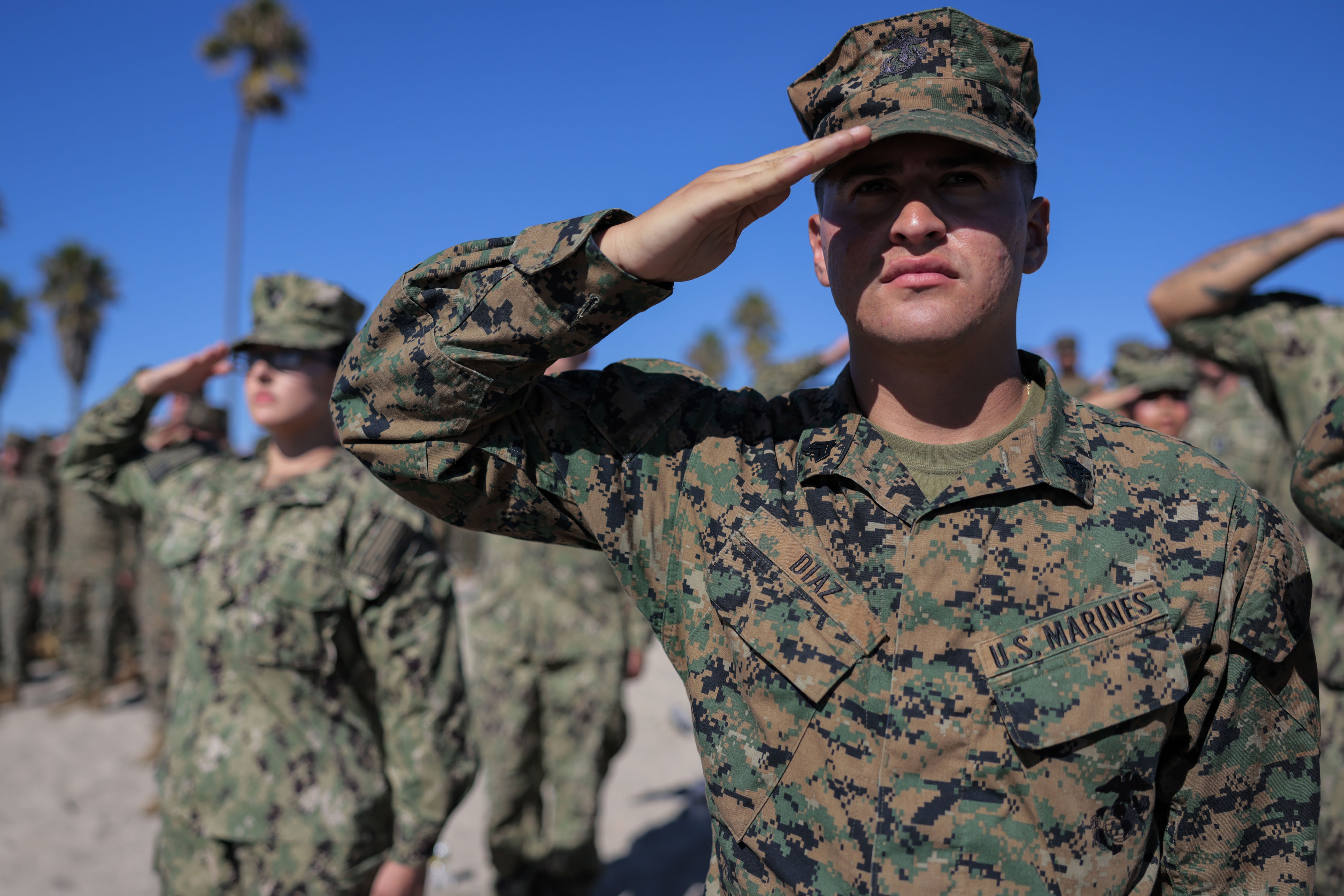
The U.S. Marine Corps has issued a new grooming policy requiring all Marines, including those with medical conditions, to conform to established shaving standards within 12 months, or face the possibility of “administrative separation,” which is a process used by the U.S. military to discharge a service member before their contract ends because they no longer meet required standards, regardless of their performance.
The directive, issued via a Marine Administrative Message (MARADMIN), signed on April 24, represents a shift toward stricter enforcement of grooming and uniform standards, even in cases involving medical conditions.
What Has Changed
The updated MARADMIN, titled “Uniform and Grooming Standards for Medical Conditions,” scraps long‑term grooming waivers and replaces them with a strict one‑year cap.
Until now, according to the Military Times, some Marines were allowed to hold grooming exemptions for extended periods due to certain medical conditions. Under the updated policy, those exemptions are now strictly temporary.
Commanders are now required to conduct formal counseling at the six‑month mark for Marines who remain unable to comply. At 12 months, commanders must evaluate whether the Marine can continue serving or whether separation proceedings should begin, if the condition is not a qualifying disability and is judged to impact good order and discipline.
Before any separation can proceed, commanders must obtain a medical recommendation endorsed by a Medical Evaluation Board Convening Authority, followed by final documented counseling.
If separation occurs, it will be categorized as “Condition Not a Disability” for enlisted Marines or “Condition Not Constituting a Physical Disability” for officers.
Why The Policy Was Implemented
The change follows repeated directives from Defense Secretary Pete Hegseth, who has pushed for tighter enforcement of grooming standards and a uniformly clean‑shaven force—including a “no beardos” policy—across the military. In a previous memo, Hegseth said, “This is critical not only for defense against chemical, biological, radiological, and nuclear (CBRN) threats, but also for firefighting, disaster relief, and other hazardous mission sets where respiratory protection may be required, often on short notice.”
Hegseth has long-since argued that consistent appearance standards are essential for discipline, cohesion, and readiness. In a memo published in August 2025 that outlined grooming standards for facial hair, Chief Pentagon Spokesman Sean Parnell said: “The Department must remain vigilant in maintaining the grooming standards which underpin the warrior ethos.”
In the MARADMIN, the Marine Corps said the new timeline gives leaders time to update training, counseling, and educational materials, while ensuring affected Marines understand the consequences of continued noncompliance.
The Marine Corps implemented the 12‑month timeline to give both service members and commanders sufficient time to work toward compliance while still allowing access to medical treatments, such as laser hair removal, which remains covered by military healthcare.
What Happens If the Standards Are Not Met
Noncompliant Marines may face administrative separation once the 12-month period ends. Commanders have the authority to initiate separation proceedings if they determine the condition:
- Has not improved despite treatment,
- Is not classified legally as a disability, and
- Is detrimental to the unit’s good order and discipline
What This Means for Military Personnel
Marines with Chronic Conditions: Those diagnosed with PFB (pseudofolliculitis barbae) or similar skin disorders now face a definitive deadline. Their careers may hinge on effective treatment or obtaining a medical disability classification.
Command Leadership: Commanders are now responsible for monitoring waiver recipients at two critical points (six and 12 months), ensuring awareness of their status, and documenting compliance or noncompliance.
Marine Corps Culture: Proponents assert the change reinforces the Marine Corps’ core values of uniformity, professionalism, and pride in appearance. They maintain that the 12-month waiver period balances compassion for medical needs with accountability and consistency.
In the Broader Context
This new policy shows a clear turning point in the Corps’ approach to grooming and uniform policies. As leaders begin conducting reviews and documenting compliance, its real-world effects—on service members’ careers, unit cohesion, and the Corps’ culture—will emerge in the months ahead.
Why the Policy Could Raise Concerns
The updated grooming standards have raised concerns among some service members, veterans, and military policy observers about equity, medical risk, and retention, particularly as the changes affect Marines with chronic skin conditions and limit commanders’ discretion in separation decisions.
PFB Disproportionately Affects Black and Asian Men
A central concern involves pseudofolliculitis barbae, a razor‑bump condition caused by shaving. According to the Journal of the American Board of Family Medicine, PFB disproportionately affects men with tightly curled hair, particularly Black men, with prevalence estimates ranging from 45 to more than 80 percent, and also occurs at elevated rates among Asian and other men with curly hair.
The medical journal states that the best way to treat PFB is to stop close shaving, placing affected Marines in direct conflict with the new strict clean‑shaven requirements.
Risks and Limits of Laser Hair Removal
The Marine Corps policy encourages affected Marines to pursue medical treatment during the 12‑month window, including laser hair removal, which is covered by military healthcare. However, dermatologists note that laser treatment is not universally effective and carries recognized risks, particularly for individuals with darker skin tones.
Dermatology guidance from the American Osteopathic College of Dermatology, cited by Task & Purpose, identifies potential side effects, including permanent scarring, burns, and pigmentation changes, especially when higher laser settings are used or treatment is performed on facial areas. These risks may limit treatment options for some Marines and complicate compliance within the required time frame.
Performance Is Not a Listed Factor in Separation Decisions
Another major point of controversy is that job performance and service record are not listed as deciding factors in separation evaluations under the MARADMIN.
Military Times notes that Marines who are otherwise performing well may still face administrative separation if their medical condition does not improve within 12 months and is not classified as a disability.
The policy directs commanders to consider whether a condition affects “good order and discipline,” but does not require consideration of merit, readiness, or mission performance when initiating separation proceedings.
Related Articles