President Trump announced a sudden end to his operation to break Iran’s hold on the Strait of Hormuz on Tuesday night, hours before reports emerged that Washington and Tehran are closing in on a framework of a deal to end the war.
The president again threatened to resume bombing if the deal falls through, but Trump’s moves underline his desire for an off-ramp as economic pain and political pressure mount.
According to Axios, the latest version of a one-page memorandum of understanding between the two sides would create a 30-day window to negotiate a more detailed agreement to reopen the Strait of Hormuz, throttle Iran’s nuclear program and lift U.S. sanctions. Both sides would ease their blockades on shipping through the strait during that period.
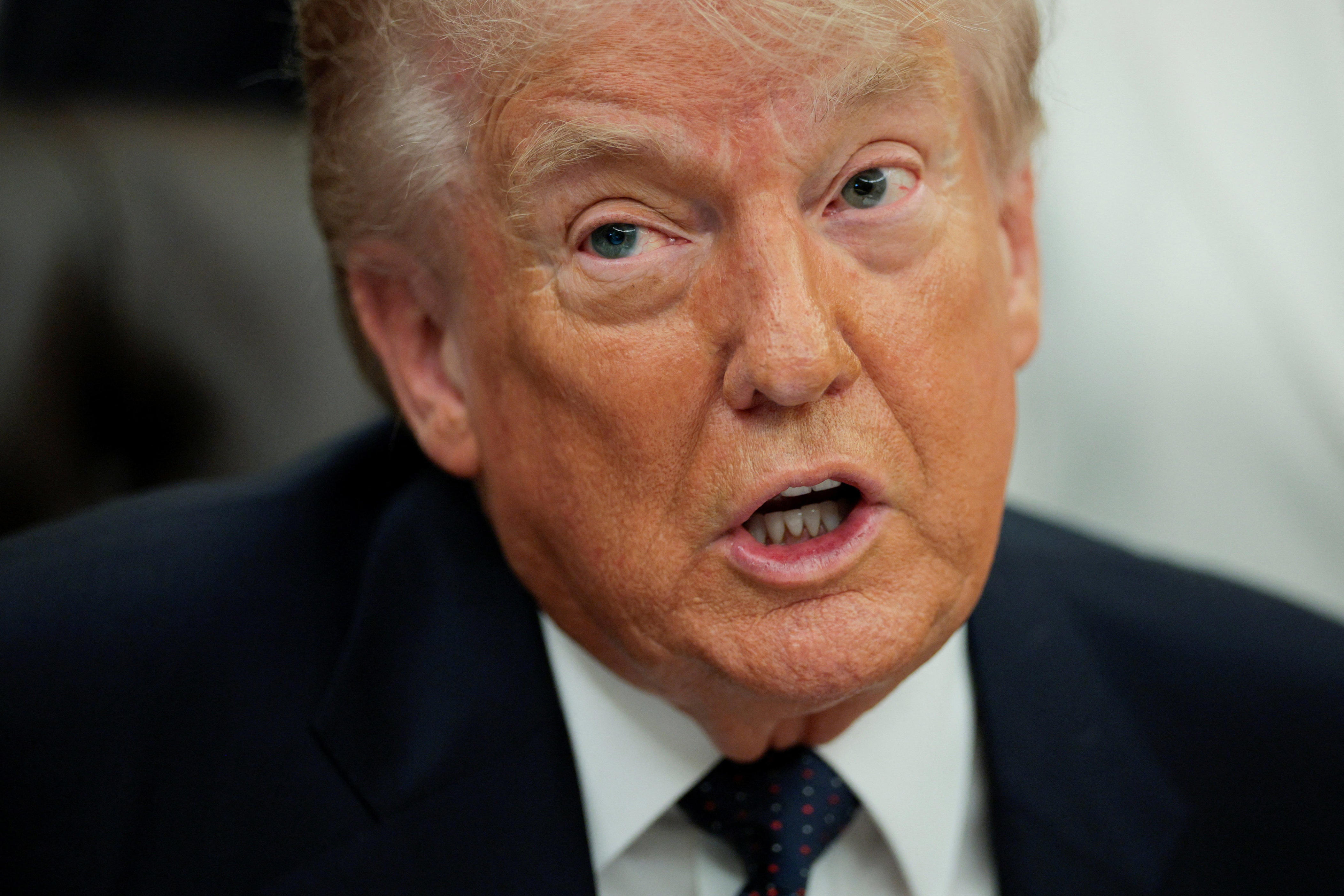
“Assuming Iran agrees to give what has been agreed to, which is, perhaps, a big assumption, the already legendary Epic Fury will be at an end, and the highly effective Blockade will allow the Hormuz Strait to be OPEN TO ALL, including Iran,” Trump wrote in a social media post on Wednesday morning.
“If they don’t agree, the bombing starts, and it will be, sadly, at a much higher level and intensity than it was before.”
Hein Goemans, a political science professor at the University of Rochester who specializes in war termination, was skeptical that either side was willing to make the necessary concessions to reach a long-term peace deal.
And whatever commitments Iran makes to reopen the Strait of Hormuz, all sides now recognize its military can shut it down again, wreaking havoc on global energy markets.
“They can say whatever they want about the Strait of Hormuz, but that ship has sailed. It is, surprisingly, a diplomatic victory for Iran — a military victory for the United States, but a diplomatic victory for Iran,” he said.
On the nuclear negotiations, a one-page memo will leave crucial details to be decided.
“At minimum, the Iranians are thinking no deal with America is credible. America can change its mind overnight and then start bombing us even in the middle of talking. So any Iranian leader will know that. So they will, they will hedge on some form,” Goemans said.
The contours of the nuclear agreement, according to officials who spoke to Axios, closely resemble the deal initially hammered out by the Obama administration that Trump scrapped during his first term, with a 10-15 year moratorium on uranium enrichment.
Trump is likely to face significant pushback from Israel and Iran hawks within his own party if he drops sanctions on Iran or unfreezes its assets in exchange for reopening the strait without firm commitments on ending its nuclear enrichment and handing over its cache of weapons-grade enriched uranium.
“You can’t use the same leverage twice. Once you spend it on one account, you can’t spend it on another one,” Goemans said.
Talks also could reach no consensus or fall apart at the last minute, as they have on several occasions in the past few months.
After gathering for a marathon 21 hours of discussions in Islamabad, Pakistan, last month, negotiators from Washington and Tehran failed to come to an agreement.
Vice President Vance, who led the American team, said significant differences remained in the quest for a peace deal. Among the biggest sticking points is the U.S. demand that Iran give up its nuclear program.
Roughly a week later, Vance’s planned trip to Islamabad was delayed before being postponed indefinitely after Iran refused to participate in the next round of peace talks.
Should that happen again, the president appears prepared to restart attacks on Tehran. Axios last week reported that Joint Chiefs of Staff Chair Gen. Dan Caine and U.S. Central Command head Adm. Brad Cooper briefed Trump on options for a “short and powerful” wave of strikes against Iran.
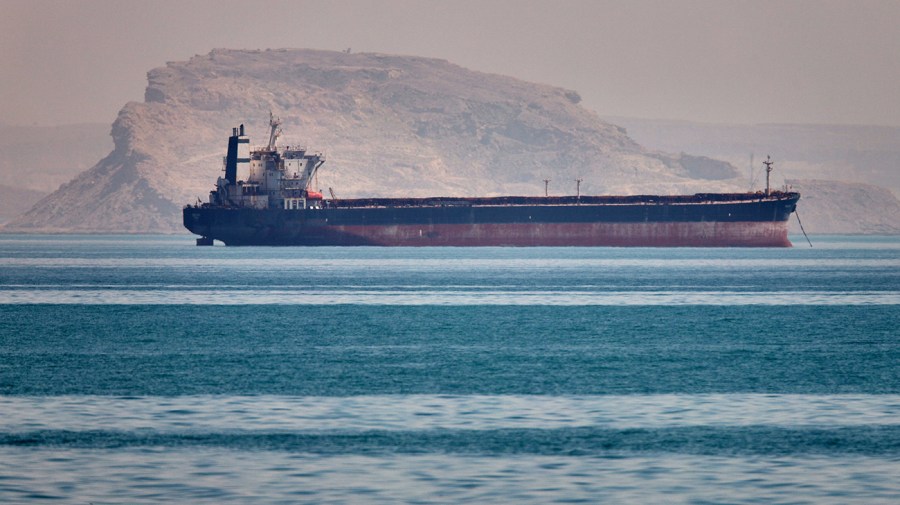
But the apparent movement toward talks was enough to prompt Trump to declare “Project Freedom” — the U.S. effort to guide hundreds of stranded vessels out of the Strait of Hormuz — on hold while Washington looks to finalize a deal with Tehran.
The president announced the decision in a social media post Tuesday evening, saying he based the move “on the request of Pakistan and other Countries, the tremendous Military Success that we have had during the Campaign against the Country of Iran and, additionally, the fact that Great Progress has been made toward a Complete and Final Agreement with Representatives of Iran.”
Both the U.S. and Iran are under mounting economic pressure to strike a deal. Gas prices in the U.S. are at their highest point in years, while airlines are facing looming jet fuel shortages and farmers are bracing for major disruptions in fertilizer supply.
Across the U.S., gas prices were at an average of $4.53 on Wednesday, up by more than a dollar from the average of $3.15 this time last year, according to AAA.
While Iran has insisted it can outlast America in the standoff over the strait, its population is experiencing soaring inflation and poverty, exacerbated by the blockade on its energy exports, a key financial lifeline for the regime.
China has also played a quiet but important role in pushing to end hostilities.
During a meeting between Iranian Foreign Minister Abbas Araghchi and his Chinese counterpart, Wang Yi, in Beijing on Wednesday, Beijing said ending the war was an urgent matter, according to a readout in the state news agency Xinhua.
“China believes that a comprehensive cessation of hostilities should not be delayed, any reigniting of hostilities is even less desirable, and sticking to negotiations is particularly important,” Wang said in the talks, according to Xinhua.
Trump also is preparing for a high-stakes meeting with Chinese leader Xi Jinping later this month.
“Xi is an important interlocutor in this, and Trump will want to show two things,” Goemans said. “First of all, that he’s a tough guy; he can get things delivered. And on the second, he will have to pay some due to Xi’s concern.”
Copyright 2026 Nexstar Media, Inc. All rights reserved. This material may not be published, broadcast, rewritten, or redistributed.For the latest news, weather, sports, and streaming video, head to The Hill.