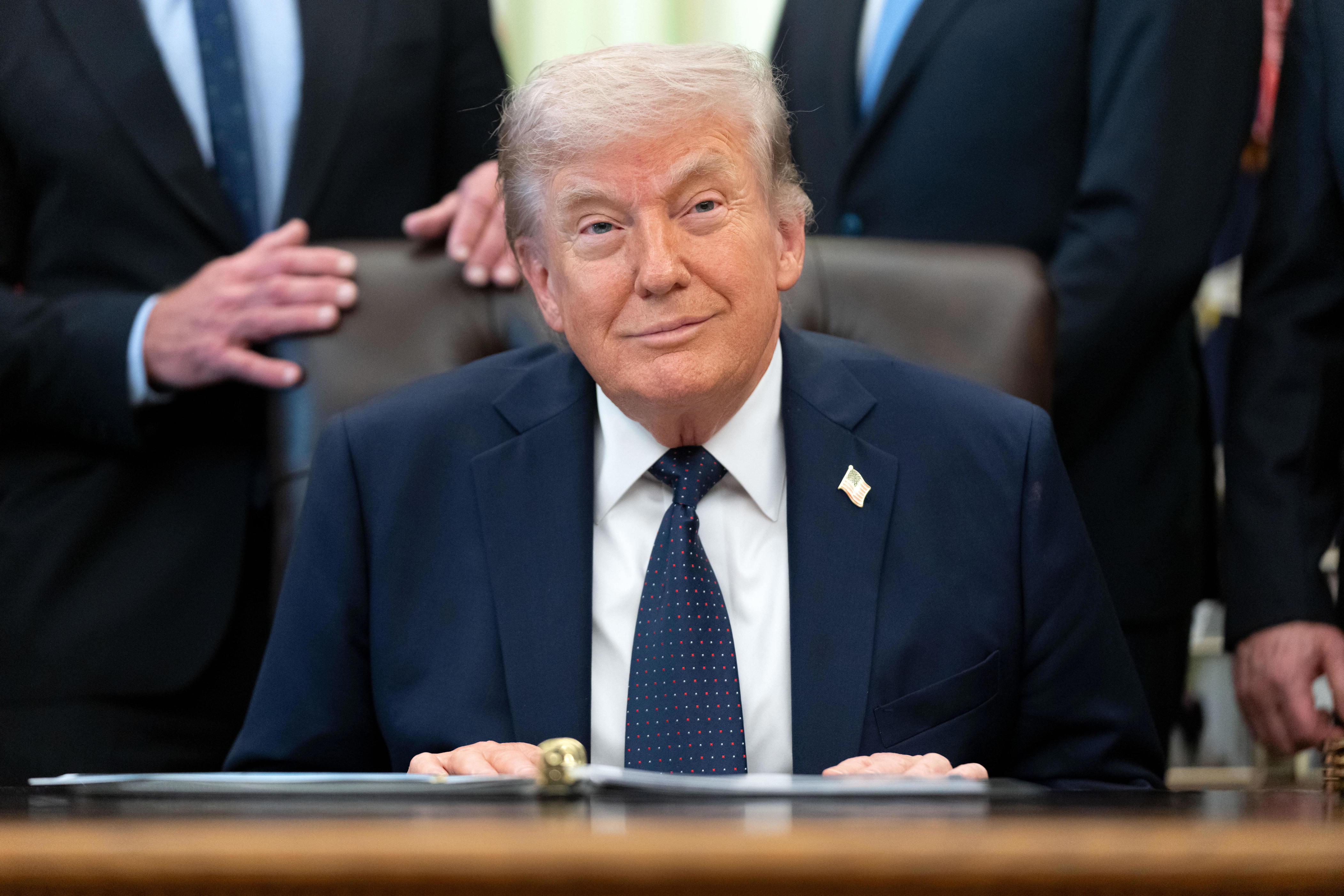
Roughly one in five voters who supported Donald Trump in the 2024 presidential election now say they regret their decision, according to new polling from Navigator Research released Thursday.
The national survey found that 20 percent of Americans who voted for Trump two years ago report feeling remorse.
Why It Matters
The findings may carry implications for future voter turnout and engagement.
Trump regretters are significantly younger and more likely to describe themselves as politically moderate, which are groups that tend to be less reliable voters in midterm elections. However, the poll found that nearly two‑thirds of regretful Trump voters believe the country is on the wrong track, a stark contrast with Trump voters who do not regret their decision.
What To Know
The survey shows that voters who regret backing Trump skew significantly younger than those who say they would make the same choice again. Nearly six in 10 Trump regretters are under age 45, including 23 percent younger than 30. By contrast, two‑thirds of Trump voters who do not regret their vote are over 45, with one‑third 65 or older, Navigator found.
Aside from age, regretful and non‑regretful Trump voters are broadly similar across gender, race, income, religion and education.
Trump voters who now regret their decision are more ideologically moderate than other members of his 2024 coalition. A plurality of regretters, 43 percent, describe themselves as politically moderate, compared with 27 percent of Trump voters who do not express regret. Fewer regretters identify as conservative, with 41 percent calling themselves “somewhat” or “very” conservative, compared with 68 percent among non‑regretters.
Their views of the Republican Party are mixed. Navigator found that 52 percent of Trump regretters view the GOP favorably, while 43 percent view it unfavorably. That’s a much narrower margin than among Trump voters who do not regret their vote, 88 percent of whom have a favorable view of the party.
“There are a litany of things that are right in front of our faces, but there just hasn’t been meaningful movement forward on any of them,” one regretter said in a Navigator focus group.
Another said: “The hatred, just the going after immigrants and just the way that he’s attacking them. I didn’t think he would go this route, not because I thought he was a good person, but because I didn’t think he would think it was personally good for him.”
At the same time, Trump regretters remain overwhelmingly negative toward Democrats. Two‑thirds hold an unfavorable view of the Democratic Party, compared with 30 percent who view it favorably, the survey found.
Nearly two‑thirds, or 64 percent, say the United States is on the “wrong track,” while just 33 percent believe it is headed in the right direction. Those numbers are sharply reversed among Trump voters who do not regret their vote, with 70 percent saying the country is on the right path and 22 percent saying it is on the wrong one.
In response to questioning on voters who may have regretted their decisions and concerns about tariffs, Trump said “Everybody’s gonna be just fine,” in a recent ABC News interview.
“We had the worst inflation probably in the history of our country. People say 48 years, probably in the history of our country, we had the worst inflation,” Trump said. “And people were dying over the inflation. You know that. Now the grocery prices are coming down. The energy prices are coming down. Gasoline’s coming down. It’s all heading in the right direction.”
Trump’s tariff decisions could play a major role in the sizable voter regret as economic issues appear to be a major factor in voter dissatisfaction. Navigator found that Trump regretters are pessimistic about the economy and express negative views of several key administration priorities, including tariffs and U.S. Immigration and Customs Enforcement (ICE).
A majority of regretters said the economy is either “poor” or “not so good” (64 percent), compared to only 35 percent who rated the economy positively. Views of tariffs for regretters were underwater by 31 points, and regretters also viewed ICE negatively by 24 points.
“Everything that’s been enacted, again, the rhetoric, all these ICE escapades and everything like that, it’s rough, and I just don’t think he’s doing anything about it or helping at all,” one regretter in a focus group told Navigator.
Those who didn’t regret their vote held favorable views of ICE, at 79 percent.
The share of Trump voters expressing regret has remained stable across several recent surveys, rather than spiking in response to a single event or policy move.
What Happens Next
The data shows that many regretful Trump voters still hold negative views of Democrats and mixed views of the Republican Party, so it’s likely dissatisfaction has not yet translated into a clear alternative political alignment.
Related Articles