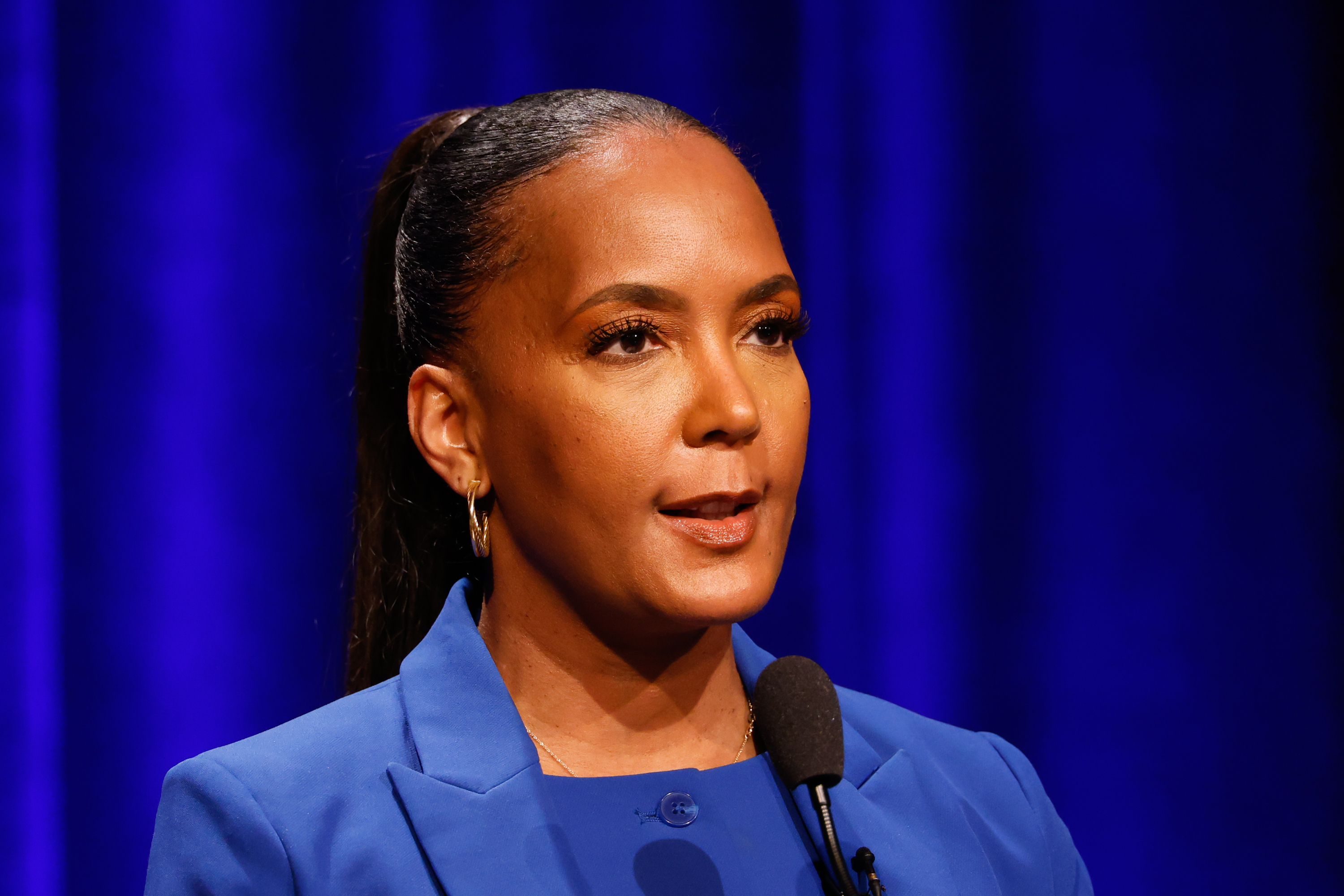
Republicans are set for a competitive race in the Georgia gubernatorial election this year as a new poll showed former Atlanta Mayor Keisha Lance Bottoms as the front-runner in the Democratic primary.
A new survey by the Atlanta Journal-Constitution is the latest to show Bottoms with a lead in the primary in what is expected to be one of the most closely watched gubernatorial races in the country in the midterm elections. Georgia is the nation’s newest swing state but has backed Republicans in recent governor’s races. Democrats hope they can flip the seat in November as President Donald Trump’s nationwide approval rating threatens to sink Republicans in key races.
Keisha Lance Bottoms Leads Democratic Primary Field: New Poll
The new poll showed 39 percent of Democrats planning to vote for Bottoms in the primary, while former DeKalb County CEO Mike Thurmond received 10 percent support. Eight percent of respondents said they would vote for former state Senator Jason Esteves, while 7 percent said they would back former Lieutenant Governor Geoff Duncan, a former Republican.
It found that 35 percent of respondents are still undecided about who they will vote for. How those voters break could be decisive for the primary. The poll surveyed 1,000 likely voters from April 23-29.
The poll comes just days after Bottoms received support from former President Joe Biden. Bottoms was viewed as one of his potential vice presidential picks.
Rashad Taylor, a spokesperson for Bottoms, told Newsweek that the campaign is “building momentum at the right time, as voters know that Keisha is the strongest candidate to defeat whatever Trump Republican emerges from the GOP primary and win the governorship for Democrats this November.
“But we’re not going to rest. We’re continuing to engage directly with voters across the state and share Keisha’s vision to lower costs, expand access to affordable health care and invest in Georgians’ education.”
Republicans vs. Keisha Lance Bottoms: What Polling, Odds Show
Only one poll has been made public of the general election so far. An Echelon Insights poll found that Georgia Secretary of State Brad Raffensperger, who rose to national prominence after Trump urged him to “find” 11,780 votes following his loss to Biden in 2020, was the most competitive Republican. In that matchup, Bottoms held only a 2-point lead. Bottoms received support from 46 percent of respondents to Raffensperger’s 44 percent.
She held identical 6-point leads over healthcare CEO Rick Jackson and Lieutenant Governor Burt Jones, who has been endorsed by Trump. In both hypotheticals, Bottoms received 49 percent support to 43 percent for Jackson and Jones.
The poll surveyed 407 likely voters from April 3-9 and had a margin of error of plus or minus 6.5 percentage points.
Newsweek reached out to the Bottoms, Jackson, Jones and Raffensperger campaigns for comment.
Prediction markets also favor Democrats. Kalshi gives Democrats a 62 percent chance of winning, while Polymarket gives them a 67 percent chance of victory as of Monday afternoon.
Bottoms is well known in Georgia and could be benefiting from high name recognition among the electorate. Republicans in the state are also divided over a more competitive primary than on the Democratic side.
At the same time, Georgia Senator Jon Ossoff, a Democrat, is up for reelection. Polls give him a lead over Republican candidates despite the state’s toss-up status. Democrats winning both the Senate and gubernatorial race would be a major blow for Republicans, who once dominated the state. A Democratic victory could also complicate any potential efforts to redraw Georgia’s congressional map before the 2028 elections.
GOP Faces Divided Primary
Polls show a divided primary with no clear front-runner among Republicans. The latest poll from the University of Georgia showed Jackson up with 27 percent support among Republicans, followed by Jones at 25 percent. Raffensperger received 14 percent support, while Attorney General Chris Carr polled at 3 percent. Thirty-one percent were still undecided.
The poll surveyed 1,000 likely voters from April 18-26 and had a margin of error of plus or minus 3.1 percentage points.
How Popular Is Donald Trump in Georgia?
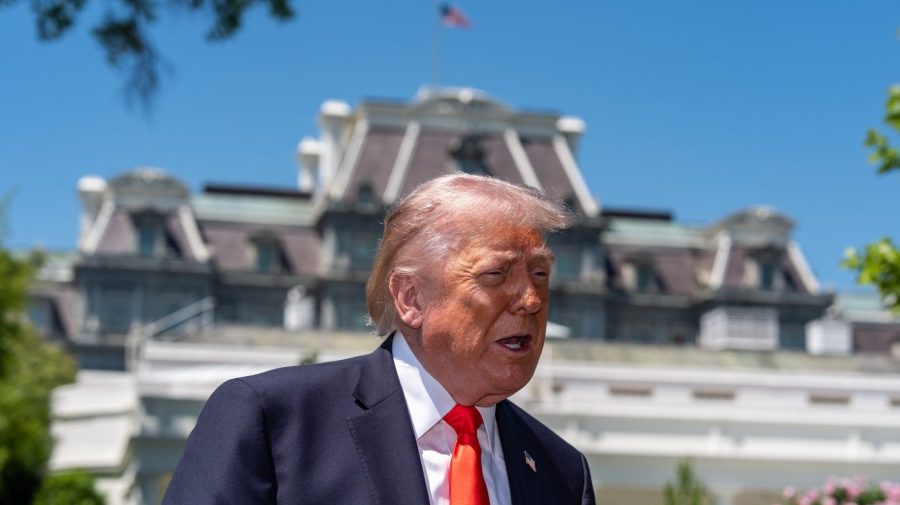
Trump’s presidency will loom over the race, as Democrats across the country will aim to benefit from his dwindling approval nationwide. Democrats are banking on higher turnout, which has played out in recent special elections across the country. Greater Democratic motivation to vote in November would be a boon for Bottoms.
In Georgia, Trump’s approval stood at 42 percent in a March Emerson poll, while slightly more than 51 percent said they disapprove of his job performance. The poll surveyed 1,000 likely voters from February 28-March 2 and had a margin of error of plus or minus 3 percentage points.
Why Georgia Shifted From Red to Purple
Georgia has shifted from a reliably Republican state to a true swing state over the last two decades, driven largely by rapid growth and demographic change in Atlanta and its surrounding suburbs.
Trump carried Georgia by about 2.2 percentage points in the 2024 presidential election, after Biden won the state by roughly 0.2 points in 2020. Trump won Georgia by about 5 points in 2016, while Mitt Romney won it by roughly 8 points in 2012 and John McCain by about 5 points in 2008.
Even as the nation and state shifted rightward in the 2024 presidential race, many suburban areas around Atlanta were among the few places that shifted leftward compared to 2020.
Biden won Henry County, consisting of southern suburbs, by 20 points in 2020 and former Vice President Kamala Harris won it by nearly 30 points in 2024. Biden won Newton County by about 11 points, while Harris won it by 15.
Democrats Overperformed in Recent Georgia Special Election
Democrats overperformed in the Georgia special election to replace former Representative Marjorie Taylor Greene, a Republican who resigned from Congress earlier this year. Republican Clay Fuller won the April 7 special election by about 11 points in the deep-red district, a significant narrowing compared to Trump’s 37-point victory in the district in 2024.
Greene told Politico in April that Republicans should be concerned about those results.
“If you saw a big drop in my district for Republican votes, a drastic drop like that, that could very much affect the governor’s race, lieutenant governor, secretary of state and of course Jon Ossoff’s Senate seat that’s up for reelection in 2026,” she said. “That’s what I saw right away, and of course it matches what we’re seeing nationwide.”
Related Articles