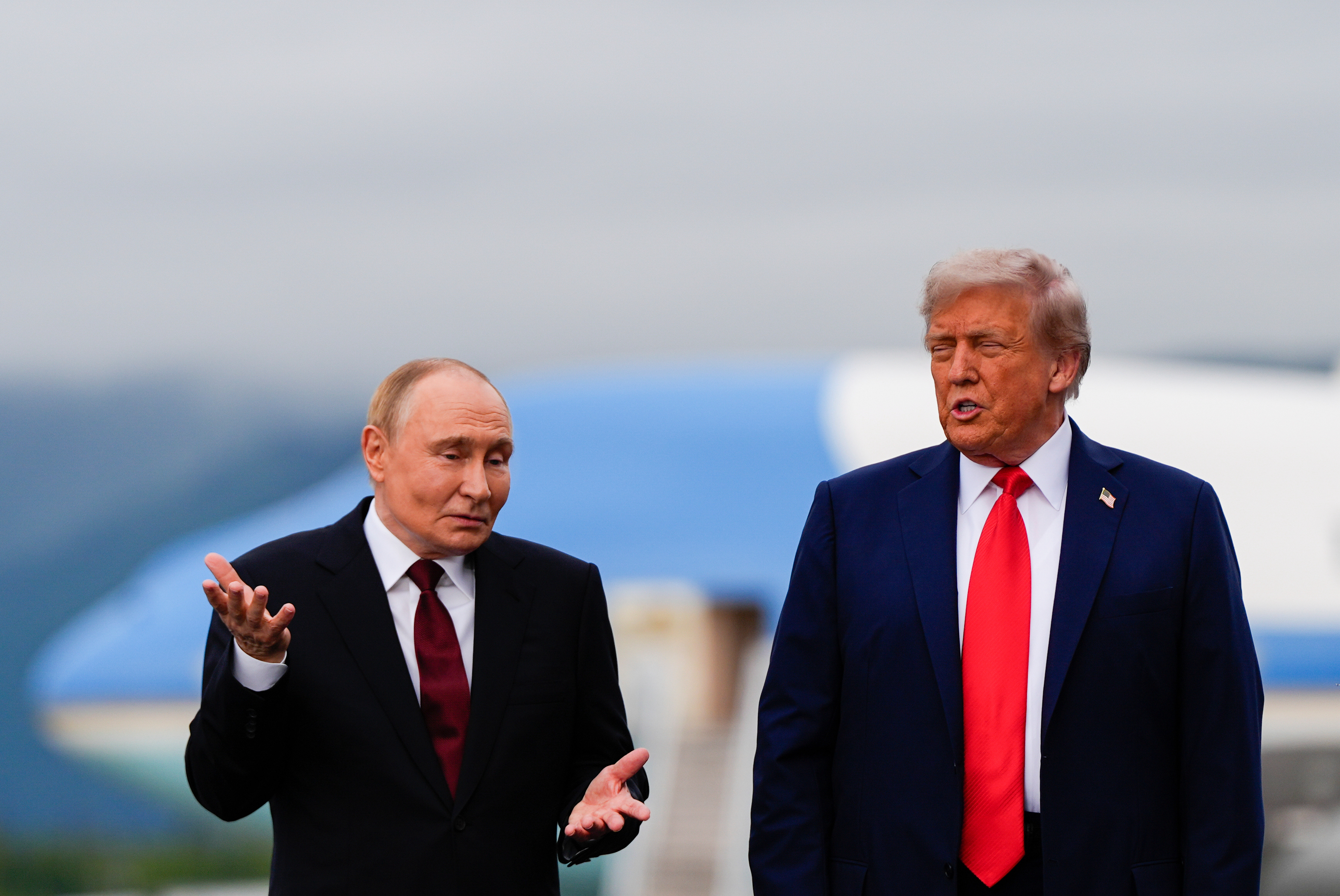
The Kremlin on Wednesday warned of “dire consequences” if fighting against Iran resumes amid a ceasefire, after Russian President Vladimir Putin raised the issue in a phone call with President Donald Trump.
Kremlin foreign policy adviser Yuri Ushakov said Putin told Trump that renewed hostilities would be “dangerous and unacceptable,” especially any ground operation on Iranian territory. Putin stressed, according to the Kremlin, that such a move would carry serious risks not only for Iran but for the broader international community, Ushakov said.
The concerns came after Trump said earlier Wednesday that he was rejecting Iran’s latest proposal to reopen the Strait of Hormuz, meaning the blockade remains in place and the stalemate over the conflict continues.
Putin-Trump Phone Call: What To Know
Ushakov told Russian state news agency TASS that Putin felt the decision to extend the ceasefire in Iran was “the right one” because it would give negotiations a chance and “help stabilize the situation in general.” Trump also laid out his assessment of the military action to this point.
Speaking in the Oval Office Wednesday afternoon, Trump told reporters that Putin had also offered assistance with the enrichment of uranium, “if he can help us get it,” he said, adding that he told Putin, “I’d much rather you be involved in ending the war with Ukraine.”
Russia, longtime Iran ally, in February surpassed the four-year mark in its war on Ukraine, despite a promise by Trump when he returned to office a year ago that the U.S. president would end the conflict.
Trump said Wednesday he had “a very good conversation” with the Russian leader and that he was under the impression Putin wanted a solution in Ukraine.
A $25 Billion Conflict
U.S. Defense Secretary Pete Hegseth told lawmakers earlier Wednesday that Iran’s nuclear facilities had been “obliterated,” triggering sharp pushback during a House Armed Services Committee hearing.
Hegseth and Joint Chiefs Chairman General Dan Caine are testifying before Congress this week as part of hearings on the Trump administration’s proposed 2027 defense budget, which would increase Pentagon spending to a record $1.5 trillion. The committee hearing is focused on military readiness, weapons procurement and long‑term strategy.
The testimony comes as lawmakers intensify scrutiny of the U.S. war with Iran, launched in February without congressional authorization and now estimated to have cost $25 billion. Members of both parties are pressing Hegseth and Caine for clarity on the conflict’s objectives, results and strain on U.S. forces and munitions.
Hegseth pushed back forcefully, saying skepticism from lawmakers was undermining the military effort.
“The biggest challenge, the biggest adversary we face at this point are the reckless, feckless and defeatist words of congressional Democrats and some Republicans,” he said, as Caine sat beside him during the contentious hearing.
What Happens Next
Trump and Hegseth have both said they want a solution in Iran quickly, but they have also given comments suggesting the conflict could drag on.
As of Wednesday, the U.S. and Iran appear locked in a stalemate, with Trump unlikely to accept Tehran’s latest offer to reopen the strait if the U.S. ends the war, lifts its sea blockade and postpones nuclear talks. The Iranians appear unwilling to give up their nuclear ambitions, despite this being a core issue for the Trump administration.
Reporting by the Associated Press contributed to this article.
Related Articles