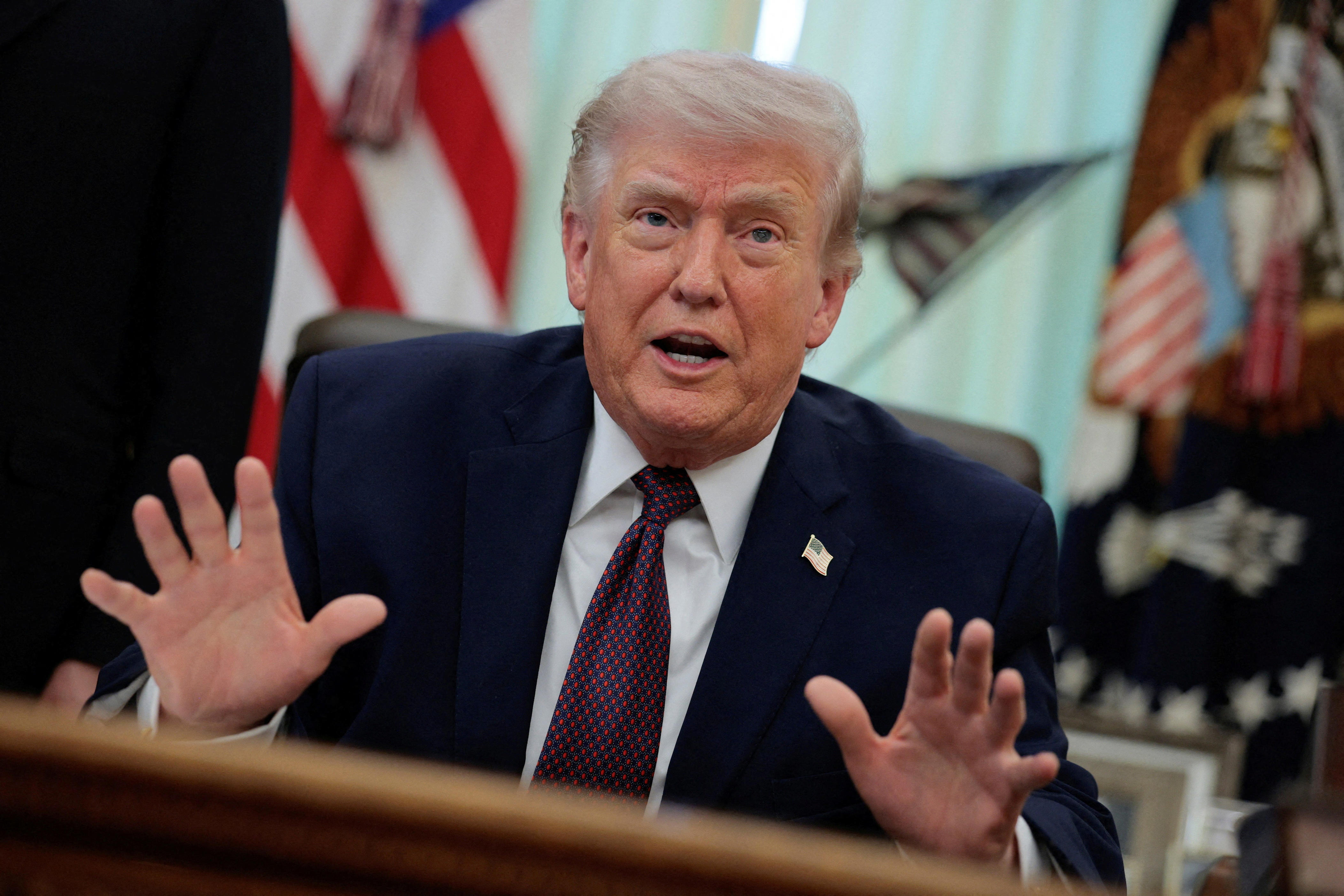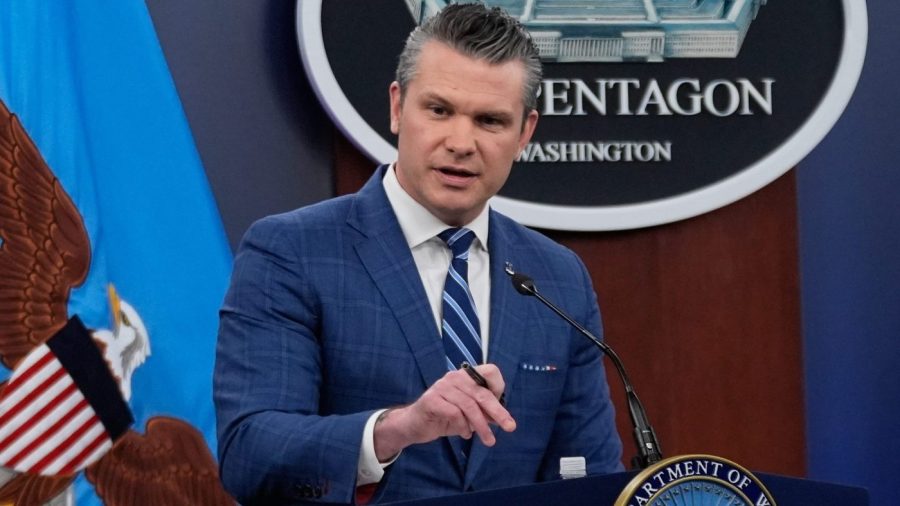
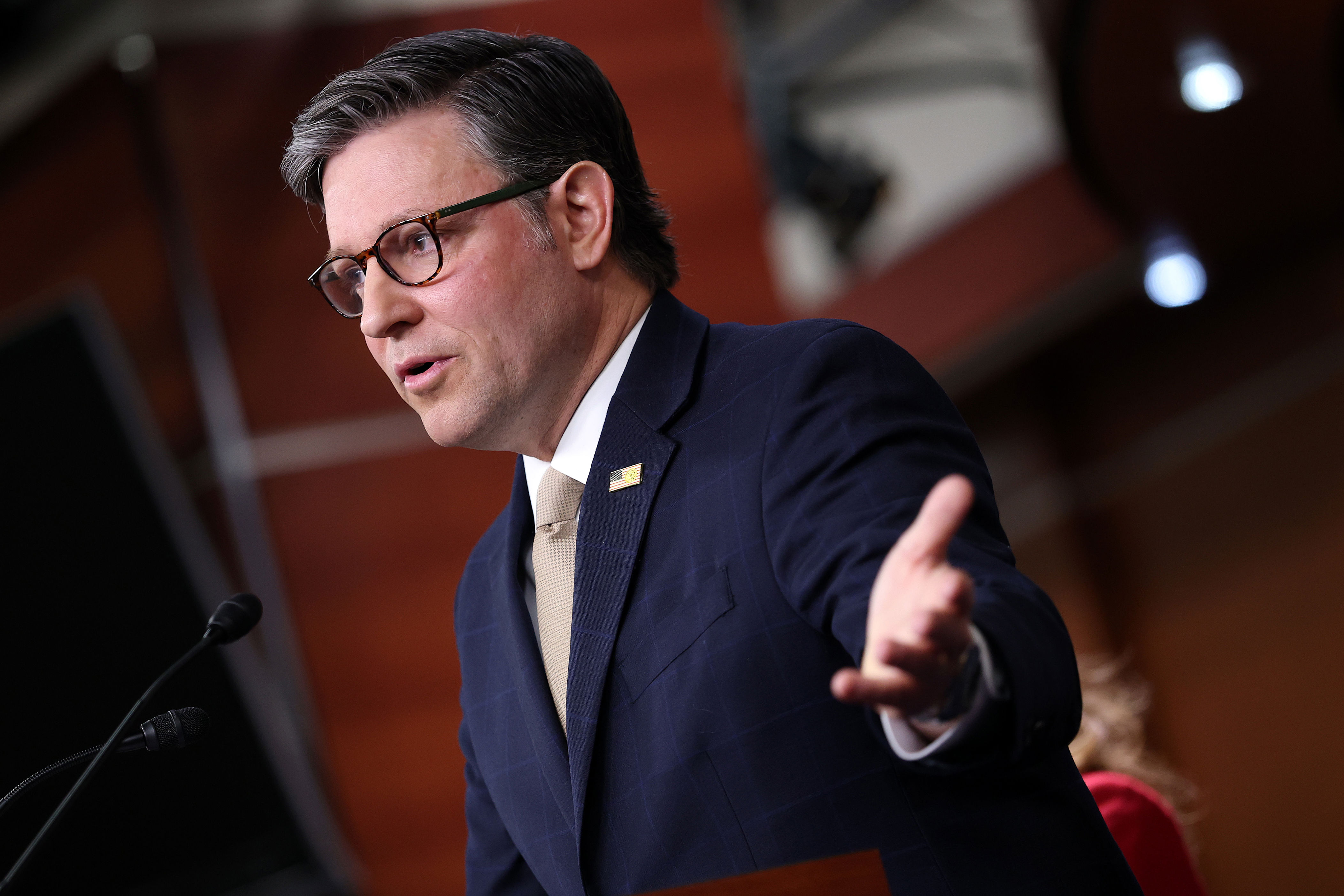
In a House so narrowly divided, nearly any Republican can wreak havoc on Speaker Mike Johnson’s best-laid plans.
That was on full display Wednesday, when the House’s civil libertarians, Midwestern ethanol advocates and Make America Healthy Again warriors all threatened to tank votes to advance three major policy proposals supported by Republican leadership and President Donald Trump.
The House passed a controversial surveillance bill championed by the U.S. intelligence community Wednesday afternoon after Johnson (R-Louisiana) quelled an open revolt from conservatives concerned about privacy.
Earlier, another flank of the caucus worried about pesticide provisions in a farm policy bill nearly derailed a measure to allow the House to consider legislation at all.
That impasse was bridged by a pledge to delay a vote on the farm bill — which subsequently infuriated farm-state Republicans who have been pushing for a bill that would be attached to it to expand the availability of ethanol-blended gasoline, a priority for them.
In response, the farm advocates held up a vote on a budget blueprint to fund Immigration and Customs Enforcement and Customs and Border Protection, which is part of an effort to end a protracted shutdown of the Department of Homeland Security.
“This is why they say lawmaking is like watching sausage be made. That’s what this is,” Johnson told reporters Wednesday evening as he left a negotiation with the farm-state Republicans near the House floor. “We’ll get it done.”
Ultimately, the surveillance bill passed the House and the budget blueprint was approved late Wednesday night. But the turbulent day highlighted the House GOP’s fractures as the conference aims to secure policy wins heading into the November midterm elections with Republicans’ narrow majority on the line.
“You lose majorities two ways: You lose majorities by overreach and dysfunction,” said Rep. Tom Cole (R-Oklahoma), chairman of the House Appropriations Committee. “And right now, we don’t look as functional as we need to look.”
Congressional Republicans have been rushing to reauthorize legislation sought by the intelligence community to extend a warrantless surveillance program, known as Section 702, which expires Thursday. The version that passed the House 235-191 on Wednesday included a ban on the U.S. government creating its own digital currency, all but dooming it in the Senate, where Democratic support would be necessary to overcome a filibuster.
Republicans who argued that the surveillance tool threatens Americans’ civil liberties were at odds with Trump administration officials, who have called for Congress to extend the program without changes, arguing that Section 702 is essential to protecting U.S. citizens — including helping in hostage rescues and thwarting terrorist attacks.
Earlier in April, a group of House Republicans joined nearly all Democrats in blocking Johnson from extending the surveillance law, in a show of defiance against the Republican leader and Trump.
Under Section 702 of the Foreign Intelligence Surveillance Act (FISA), the U.S. government can collect the texts, emails and phone calls of foreigners living overseas from American telecommunications firms without a warrant. Republican civil libertarians are concerned that Americans’ data could be swept up in those searches and have demanded a warrant requirement, while Democrats have worried that the Trump administration could exploit the law to spy on political enemies.
Administration officials have disputed the assertion that Section 702 is vulnerable to abuse — and Trump, a past critic of FISA overall, has said the program is indispensable for the U.S. military.
Meanwhile, Republicans are also trying to fund the Department of Homeland Security, which has operated without new funding since Feb. 14, after Democrats demanded new accountability measures for immigration enforcement. It’s now the longest partial government shutdown in U.S. history, though much of its effects have been muted as the Trump administration pays salaries from an emergency fund authorized by the GOP tax and spending law passed last year.
Republican leaders plan to fund the department through a complex process that would fund the main immigration agencies — ICE and CBP — with a party-line bill and a separate bipartisan bill to fund the rest of DHS. The latter measure has already passed the Senate, but House Republicans have refused to take it up for weeks, arguing that ICE and CBP should be funded first. On Monday, Johnson said the House may try to modify that bill due to technical concerns in the way it’s written.
The White House Office of Management and Budget told congressional offices Tuesday that the temporary funding for employee salaries will run dry up at the end of the week and urged them to “immediately” pass both measures, according to a copy of the memo obtained by The Washington Post.
Johnson told CNN that Republicans understand “the urgency” of passing the measures and that he has discussed it with Trump and Homeland Security Secretary Markwayne Mullin.
GOP leaders also faced a rebellion over the farm bill, which includes a provision that would protect pesticide makers like Bayer from lawsuits. Rep. Anna Paulina Luna (R-Florida) said she would “slaughter” the farm bill if the pesticide provision was not scrapped, though she acquiesced after receiving assurances that she could help shape the policy before it became law.
Johnson has repeatedly juggled multiple factions seeking to leverage their power amid his party’s narrow majority. Republican leaders can lose only two votes if everyone is present and all Democrats vote against them.
The dynamic has allowed any Republican to slow down important legislation in an effort to secure their preferred policies, especially as the midterm elections loom and many lawmakers doubt another party-line package tackling affordability, health care and anti-fraud policies would be successful.
On Monday and Tuesday, a committee hearing to set the rules for the week stretched on for hours as the same dynamics on display Wednesday played out on the smaller stage.
Democrats have said that the lack of cohesion among GOP lawmakers has reflected poorly on Johnson’s leadership.
Rep. Jim McGovern (D-Massachusetts) accused GOP leaders of “rushing” bills to the House Rules Committee, which sets the terms of how legislation will be considered on the floor, without securing the necessary support from their conference.
“This is like amateur hour,” he said. “Don’t you guys do your homework? Don’t you do Zoom calls on weekends to find out what your members think?”
Some in the Republican conference say the disagreements within their conference are a sign they’re using the legislative system as intended.
Rep. Tim Burchett (R-Tennessee), who raised concerns Wednesday with FISA and with the farm bill, said Johnson is “herding cats.”
“We’re allowed to think outside the box, we’re allowed to express our opinions and we’re not necessarily penalized for it,” he said. “The Democrats, they use the carrot and the stick, and we don’t. We let our guys and gals do their thing and we fight it out there on the floor.”
Mariana Alfaro contributed to this report
Most Read From The Washington Post
- More than 60 percent of U.S. is covered by drought as impacts worsen
- CWG Live: Showers and storms through evening, then a chilly weather pattern takes hold
- CWG Live: Shower chance today; rain and storms likely to develop Wednesday
- What caused the Palisades blaze? Visual evidence points to a recent fire nearby.
- I’ve chased hundreds of supercells. What makes them the king of thunderstorms?