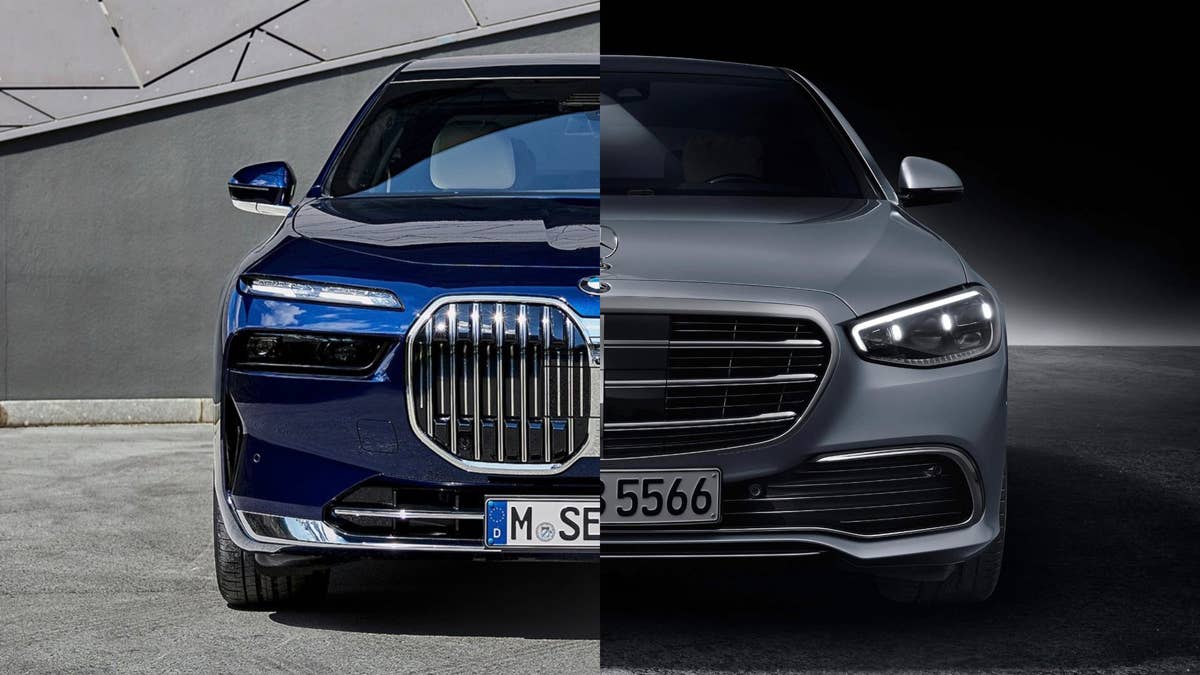
The rivalry between BMW and Mercedes-Benz has been raging for decades. These German powerhouses have pushed each other to ever more advanced and innovative designs, but this hasn’t always resulted in the most reliable offerings.
BMW is traditionally beloved for its focus on the driving experience, and tends to emphasize sharp handling, driver-centric cockpits, and sporty performance. On the other hand, Mercedes-Benz has built up a huge following thanks to its “The Best or Nothing," a philosophy that prioritizes ride comfort, opulent materials, and advanced technology. But has this resulted in vehicles that spend more or less time in the shop?
We turned to Consumer Reports, a non-profit, independent organization, to find the answer. CR buys all its test vehicles anonymously and collects data from hundreds of thousands of real-world owners, it remains the most trusted, unbiased authority on vehicle longevity and repair frequency. To cover a broad cross-section of both brands’ offerings, we split this comparison up into the five most important segments that both BMW and Mercedes compete in. Let’s see how they fared.
And remember: these scores are based purely on owner feedback from Consumer Reports and are not the opinion of AutoBlog employees or contributors.
Luxury Midsize SUVs (X5 vs. GLE)
- BMW Consumer Reports Reliability Score: 82/100
- BMW base MSRP:$68,300
- Mercedes Consumer Reports Reliability Score: 45/100
- Mercedes base MSRP:$64,750
Scoring an impressive 82/100, the BMW X5 consistently outperformed the GLE in almost every CR metric tested due to its mature platform, reliable engines and lack of issues with its electronics. While the GLE has also been around for some time, its more tech-filled cabin with its expansive screens has come in for criticism from owners who frequently reported glitches with the MBUX infotainment system. Once again, the electronic air suspension components were sources of problems as well, and this all resulted in the BMW gaining a significant edge in long-term dependability.
Luxury Compact SUVs (X3 vs. GLC)
- BMW Consumer Reports Reliability Score: 63/100
- BMW base MSRP:$51,300
- Mercedes Consumer Reports Reliability Score: 40/100
- Mercedes base MSRP:$49,500
The X3 takes the luxury compact SUV match-up scoring 23 points more than its GLC rival. Its 63/100 score isn’t particularly stellar, but this is partly down to the introduction of a new model in 2025 which usually results in a few teething issues. The underlying platform is a development of the outgoing X3, so its score should go up in the coming years.
The GLC is another stunningly designed Mercedes-Benz product and it comes with plenty of customization options. It underwent a full redesign in 2023 and should have gotten over its early production issues, but customers still have issues with the 48-volt mild-hybrid system and the interior build quality is below par for such a premium product. Hopefully it can overcome these problems and post some better reliability figures soon.
Luxury Compact Sedans (3 Series vs. C-Class)
- BMW Consumer Reports Reliability Score: 59/100
- BMW base MSRP:$48,000
- Mercedes Consumer Reports Reliability Score: 19/100
- Mercedes base MSRP:$49,650
The luxury compact sedan market has been gradually shrinking, but competition between the remaining rivals is as fierce as ever. BMW has recently facelifted its 3 Series offering, introducing several new tech features, although its score of 59/100 is only an average showing, especially considering that it has bene around since 2019. It still suffers from the odd electronic glitches, which should have been resolved by now.
If the performance of the 3 Series is a mild disappointment, the more recent C-Class is an absolute disaster. The gap here is staggering. The C-Class has suffered from bottom-tier reliability ratings recently, with owners citing frequent electronic failures, sensor malfunctions, and transmission software issues. To further rub salt in the wound, Japanese luxury brand Lexus managed to score an impressive 84/100 for its IS sedan, putting both German brands in the shade.
Luxury Executive Sedans (5 Series vs. E-Class)
- BMW Consumer Reports Reliability Score: 66/100
- BMW base MSRP:$60,500
- Mercedes Consumer Reports Reliability Score: 34/100
- Mercedes base MSRP:$66,400
Both of these models were recently redesigned, which usually brings a short-term dip in reliability. However, BMW's 5 Series manages a much higher score partly by maintaining more mechanical continuity with its predecessor. It still offers several advanced features, but failure rates are pleasingly low according to owner feedback.
The Mercedes E-Class is a technological tour-de-force with a massive set of screens sprawled across the dashboard, ‘augmented reality’ features, and a range of smooth and powerful engines. The interior is packed with high-quality materials and tech, but that complexity comes at a cost; the high volume of software-driven features increases the likelihood of digital errors, and this has been borne out with an above average number of owners having electronic glitches, infotainment malfunctions and even wiring faults.
Luxury Electric Vehicles (i vs. EQ )
- BMW EV Consumer Reports Reliability Score: 78/100 (Average across i4, i5, iX)
- Mercedes EV Consumer Reports Reliability Score: 27/100 (Average across EQB, EQE, EQS)
Both brands have released several new electric vehicles in recent years, and new product development continues at serious pace despite recent legislation changes regarding EVs. BMW has had more mass-production experience here having introduced the i3 and hybrid i8 back in 2014, and this head start over Mercedes shows in its impressive reliability score. Many of its latest electric models are based on existing gas-powered platforms, resulting in more proven components and fewer customer issues.
Mercedes went with a "ground-up" dedicated EV platform for the EQ series, which has unfortunately been plagued by thermal management issues and massive software bugs. These models look and feel very futuristic, but unfortunately their reliability is a big step backwards. With a score of just 27/100, Mercedes needs to address some serious customer complaints before its EQ range can take on the latest EVs from BMW.