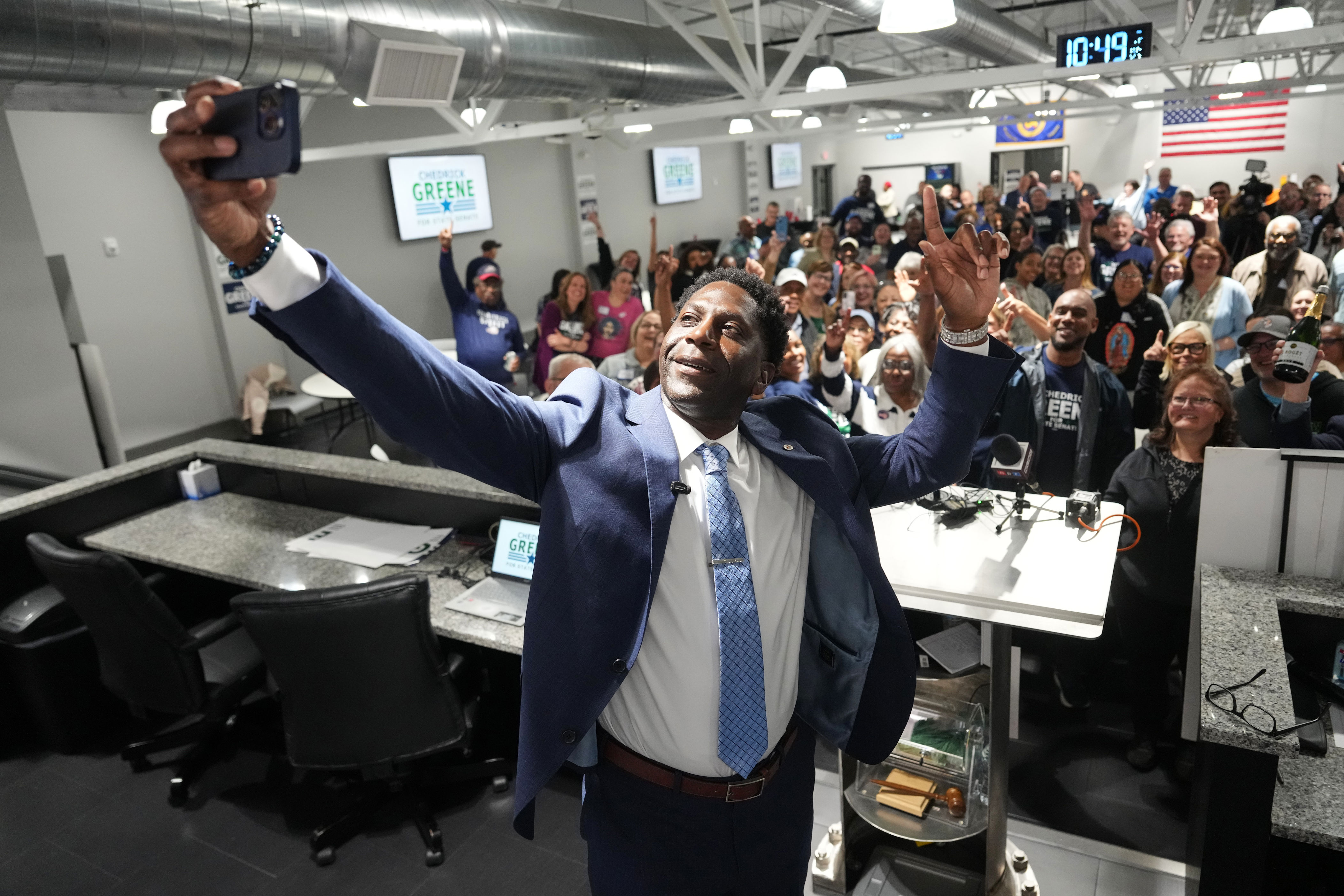
Democrats looked on course to significantly overperform as they held onto control of the Michigan state Senate with victory in a special election on Tuesday night.
With around 95 percent of the vote counted, Democrat Chedrick Greene, a firefighter and Marine veteran, held a 58.9 percent (36,374 votes) to 39.4 percent (24,337 votes) lead over Republican attorney Jason Tunney, with Libertarian Ali Sledz trailing in third.
Special elections nationwide are being closely watched in the run up to the 2026 midterms in November. Midterms are often seen as the biggest test of a party’s popularity, as they occur midway through a president’s term. While special elections for state seats do not hold the same national significance as Congressional elections, they can offer some insight into how things may shape up nationally.
The district backed former Vice President Kamala Harris by under one percentage point in the 2024 election, and the seat was previously won by Democrat Kristen McDonald Rivet in 2022 with 53 percent of the vote.
As it stands, the unofficial results are shaping up to be an approximate 19-point overperformance for Democrats compared with 2024, according to Votehub.
Democrats have generally exceeded expectations in special elections since President Donald Trump returned to office in January 2025.
“This is a win for affordability, for people who do everything right but still struggle because their wages aren’t keeping up with the solar prices,” Greene said in his victory speech.
“We’ll have a working class guy who has walked in their shoes fighting for them in Lansing. This is a win for safety, people who want to feel safe in their schools, in their neighborhoods. We’ll have a career public safety professional making decisions on policy aimed at stopping violence, drugs, theft and more.”
“Tonight, we fell short in the special election, but I’m incredibly proud of what this campaign accomplished together,” Tunney said in a statement. “We worked hard every single day to run the best campaign.”
Michigan is considered a battleground state, which is a state in an election where no single political party has a clear or consistent advantage, so both major parties compete heavily because the outcome is uncertain and could “swing” either way.
Michigan’s 35th District is located about 100 miles north of Detroit and includes Saginaw, Bay City and Midland. Saginaw is the only Michigan county to back the winning presidential candidate in each of the last five elections.
“It’s really this microcosm of the Midwest, frankly,” McDonald Rivet said of the district she left when she entered the House in 2025. “Given how much it resembles so many other places across the country, we have to look at it and say, this is an indicator of how things are going to go in November.”
The Michigan result continues a trend of Democrat gains in elections during Trump’s second term as president. Since Trump returned to office, Democrats have flipped over two dozen seats in state and special elections, or overperformed in other seats they have lost.
While Democrats have heralded the successes as a “trend that cannot be ignored”, Republicans have said that special elections are “not a true depiction” of what will happen in November’s midterm elections. There have also been notable Republican overpeformance in some local elections.
Michigan Democratic Party Chair Curtis Hertel described Tuesday’s result as a rebuke of President Trump.
“Congratulations to Senator-elect Chedrick Greene on his decisive win,” Hertel said in a statement Tuesday night. “The country was watching Michigan in this special election, and voters made clear that Chedrick is focused on reducing costs, defending freedoms, and pushing back against Trump’s impact on working families.”
Related Articles