One of the secrets of gardening is to be honest with yourself. All of those pretty plants in your shopping cart may look healthy in the garden store, but will they survive the clay-like soil in your yard or months of baking heat? If you’re looking for long-lasting blooms and foliage, it’s best to get real about any less-than-ideal yard conditions and choose plants that actually have a chance to take root and grow.
We asked Master Gardener Rhonda Fleming Hayes, author of Garden for Life: Strategies for Easier, Greener, More Joyful Gardening as We Age and the Substack The Garden Buzz, for her top picks for tough plants. If you live with long, hot summers or warm weather year-round, this is the list you should bring with you to your local nursery or garden shop. These seven plants are some of the hardiest ones out there—even droughts and poor soil won’t stop them from flourishing.
Black-eyed Susans
Good for pollinators and tough soil, these low-maintenance plants return year after year with masses of blooms. “It’s an old standby because it has staying power,” Hayes says. “The taxi-yellow flower tolerates heat and drought, and poor soil. That same saturated color looks great with other late-summer bloomers like Russian sage and coneflowers.”
Lantana
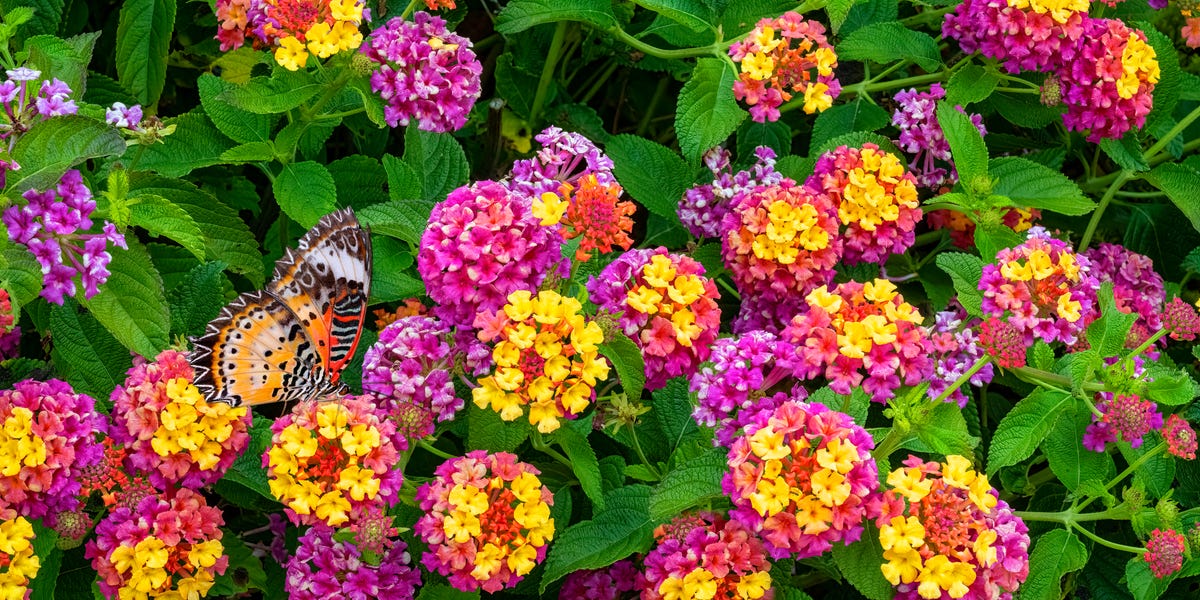
Covered with clusters of tiny, candy-colored flowers, this hot weather favorite thrives in most soil conditions and keeps blooming, even in the most sweltering months of summer. “Lantana has a low profile that isn’t bothered by rain and wind. I love that it attracts yellow swallowtail butterflies in my garden,” she says.
Ice plants
This succulent has small flowers in neon shades and leaves with a bit of a frosty shine. “Don’t let the name fool you; this bold groundcover thrives in hot sun,” Hayes says. “I know it as the invincible plant that lined the freeways of my Southern California childhood.” Typically used as a ground cover, ice plants do well in most types of soil as long as it is well-drained.
Coreopsis ‘Moonbeam’
This plant may look delicate with its pretty yellow flowers on threadlike stems, but Hayes says that it soldiers on through drought and dry soil. Even better, it will come back every year. “I grow it next to my driveway with catmint and orange butterfly weed, a pretty combination,” she says.
Switchgrass
If you like the look of ornamental grasses, this easy-to-grow variety has delicate, pink-tinged panicles that rustle in the wind. Resistant to most pests, it can tolerate wet, dry, and even clay soil. “Switchgrass stays mainly in clump form so is better behaved than some (other) native grasses for a typical garden situation,” says Hayes.
Catmint
A popular shrub for its toughness, pretty blue-lilac flowers, and silvery green leaves, catmint will also attract bees and butterflies to your garden. It can have other uses in the garden as well. “I love it when catmint is underplanted around roses to hide their legs,” Hayes says.
Sedum
These fun plants come in so many shapes, sizes, and colors, and Hayes says they can all withstand heat, drought, and poor (but well-drained) soil. Known for their succulent-like foliage, some sedum can be used as groundcover, while others are taller and covered in flowers that are beloved by bees. Hayes says she uses a variety of low-growing sedums as “living mulch” to suppress weeds and reduce the need for bagged wood mulch.