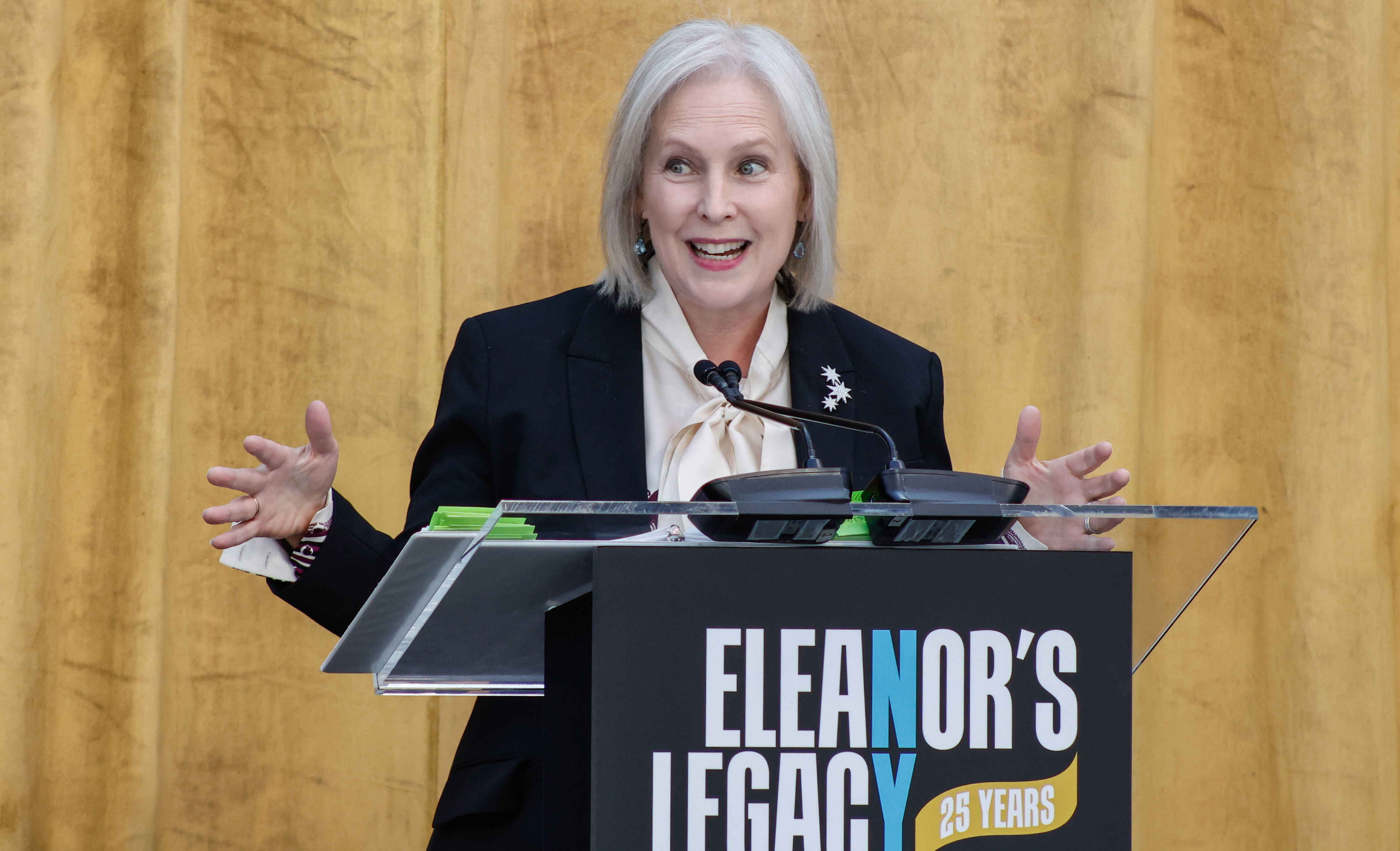
Social Security benefits for millions of Americans could increase under new legislation introduced in Congress aimed at protecting the retirement security of unpaid caregivers who leave the workforce to care for their loved ones.
Democratic U.S. Senators Kirsten Gillibrand of New York and Chris Murphy of Connecticut have reintroduced the Social Security Caregiver Credit Act, a bicameral bill that would allow eligible caregivers to earn Social Security retirement credits while providing unpaid care to their dependent family members.
“Caregiving for an aging parent, relative with a disability, or ailing loved one is a full-time job,” Gillibrand said in a statement.
“Individuals who leave the workforce to care for their loved ones should receive compensation for that critical work. This commonsense bill would ensure eligible caregivers receive essential Social Security benefits in retirement, helping them to continue to provide for themselves and their families after leaving their jobs.”
Why It Matters
Social Security retirement benefits are calculated using a worker’s 35 highest‑earning years, which means people who leave the workforce or significantly reduce their hours to provide unpaid care often see their future benefits permanently reduced.
The issue affects tens of millions of Americans. According to Gillibrand, 63 million U.S. adults, or nearly one‑quarter of the adult population, provide unpaid care to a child, older adult, or family member with a disability.
What To Know
Under current law, people who reduce work hours or leave the workforce entirely to provide unpaid care often end up with zero‑earning years on their record, which can permanently lower their monthly benefits.
The proposed legislation would allow qualifying caregivers to receive up to five years of deemed wages for Social Security benefit calculations if they spend at least 80 hours per month caring for a dependent child under age 12 or a chronically dependent relative, such as an aging parent, spouse, or family member with a disability.
Those deemed wages would be treated as high‑earning years, helping to boost a caregiver’s average indexed monthly earnings and offset years with little or no income.
Companion legislation has been introduced in the House by Representative Brad Schneider of Illinois.
“The bill targets a structural blind spot baked into Social Security’s original design. A system built around continuous, full-time employment that no longer describes how millions of Americans actually work,” Michael Ryan, a finance expert and the founder of MichaelRyanMoney.com, told Newsweek.
“When a caregiver steps out of the workforce to raise a child, care for an aging parent, or support a disabled spouse, those years count as $0 earnings in their 35-year average calculation. Every zero drags down lifetime benefits permanently.”
The credits would apply only to caregivers who do not receive monetary compensation for the care they provide.
Why Benefits Could Increase
Because Social Security benefits are tied directly to lifetime earnings, replacing low‑ or zero‑earning years with credited wages could result in higher monthly retirement checks for eligible caregivers once they claim benefits.
While the bill does not specify an exact dollar increase, lawmakers say the goal is to prevent caregivers from being financially penalized in retirement for stepping away from paid work to care for family members.
“Caregivers shouldn’t lose out on Social Security benefits because they step away from the workforce to care for a loved one,” Murphy said in a statement. “Caregiving is work, and it’s time we start treating it that way. This legislation would make clear that the selfless decision to care for a family member no longer jeopardizes if and when you can retire.”
In New York alone, 4.1 million residents served as unpaid caregivers in 2025, providing more than 2.6 billion hours of hands‑on care to family members, according to Gillibrand’s office. Nationwide, about 63 million adults provide care to a child or adult with a medical condition or disability.
Many of those caregivers cut back their hours or leave paid employment entirely at some point in their careers, reducing their lifetime earnings and, in turn, their Social Security benefits.
“The bill is designed to benefit women most, though it’s gender-neutral in language,” Ryan said. “Women make up roughly 60 percent of unpaid caregivers and are disproportionately represented among seniors living in poverty.”
The Social Security Caregiver Credit Act is endorsed by a number of advocacy and aging‑focused organizations, including Social Security Works, National Alliance for Caregiving and the Alliance for Retired Americans.
“We know caregivers can see economic setbacks due to having to reduce their working hours or even temporarily leaving the workforce altogether,” Alex Beene, a financial literacy instructor for the University of Tennessee at Martin, told Newsweek. “Providing this financial cushion would help caregivers in that situation.”
What Happens Next
The legislation has been formally introduced but has not yet advanced through congressional committees. Previous versions of the Caregiver Credit Act have been introduced in past sessions of Congress but have not become law.
Additional pushback may arrive as the SSA currently faces funding insolvency as early as the 2030s.
“There is no excess funding sitting in the Social Security system to support additional payouts,” Kevin Thompson, the CEO of 9i Capital Group and the host of the 9innings podcast, told Newsweek. “Instead of finding ways to reinforce the trust fund, we keep seeing proposals that increase obligations. That’s the disconnect.”
If enacted, the bill would not change Social Security benefits automatically. Instead, it would allow future retirees who qualify as caregivers to have credited earnings included in their benefit calculations, potentially increasing monthly benefits over time.
“The real obstacle isn’t policy merit. It’s political math,” Ryan said. “In a Congress where both parties are spooked by Social Security’s solvency timeline, any benefit expansion without explicit funding gets positioned as ‘accelerating the trust fund depletion.’”
Related Articles