Ice floats because water is one of the only substances that expands when it freezes. The same matter is spread thinner, taking up more space without adding any mass.
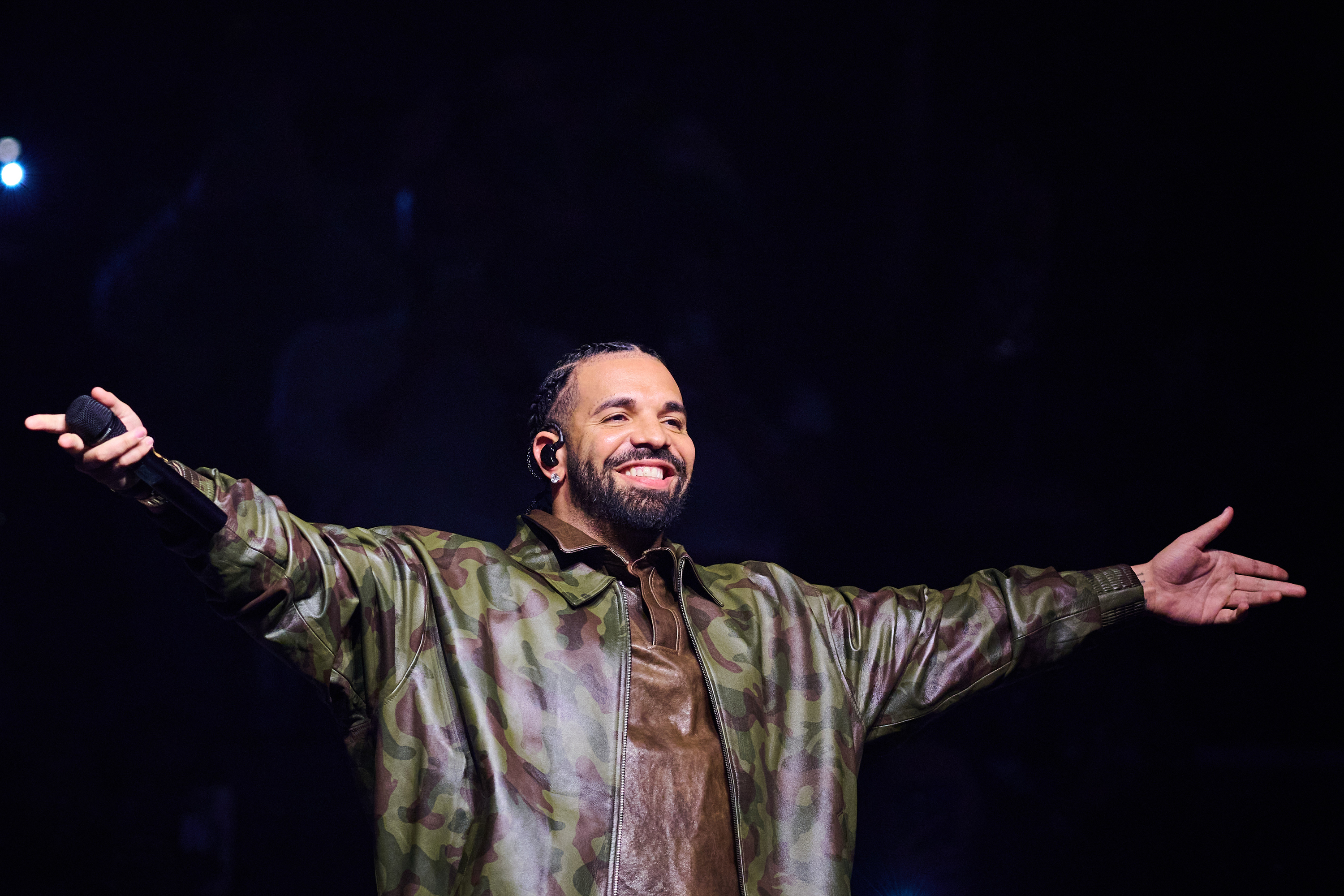
It’s a useful frame for what Drake just did Thursday night, releasing three albums with 43 songs two years after his global humiliation at the hands of Kendrick Lamar. Swarmed with fans, celebrities and influencers, Toronto came out to celebrate Aubrey Graham’s return as if the loss had never happened.
I listened through the night and into Friday morning. It might be his strongest work since the beloved-but-corny “Views” in 2016 and the hits-laden double-album “Scorpion” two years later. The quality of his music has dropped over the years. This year, the likability comes through sheer quantity.
This isn’t a reinvention arc. The album trio is the same Drake spread thinner — buoyant because of its restructuring, not because of more substance. Same Drake, more square footage.
That might still underrate what Drake accomplishes here. He has provided what the fans want: all sides of his sound that make him a hitmaker. “Iceman” is all bars, and where he airs out much of his grievances from the 2024 rap beef in which Kendrick Lamar famously labeled him a pedophile and misogynist, to name a few. (If you need a refresher, YouTube essayist F.D. Signifier has a comprehensive explainer, admittedly with a bias against Drake.)
“Habibti” is all jazzy R&B beats, while “Maid of Honour” finds Drake reuniting with producer Gordo to create a sequel to 2022’s “Honestly, Nevermind,” his surprising and fun dalliance in house and dance music.
Early leaks had fans worry that most of the music would be victimhood rap, similar to the lead single released last year, “What Did I Miss?,” where Drake bemoans celebrities like LeBron James showing up to Kendrick’s “Pop Out” concert. That track and the leaked track, its final title “Make Them Remember,” both make the cut on “Iceman.”
Already, battle lines are predictably drawn online: Fans love it, haters hate it. Content creators are picking their sides.
Victor Baez is the host and co-founder of Club Ambition, a YouTube channel and podcast with 400,000 subscribers that covers music and pop culture. The 28-year-old Rhode Island native is, by his own admission, a Drake guy, and has been creating meticulous coverage of this album’s rollout since last year. I asked him on Wednesday, before the launch, about the smartest and dumbest thing Drake has done for the rollout.
The smart thing, Baez said, was Drake’s apparent self-awareness, starting with taking ownership of the label dropped on him the last two years: a man iced out of an industry that once embraced him.
“It’s a guy that’s now back against the wall, knowing ‘people think I’m not as hot as I used to be. I’m cold,’” Baez said. “He’s thinking maybe he hasn’t been dropping the quality people wanted from him.”
The rollout to Thursday included a massive ice structure in Toronto that melted away to reveal the release date. It included a booklet with art. It declared, “Save our clubs,” referring to the post-pandemic doldrums of nightclub culture, which Drake’s music fueled in the 2010s.
“Whenever he drops music, he’s all in the clubs and every party I go to, every family gathering, it’s Drake, Drake, Drake. He’s inescapable,” Baez said.
It’s said that there’s a Drake song for every moment in life. It’s both a compliment and a criticism of his music: how universal it sounds, and how impersonal it can be.
Even before Drake revealed his three-album drop, Baez predicted Drake’s strategy would favor volume. Kendrick may be the better rapper — Baez is also a fan — but Drake is far more prolific.
“If Kendrick Lamar was more consistent or just as consistent as Drake was, I really feel like it would be undeniable to tell the people he might be No. 1,” Baez said. “Drake always had more music. Drake every summer, hits, hits, hits.”
The worst thing Drake did, Baez said, was spend the last year releasing weak tracks. “What Did I Miss?” was a bit sleepy with its grievances, and the next two songs were forgettable. These were released alongside esoteric short films that felt Lynchian on the surface, with men dressed as Pinocchio while Drake live-streamed himself slowly and somberly driving through Toronto.
“He dropped a good album with PartyNextDoor, but there was still a sense that we don’t want this. The singles themselves, I feel like they just could’ve been better,” Baez said.
Baez also took issue with the influencers Drake uses. Adin Ross, known for hosting racist chats and other controversial antics, remains a hanger-on in that crowd, and even gets a shoutout on “Make Them Pay.”
“It’s just not as effective as someone that’s actually within the music category,” Baez said. “Adin Ross is all over the place. If I was him, I would’ve picked Plaqueboymax or Kai Cenat, people in that world.”
I messaged Baez after the albums dropped. Busy with his own content, he simply responded, “iceman album of the year.” Safe to say that he’s among the fans feeling well fed.
As for me, I have actually been a bigger fan of Drake than Kendrick. Kendrick has the better classics, but because of my clubbing lifestyle, Drake was my soundtrack for my late 20s. Most of my circle, including my partner, count him as their favorite artist. “Started from the Bottom” was my theme song when I got hired at The Washington Post.
I also don’t care much for his lyrics, especially since “Views” revealed how needy he is with women. I hated “Hotline Bling.” But I dance to “In My Feelings.” Heck, I even liked “Family Matters,” Drake’s catchy diss before Kendrick stomped it out half an hour later.
I find myself puzzled at people who think Drake should’ve moved on from the beef. The man was humiliated like no celebrity I’ve ever seen in my life. Dr. Dre, Serena Williams, LeBron and the Weeknd are just a few of the celebrities who jumped him.
Plus, it’s hard to argue the rap world has moved on from it. Take a look at the viewership numbers of any podcast or creator who covers music. Two years later, Kendrick and Drake beef content still ranks as the most popular topic. It only helps Drake to throw more wood into the fire.
The energy is there sometimes. “Ran To Atlanta” is perhaps the most loaded track, a direct response to Kendrick’s characterization of Drake as a colonizer, reuniting him with Future, whose album featured the Kendrick verse that kicked off the whole beef. The reunion is a shocker, the song a mid-2010s Atlanta trap revival. “National Treasures” is aggressive with drill-adjacent production.
It also has what might be the corniest bar, as Drake spits, “Ironic ‘cause the Iceman was a nice man, now I’m hot and cold.” Not to mention the LeBron diss. Why is Drake rap battling against people who can’t rap back? Unless LeBron is about to hop into a booth, it’s more wasted space. I’m tempted to give Drake the benefit of the doubt, that he’s just having fun with the stupidest lines possible, but he’s also the guy who called himself a lesbian in “Girls Want Girls.”
“Iceman” may suffer from too many beat switches. It’s an effective tactic to keep songs interesting, but it becomes entirely too predictable and unwanted. The production here is great, some beats deserve to ride out and it’s frustrating to hear songs cut short.
He also could sound stronger. Pusha T, in his own diss against Drake that famously forced the Canadian to publicly acknowledge he had a son, said, “You talking about how you’re upset. I wanna see what it’s like when you get angry, okay?” I would too. Too often, he sounds like a man who’s spent the last two years drafting the same angry texts.
Of the trio, the album “Maid of Honour” is his most consistent. Peppered with orchestra hits that defined the 1980s, Drake finally wisely follows Kendrick’s advice from “Euphoria” to “keep making me dance, wave my hand.” The seemingly government-mandated Sexxy Red verse is a “Cha Cha Slide” throwback that is easy to laugh at, but I’ll bet anything that it’s a hit on TikTok and the clubs. The opening tracks set expectations for an album of exuberant pop. It closes with a confounding detour into fuzzy guitar rock, maybe a misguided cue from his mentor Lil Wayne’s flirtations with rock. It’s an awful closer to some good music.
Likely a symptom of a long night of listening, but “Habibti” put me to sleep. By the end of the night, every song started to sound like the same old Drake of “Marvin’s Room” across an entire album.
Across the 43 songs, there is a playlist that could make up Drake’s strongest album in a decade. Flooding the zone with tracks and albums will likely result in easy streaming chart wins, which will only fuel this idea that Drake is an insurmountable, necessary force for the industry.
Drake has become the Iceman the only way he knew how, by spreading himself across every surface possible. The legacy isn’t only in what he released, it’s what’s left when it all thaws.
Most Read From The Washington Post
- A California billionaire is paying influencers to boost his campaign for governor
- Inside Ben Shapiro’s MAGA meltdown
- Elon Musk’s anonymous online BFF spreads his ideas and attacks his enemies
- See which jobs are most threatened by AI and who may be able to adapt
- These states have the smartest, friendliest people, according to ChatGPT