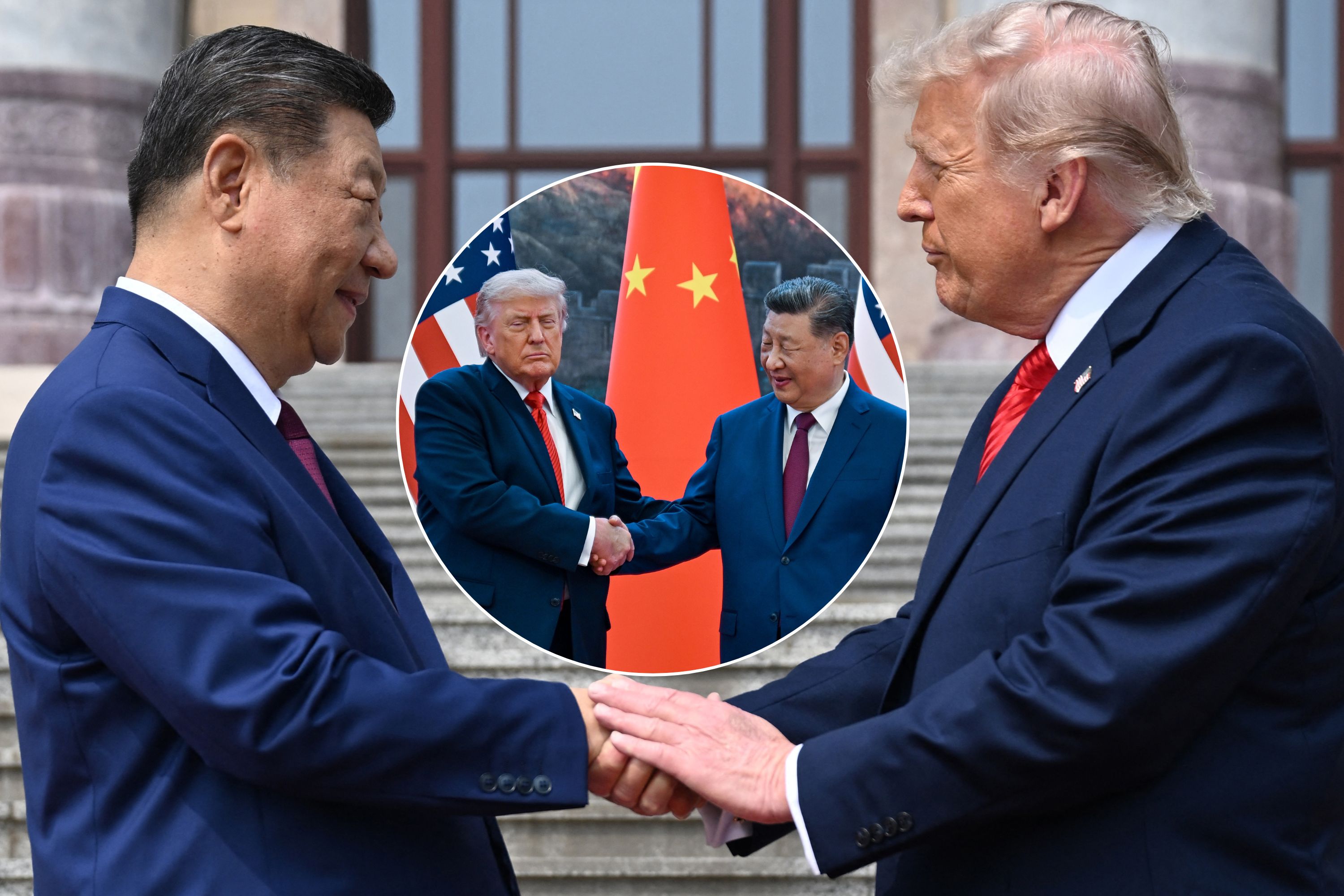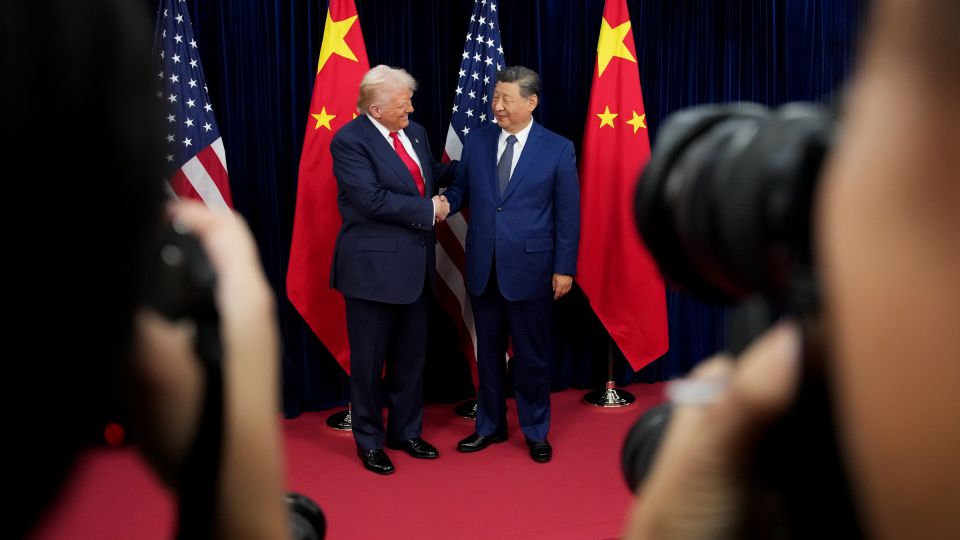
President Donald Trump would seem to have a distinct advantage going into his upcoming negotiations with Chinese leader Xi Jinping.
- Economy: America’s economy is growing strong, boosted by AI and consumer spending. China’s overall growth remains robust, but its economy is struggling with challenges stemming from its housing collapse five years ago. ✔️ USA
- Jobs: US companies are hiring, and unemployment remains low. China’s real estate crisis slammed the brakes on residential construction, evaporating jobs. ✔️ USA
- Spending and inflation: American consumers keep spending, even as inflation rebounds (but nowhere close to where it was four years ago). Consumer spending in China is still running soft, and prices are only starting to bounce back from prolonged deflation, a worrisome economic trend that sends prices and paychecks falling. ✔️ USA
- Energy prices: The United States, with its vast oil and gas resources, is much more insulated from the economic effects of the Iran war than most countries. As a major energy importer, China is more vulnerable to oil price shocks even with a healthy buffer of crude stockpiles. ✔️ USA
Trump is winning across the board. But America’s president is going to China with significantly less leverage than you’d expect.
Consumers from both countries grew fed up with their economies in 2022, and those sentiment reports have remained downtrodden.
Trump and his Republican party could suffer in the November midterm elections for that. But Xi maintains ultimate control of his party and economy. He can afford to prioritize long-term strategy over weak consumer sentiment as long as he can keep overall growth from stalling outright – even if his citizens pay a near-term price.
✔️ China.
And that last checkmark may be the only one that counts: Trump’s low support in an election year is hurting his ability to maximize his leverage with China.
America’s short-term problem
Trump is facing something of a revolt at home.
Consumer sentiment was near record lows before the war with Iran began. Last week, it fell to a record low – in a survey that dates back to the 1950s – as gas prices continued to surge.
American consumers haven’t yet adjusted to the massive price spikes from the 2022 inflation crisis. Meanwhile, the housing market has been frozen for years, locking away access to America’s wealth engine for would-be homebuyers. Prices of necessities like childcare, groceries, education and electricity all rose faster than overall inflation this decade.
Adding a gas price shock on top of that has compounded Americans’ deep uncertainty about the economy and sent Trump’s favorability ratings to the lowest of either of his terms. High gas prices hit American wallets immediately, and big signs with $4 gas plastered all over town serve as a constant reminder about how much folks have to shell out for fuel.
Neutering Trump’s leverage
With the looming midterms, Republicans are scrambling for answers. That limits Trump’s tools to force the trade issue with Xi.
“Xi is well aware of the fact that Trump has very little leverage,” said Steve H. Hanke, a professor of applied economics at Johns Hopkins University who served on former President Ronald Reagan’s Council of Economic Advisers. “Xi knows that Trump’s threatening rhetoric and imposition of sanctions and tariffs are not playing well with American voters.”
Trump will almost certainly ask Xi for help pressuring Iran, ramping up exports of rare-earth minerals and increasing purchases of US goods – all while threatening to raise tariffs on China. It remains to be seen much Xi will give in to Trump, as Beijing will certainly understand the political problems the American president faces at home.
“If tariffs lift prices, hit markets or disrupt supply chains, voters feel it quickly,” said Nigel Green, CEO of deVere, a financial advisory firm. “Low economic sentiment at home will likely limit how aggressively he pushes.”
For the same reason, Trump has resisted resuming attacks on Iran, despite dragged-out peace negotiations and a locked-down Strait of Hormuz that threatens still-higher energy prices. He knows the war is playing poorly at home, and more bombing worsens his chances of exiting the damaging conflict.
Meanwhile, Trump and his lieutenants continue to heap praise on the economy (correct, if tone deaf). US GDP grew at an annualized rate of 2% in the first quarter – robust growth for America’s $32 trillion economy. Consumer spending and retail sales rose relatively strong last month, even when stripping out gas prices and inflation.
But the divide between America strong economy and voters’ weak sentiment can have serious political consequences.
Just ask former President Joe Biden.
China cranks up the pressure
Meanwhile, Xi has exerted ever more pressure on the United States – particularly by curtailing exports of rare earths that the Trump administration will need to rebuild weapon stockpiles after the Iran war.
Xi and senior Chinese officials view rare earths as critical to their ability to push back against any new US demands, noted Paul Triolo, a China and tech expert at consulting firm Albright Stonebridge.
China has built up its arsenal of US countermeasures in recent years. Earlier this month, it dusted off a 2021 statute – never before used – to block Chinese citizens and enterprises from complying with US sanctions.
“China is relatively confident in its position even if talks fail,” said Joe Mazur, senior analyst at consultancy Trivium China, pointing to Beijing’s “highly effective” playbook from last year, including reciprocal tariffs.
China’s long-term advantage
Xi has more wiggle room because he has the luxury of a long-term view of the economy (that’s what an un-democratic, single-party government affords you).
It’s not that China’s domestic economic challenges matter less than America’s. Xi is just working on a different timescale than Trump.
Chinese citizens continue to face financial strains: A large segment of the population remains unemployed, and youth joblessness has hovered above 16% over the past couple of months. Consumer confidence tumbled after 2021 because of a real estate crisis and heavy-handed pandemic-era lockdowns. Sentiment has remained subdued ever since. Signs of a gradual recovery have begun to appear only in the past several months.
But Xi’s power has limits.
China’s relatively weak growth has added urgency to the government’s push to reshape the economy. China’s shifts to prioritize AI and high-tech industries have sparked a boom in some sectors, but the gains have yet to spread widely enough to make up for the jobs lost over the past decade.
And China wants help from the United States, too: Xi will probably ask Trump to extend a pause on harsh tariffs. He’ll want fewer restrictions on US technology for Chinese companies and greater access to US markets. Taiwan and Iran are sure to be major topics as well.
It’s not clear how much Trump will give in to any of that. Lawmakers on both sides of the aisle have identified China’s robotics and AI ambitions as a national security threat and have little desire to give China any more access to critical US technologies.
Nevertheless, Xi comes into negotiations with the upper hand. Because Xi has something Trump doesn’t have: time.
For more CNN news and newsletters create an account at CNN.com