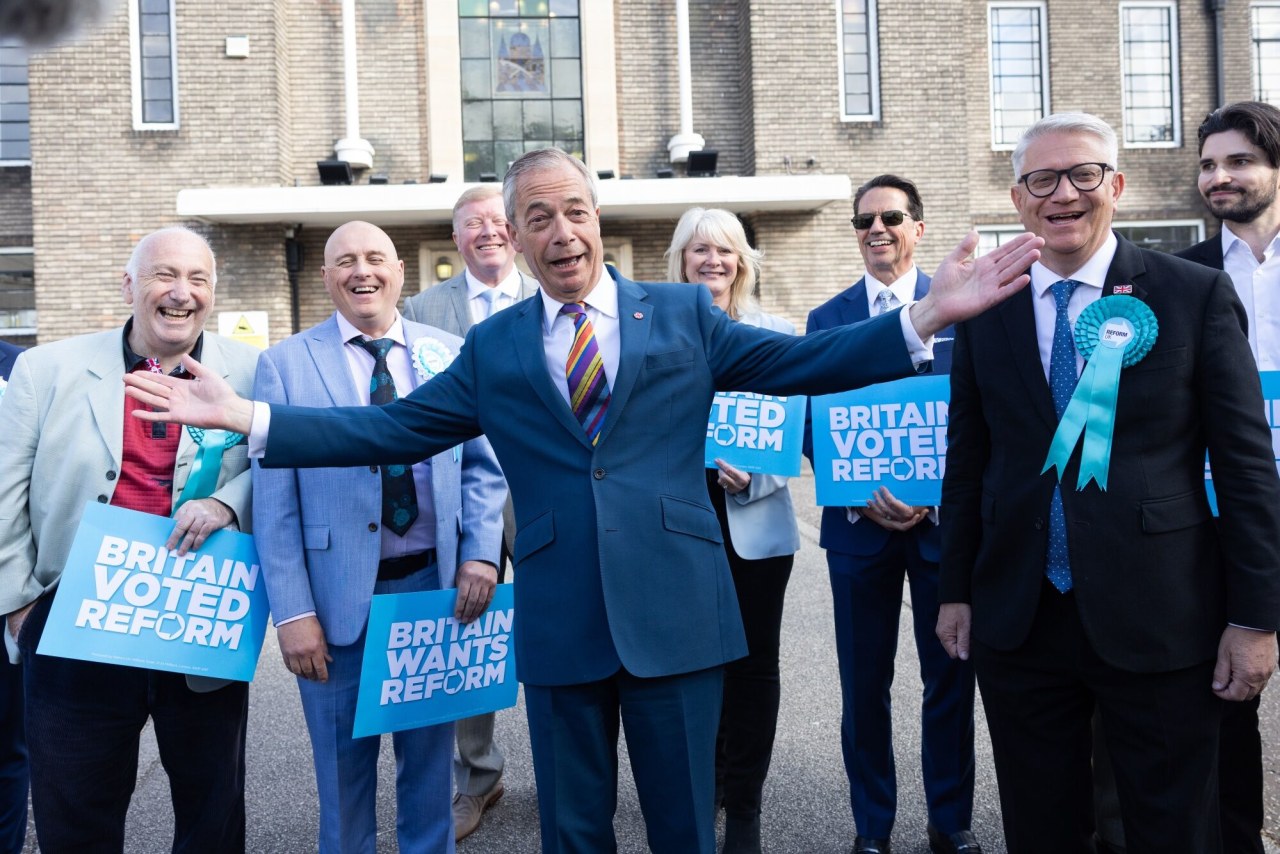
LONDON—Britain’s anti-immigration Reform UK party notched big gains in local elections that are set to hand the ruling Labour Party one of its worst election results in history, ramping up pressure on Prime Minister Keir Starmer.
Reform, headed by Brexit architect Nigel Farage, claimed hundreds of council seats across England and also looked set to perform strongly in Wales, punctuating one of the biggest reorderings of the British political system in a century.
Farage pitched working and middle-class voters with a promise to curb immigration, ditch green-energy policies and cut wasteful government spending. His antiestablishment message has resonated at a time when real wages are stagnating, illegal immigration is close to historic highs and British voters are losing patience with mainstream parties after years of sluggish economic growth.
“The best is yet to come,” a beaming Farage said Friday as he hailed a “truly historic shift in British politics.”
The votes in England—normally a mundane electoral exercise focused on choosing local councilors to deal with matters such as trash collection and potholes—have become a litmus test for Starmer’s fitness to remain in Downing Street just two years after he was voted into office with a big majority.
Starmer on Friday said the result “hurt” but vowed to fight on. The former prosecutor, one of Britain’s most unpopular leaders in modern times, has notched progress in areas like reducing inflation and hospital waiting times. But he faces growing pressure from his own party, as restive Labour lawmakers worry his perceived lack of charisma and failure to get the economy growing will cost them their jobs at the next general election, due in 2029.
Labour’s problems are further compounded by the rise of the populist Green Party, which logged its best-ever local election results. Labour’s support from Muslim voters has collapsed, with many now voting for candidates that they see as more supportive of Palestinians in Gaza.
Projections by Sky News showed that if a general election were held tomorrow, Reform would become the largest party in parliament but wouldn’t secure an outright majority.
Some 70% of Brits now think Starmer is doing badly as Britain’s leader, according to polls. U.K. government borrowing costs crept up in recent weeks as investors fretted that a more left-wing replacement might go on a borrowing binge to bolster the nation’s public services.
But removing a Labour leader is complex, with 20% of Labour lawmakers needed to nominate a challenger. Party members and trade unions then vote to choose the winner. The favorite to replace Starmer, Manchester Mayor Andy Burnham, isn’t a member of parliament and so can’t stand against him. Members of Starmer’s cabinet took to the airwaves Friday to defend their leader and say now wasn’t the time to embark on a process to find a new prime minister.
Of the roughly 5,000 council seats up for election, 2,196 were held by Labour. By Friday afternoon, Labour was on course to lose 1,200 of those seats, but counting will continue into the weekend. Swaths of what was once called the “Red Wall”—post industrial English heartlands that have voted Labour for generations—swung to Reform. Meanwhile the Green Party made inroads in London, Labour’s other heartland.
The rise of Reform has fractured Britain’s political consensus of the past century, a long stretch when either the Conservatives or Labour won every election. This is the first time in a century that a party other than those two has led in the polls for a year. In the 1950s, the Tories and Labour would capture 97% of all votes. Today, they can muster around 40%.
For decades, the assumption was that a populist party on the far left or right couldn’t prevail in Britain’s winner-take-all voting system, which heavily favors the big incumbent parties, says John Curtice, a pollster. “That assumption is no longer valid.”
Britain has cycled through five prime ministers in the past seven years. But no leader has been able to fix the country’s economic ills, which have been compounded by the decision to leave the European Union and a borrowing binge during the Covid-19 pandemic.
“I think Reform are the proverbial kick up the backside the two main parties need,” said Jeff Weston, 58 years old.
Starmer entered office in 2024 with a pledge to improve Britain’s economy, lower illegal immigration and cut hospital waiting lists. The turnaround has been slow, hampered by an aging population, higher borrowing costs and what critics see as Starmer’s unwillingness to push through difficult decisions. His tenure has been marked by U-turns on issues big and small, from whether to issue national ID cards to an inheritance tax on farmers.
The Labour government has raised taxes to cover increased government spending and higher borrowing costs. But Starmer has dodged tough trade-offs: He abandoned plans to curb welfare spending after a small revolt by lawmakers. The reticence to cut spending means other areas such as the military have been starved of meaningful investment. Meanwhile, the war in Iran has snuffed out green shoots in the economy and pushed up government borrowing costs, raising the prospect of more tax increases.
The International Monetary Fund says the U.K. economy—a net importer of food and energy—will suffer the biggest hit to growth of all major economies from the fallout of the Iran war.
Starmer has also struggled to counter Reform’s biggest selling point: that immigration is out of control. The number of arrivals on small boats from France was the second highest on record in 2025. Legal migration, meanwhile, has dropped significantly, as the government tightens controls after the previous Conservative government allowed in an unprecedented number of migrants. Legal migration ran at one million in the 12 months to June 2023 and fell to 204,000 in the 12 months to June 2025.
Paul Rendle, a 66-year-old electronics engineer who lives in the London suburb of Bexleyheath, is typical of the many working-class Britons who have made a political journey. He backed Labour for decades before turning to the Conservatives in 2010 and now Reform. Rendle said his main issue is immigration.
“We’re a small island, and we can’t keep up with this many people coming in,” he said. “We’re attracting too many people who aren’t contributing.”
Write to Max Colchester at Max.Colchester@wsj.com and David Luhnow at david.luhnow@wsj.com