
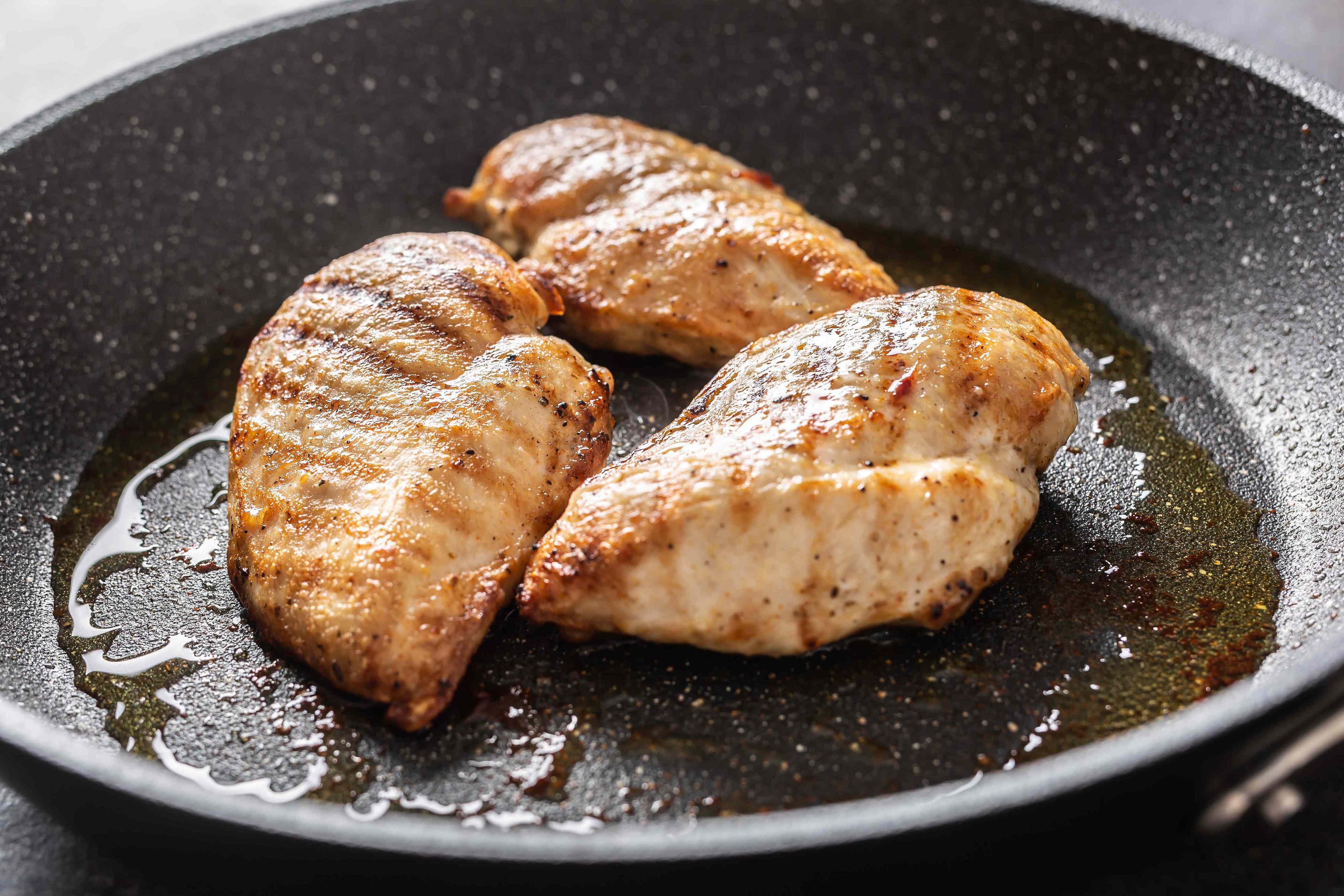
Here's how to add flavor and maintain tenderness.
There's a particular satisfaction in throwing chicken into a marinade the night before you plan to cook it—like you've already handled tomorrow's dinner problem before today is even over.
The logic tracks too: more time means more flavor, more tenderness, more delicious. The problem is that depending on what's in that marinade, you might be waking up to chicken with the structural integrity of a soggy washcloth.
Overnight marinating is great—until it isn't. I asked three chefs to explain exactly where the line is.
Meet the Marinade Masters
- Jessica Gavin: Certified food scientist and author of Easy Culinary Science for Better Cooking
- Esther Reynolds: Recipe developer and food writer
- Jessica Furniss: Recipe developer and food writer
When You Should Not Marinate Overnight
Before timing even enters the picture, it helps to understand what a marinade is actually doing. Reynolds explains, "Unlike a brine—which is all about moisture retention and drawing flavor deeper into the meat—a marinade works its magic on the outside of the chicken." Flavor molecules stay in the outer few millimeters of meat regardless of time. What changes with time isn't depth of flavor, it's texture. And that's where marinade type makes all the difference.
Strong acids, like citrus juice, vinegar, and wine, are where the soggy washcloth situation becomes a real risk. They begin denaturing surface proteins almost immediately, and past a certain point, the texture tips from tender to mealy. Gavin holds off on adding the acidic components of a marinade until 30 to 60 minutes before cooking.
Furniss, whose go-to is a vinegar-based Italian dressing marinade, keeps her window tight: "Marinating even 20 minutes can help impart flavor and tenderness into chicken, but I try not to exceed three hours to avoid mushy chicken."
Enzyme-based marinades, made with pineapple, papaya, or kiwi, are the most aggressive of all, each containing proteolytic enzymes that rapidly break down muscle fibers and with little mercy. Reynolds flags pineapple juice specifically: "It has a powerful enzyme that can wreak havoc on proteins if left for too long." Keep these to 30 minutes to two hours, maximum.
When To Marinate Overnight
For salt-based marinades (such as brined chicken breasts) extra time is well spent. Salt works through osmosis, drawing moisture out briefly, then pulling it back in, carrying seasoning deeper into the meat than any other marinade component. Gavin takes advantage of this during weekly meal prep; salt "acts like a brine, loosening the protein structure," providing tender, juicy chicken.
Oil-based rubs are forgiving. They coat the surface and carry fat-soluble flavor compounds without altering texture, making timing a matter of convenience. Reynolds finds her sweet spot at two to six hours, though she will marinate them overnight when she has a lot of prep to do. "It's especially helpful if I have a lot of other things on the menu [and know] the chicken is doing its thing in the refrigerator," she says. A dry brined whole chicken benefits from sitting in the fridge for 24 to 72 hours.
Dairy-based marinades, like yogurt and buttermilk, are overnight-friendly for different reasons. Gavin explains that lactic acid is "much gentler than citric acid in lemon juice or acetic acid in vinegar," and yogurt's fat and proteins add an extra buffer, slowing the acid's effect even further for "a juicy, tender texture without the surface turning mushy too quickly." Even so, Gavin sets a limit: After about 24 hours, even a dairy marinade will start to soften the exterior past the point of no return.
Read the original article on Simply Recipes