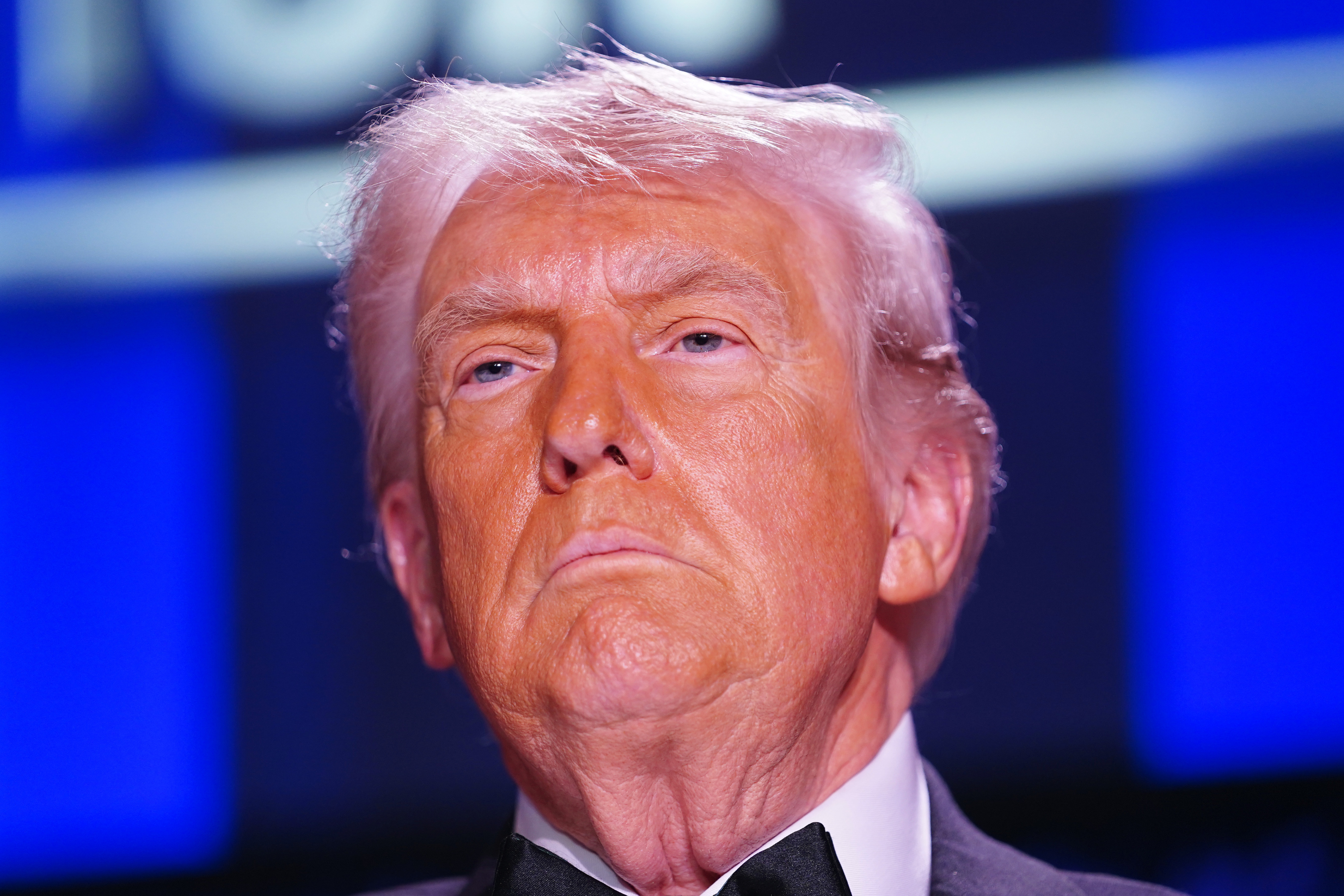
President Donald Trump’s approval rating has fallen to its lowest point since his return to office last January as voters turn sharply against his handling of the cost of living amid intensifying inflation pressures following the Iran war’s disruption of global energy markets, according to a new Reuters/Ipsos poll.
The drop lands just months before pivotal midterm elections, and as households facing higher fuel and everyday prices feel the impact most, political risk is rising for Republicans already defending narrow congressional margins.
The survey shows Trump’s overall approval rating dropping to 34 percent—losing 2 points since mid-April—while disapproval gained 2 points, climbing to 64 percent.
Voters are especially dissatisfied with Trump’s handling of cost-of-living issues. In another record low, just 22 percent approved of his performance on that front, a 2-point loss from the Reuters/Ipsos poll conducted April 15-20.
White House spokesman Kush Desai told Newsweek: “President Trump created an economic boom in his first term with historic job, wage, and investment growth along with the first decline in wealth inequality in decades. In his second term, President Trump is again implementing his proven, first-term economic agenda of tax cuts, deregulation, and energy abundance.
“As cargo traffic in the Strait of Hormuz begins to normalize again and the disruptions of Operation Epic Fury begin to subside, Americans can rest assured that the best is yet to come.”
Why It Matters
Trump returned to office promising price relief after years of high inflation, but renewed geopolitical shocks have tested that pledge. For many voters, the distinction between domestic policy and foreign conflict blurs at the pump.
Energy costs feed directly into grocery bills, transportation and rent, amplifying the sense that household finances are deteriorating despite a slowing inflation rate elsewhere. These persistent cost pressures now appear to be eroding confidence beyond the president’s core supporters.
What To Know
The latest Reuters/Ipsos survey has produced Trump’s lowest approval rating of his second term, with his net approval rating (those who approve minus those who disapprove) now standing at minus 30 points, a sharp deterioration from minus 14 in October.
While consistently polarized ratings defined Trump’s first presidency, his approval during long stretches hovered closer to 40 percent.
The current figure sits just above the 33 percent low point recorded during his first term.
The latest Reuters/Ipsos survey was conducted nationwide and online from April 24 to April 27, polling 1,269 U.S. adults, including 1,014 registered voters, with a margin of error of plus or minus 3 percentage points.
Cost of Living Emerges as Central Weakness
Voters are most downbeat about the cost of living, with Trump’s approval at a record low of 22 percent and disapproval at 69 percent.
The timing is crucial. Since the U.S. and Israel launched surprise attacks on Iran on February 28, global oil flows have been disrupted, shutting down roughly a fifth of worldwide supply routes.
U.S. gas prices have surged more than 40 percent over that period, reaching about $4.18 a gallon.
Even with a ceasefire announced earlier this month, Iranian threats in the Persian Gulf continue to restrict shipments, keeping pressure on prices.
Republicans Hold, but With Visible Cracks
Trump maintains strong loyalty among Republican voters, with 78 percent saying they approve of him overall in the Reuters/Ipsos poll.
Yet the data also suggests visible strain within his own party, with 41 percent of Republicans surveyed saying they disapprove of his handling of the cost of living, an unusually high share for a president among partisan supporters.
That internal tension matters heading into November’s elections.
Rising prices historically punish the incumbent party, and Republican strategists are increasingly alert to the risk of losing control of Congress if economic anxiety persists through the summer and fall.
Independent Voters Drift Away
Independent registered voters, often decisive in midterm outcomes, appear to be moving in the opposite direction.
In the same April 24-27 Reuters/Ipsos poll, independents favored Democrats by 14 points—34 percent to 20 percent—when asked which party they would support in congressional elections.
One in four independents said they remained undecided, underscoring both volatility and opportunity for both sides.
That combination is dangerous for incumbents. High disapproval among independents typically signals not only dissatisfaction but also openness to change.
With many independents still uncommitted, perceptions of economic competence over the next several months could prove decisive.
War and Economic Confidence Intertwined
Beyond prices, Trump’s management of the conflict with Iran is also weighing on public opinion. Only 34 percent of Americans approve of U.S. involvement in the war, down from 36 percent in mid-April and 38 percent in mid-March, according to the same Reuters/Ipsos methodology.
While support has declined gradually, the trend aligns with rising economic fallout rather than battlefield developments.
Historically, wars that raise domestic costs without clear or swift resolution tend to erode public backing, especially when voters had expected economic relief.
Trump’s overall economic approval rating now sits at 27 percent, well below any point during his first administration and below even President Joe Biden’s weakest economic readings during periods of elevated inflation.
A Familiar Pattern, With Higher Stakes
Trump entered office in January 2025 with 47 percent approval, buoyed by expectations that he could tame prices.
Since then, support has steadily trended downward. While polarization ensures a durable floor of backing, the polling suggests that dissatisfaction is deepening rather than plateauing.
For now, the president’s approval remains narrowly above the lowest levels of his first term. Whether it stabilizes there or continues to fall may depend less on campaign messaging than on forces largely outside the White House’s control.
For voters facing higher gas bills and everyday costs, patience appears to be wearing thin.
Related Articles