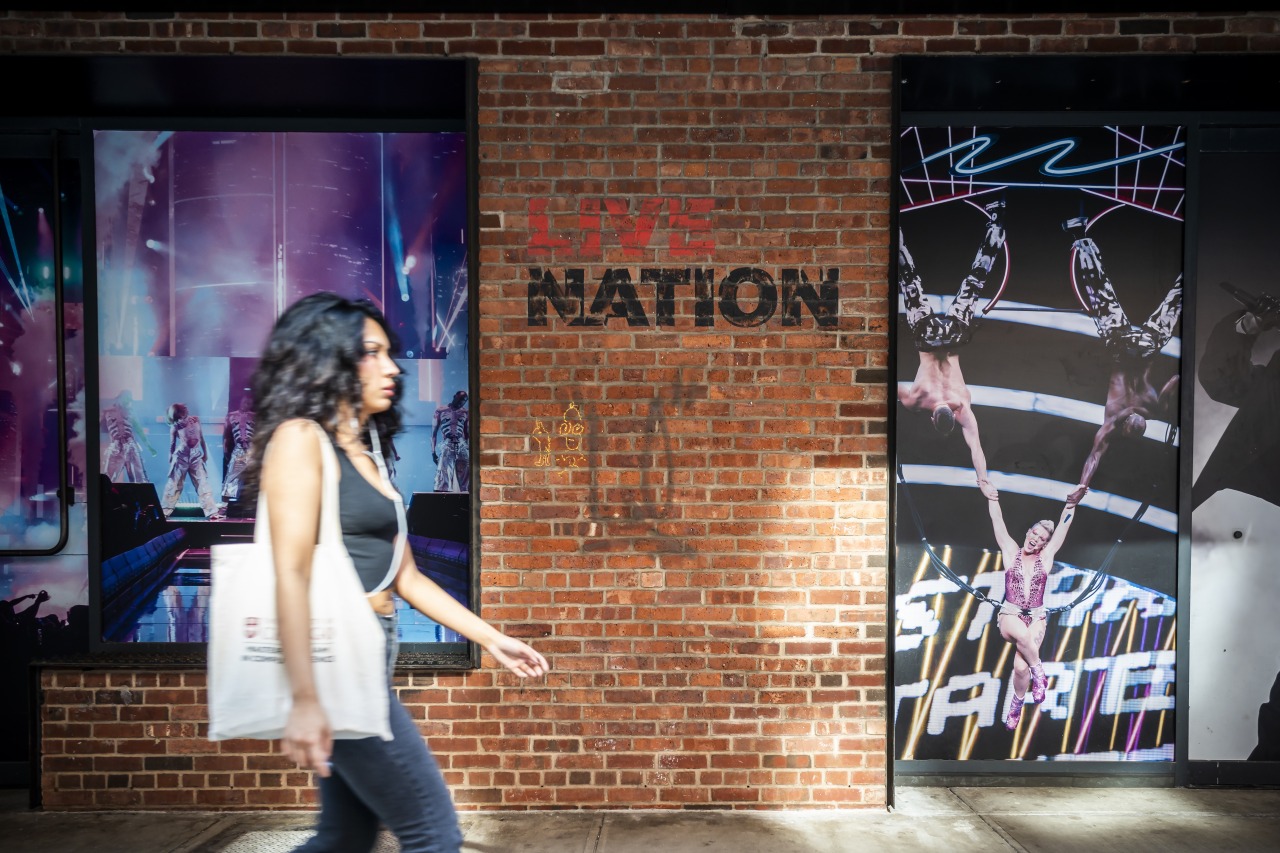
A federal jury on Wednesday found that Live Nation illegally monopolized the ticketing market for major concerts in the U.S., in a win for a group of states that accused it of overcharging music fans and pressuring venues to use its dominant Ticketmaster service.
The verdict came after five weeks of trial and nearly four days of deliberation by jurors in a New York City federal court. The Justice Department made the decision last month to settle its case against Live Nation, leaving more than 30 states to try their claims without the federal government.
Now, the group of states will likely try to persuade a judge during a new phase of proceedings that splitting up Live Nation is the only way to fix a broken market. Consumers who were overcharged for tickets will be eligible to get money back, but the total amount Live Nation will pay hasn’t been determined yet.
Live Nation shares fell more than 6%. Shares of ticketing rival StubHub rose by nearly 4%, while Vivid Seats closed up more than 9%.
The bipartisan group of states argued that Live Nation, which merged with Ticketmaster in 2010, built a colossus that dominates essential parts of the live entertainment market, including concert promotion, venue management and ticketing. Its market share in ticketing and promoting shows at large amphitheaters exceeded 70%, according to the states.
The case turned on claims that Live Nation bullied venues and artists, and kept prices high by shutting other ticket sellers out of key amphitheaters. The states said Live Nation tied its offerings together—for instance, requiring artists to use its promotion service if they wanted to perform at amphitheaters it controlled.
Live Nation denied that it was an illegal monopoly and said the states’ case exaggerated its market power. The company argued that artists determine ticket prices and that Ticketmaster didn’t have the power to raise prices on fans or exclude competing ticketing services. Live Nation said it never conditioned concerts on a venue’s use of Ticketmaster.
In a statement Wednesday, Live Nation said it would ask the judge to find that jurors had erred and overturn their verdict. The company also is challenging the expert-witness testimony that underpins the states’ claim for hundreds of millions of dollars in damages.
“We remain confident that the ultimate outcome of the states’ case will not be materially different than what is envisioned by the DOJ settlement,” the company said.
The states’ victory is validation for Live Nation’s longtime critics, who say the Ticketmaster merger never should have been allowed.
It also represents a win for states that have taken a leading role in enforcing competition laws, while the Trump administration has warmed to consolidation and favors cutting deals to resolve antitrust lawsuits inherited from the Biden era.
The states “stepped up very quickly and got a clean victory,” said Barak Orbach, an antitrust professor at the University of Arizona.
The Obama administration allowed the merger, prompting worries that the combination of the largest concert promoter and ticketing company would harm consumers. For years, antitrust enforcers tried to remedy those concerns with settlements that sought to limit Live Nation’s ability to pressure rivals, but opponents argued that those measures weren’t enough.
A breakup of Live Nation and its Ticketmaster subsidiary, which the company is sure to fight, would be a significant blow to the company, which touts itself as the largest live entertainment business in the world. Having both concert promotion and ticket sales creates a flywheel effect, or a virtuous cycle in which the growth of one part of the business fuels others, the company has said.
Consumers would be eligible to receive damages payments based on the jury’s finding they were overcharged by $1.72 per ticket. U.S. District Judge Arun Subramanian, who oversaw the trial, will determine the total amount at a later date, as well as what constraints to put on Live Nation to foster more competition, including whether to order a Ticketmaster spinoff.
“It is a major affordability win for the consumer and just a huge missed opportunity for the Department of Justice, which settled on the cheap in the manner that they did,” said Roger Alford, a former senior Justice Department official who has said lobbyists wield too much influence over how the Trump administration resolves antitrust cases.
Only a few states joined the Justice Department’s settlement, which came after President Trump inquired about resolving the case, The Wall Street Journal reported. A larger group that included New York, Texas and California continued to litigate, believing the Trump administration had signed on to a weak settlement that fell short of the industry overhaul envisioned by some of Live Nation’s competitors and critics.
The full language of the Justice Department’s settlement hasn’t been made available. A seven-page summary outlined terms that would make it easier for rival promoters to compete for business at Live Nation’s amphitheaters and would restrict the company’s ability to use exclusive ticketing contracts at its venues. The company agreed at the time to pay $280 million in damages to the states.
In closing arguments, the states argued that stark language used by Live Nation executives showed how an anticompetitive culture came from the top. One executive talked about the company’s “moat around the castle,” while another referenced a “velvet hammer,” or practice of withholding concerts from venues that didn’t work with it.
“What type of company uses this language?” said a lawyer for the states, Jeffrey Kessler. “A monopolist who believes itself above the law.”
The states’ case leaned on what they described as examples of threats and coercion. A Brooklyn arena executive who had switched from Ticketmaster to rival SeatGeek testified that Live Nation CEO Michael Rapino threatened to steer concerts away from the venue.
Rapino, who has led Live Nation since its inception in 2005, also was confronted with messages written by regional Live Nation executives in which they mocked consumers and said they “gouge” them on ancillary services such as parking. “These people are so stupid. I almost feel bad taking advantage of them,” one of them wrote.
Live Nation said a few cases of negotiations being perceived as threats weren’t sufficient to show that it had monopoly power. Rapino testified that he never threatened the Brooklyn venue executive, and said Live Nation didn’t prevent venues from working with other ticketers. The venues prefer exclusive ticketing arrangements, he told the jury.
Live Nation’s lawyer, David Marriott, told the jury during closing arguments that the states had disparaged the company’s employees and taken statements out of context. “This has been in many respects a trial by snippet and insinuation,” Marriott said.
Speaking after the verdict, the jury foreperson, who asked to remain anonymous, said certain evidence in the case, including messages between employees, stood out to her and the other jurors. “The language they used in their emails was not very professional,” she said.
The juror said that she has been to concerts where she has been surprised by the cost of tickets. “Everyone has been impacted by that,” she said.
Write to Dave Michaels at dave.michaels@wsj.com, Corinne Ramey at corinne.ramey@wsj.com and James Fanelli at james.fanelli@wsj.com