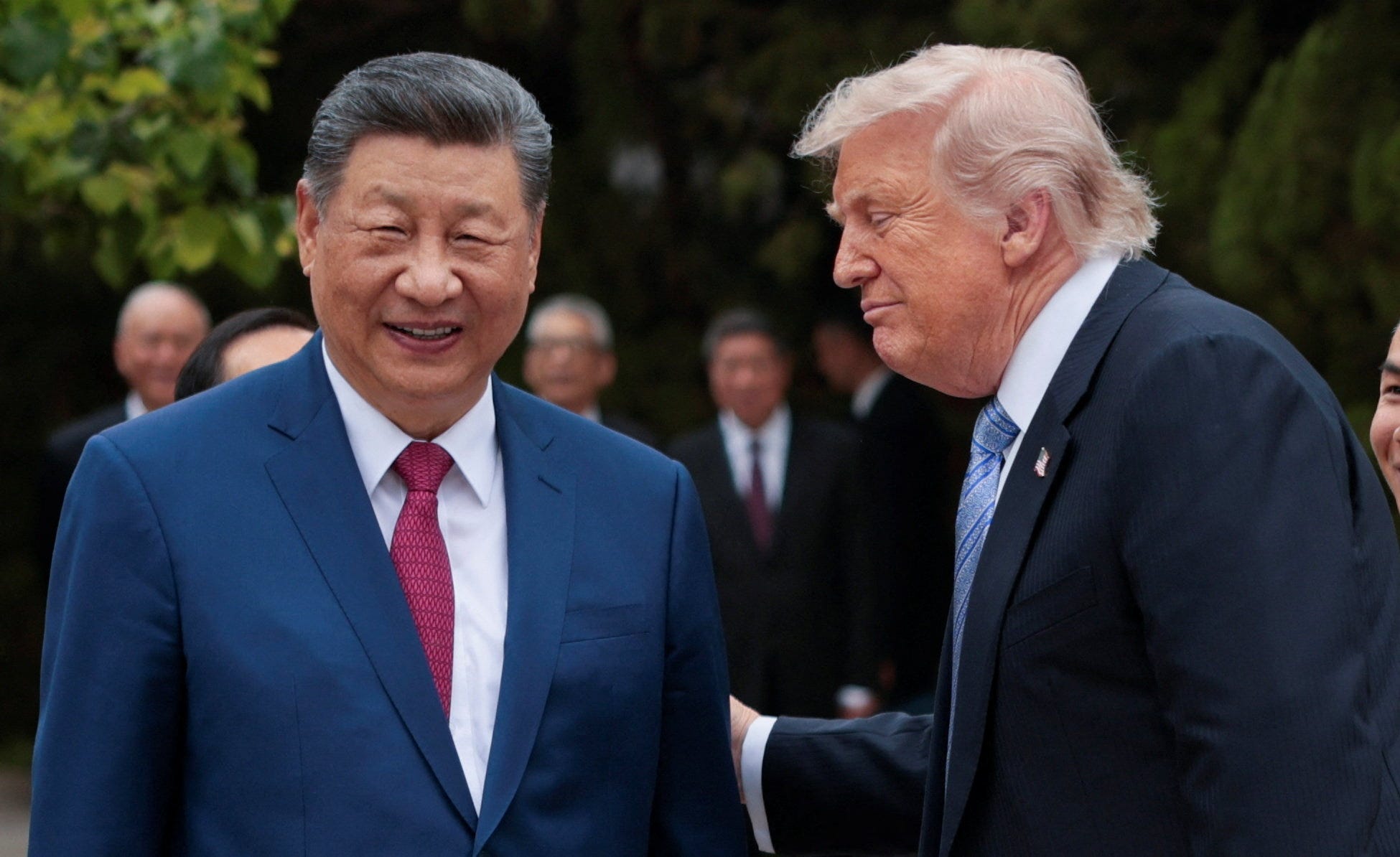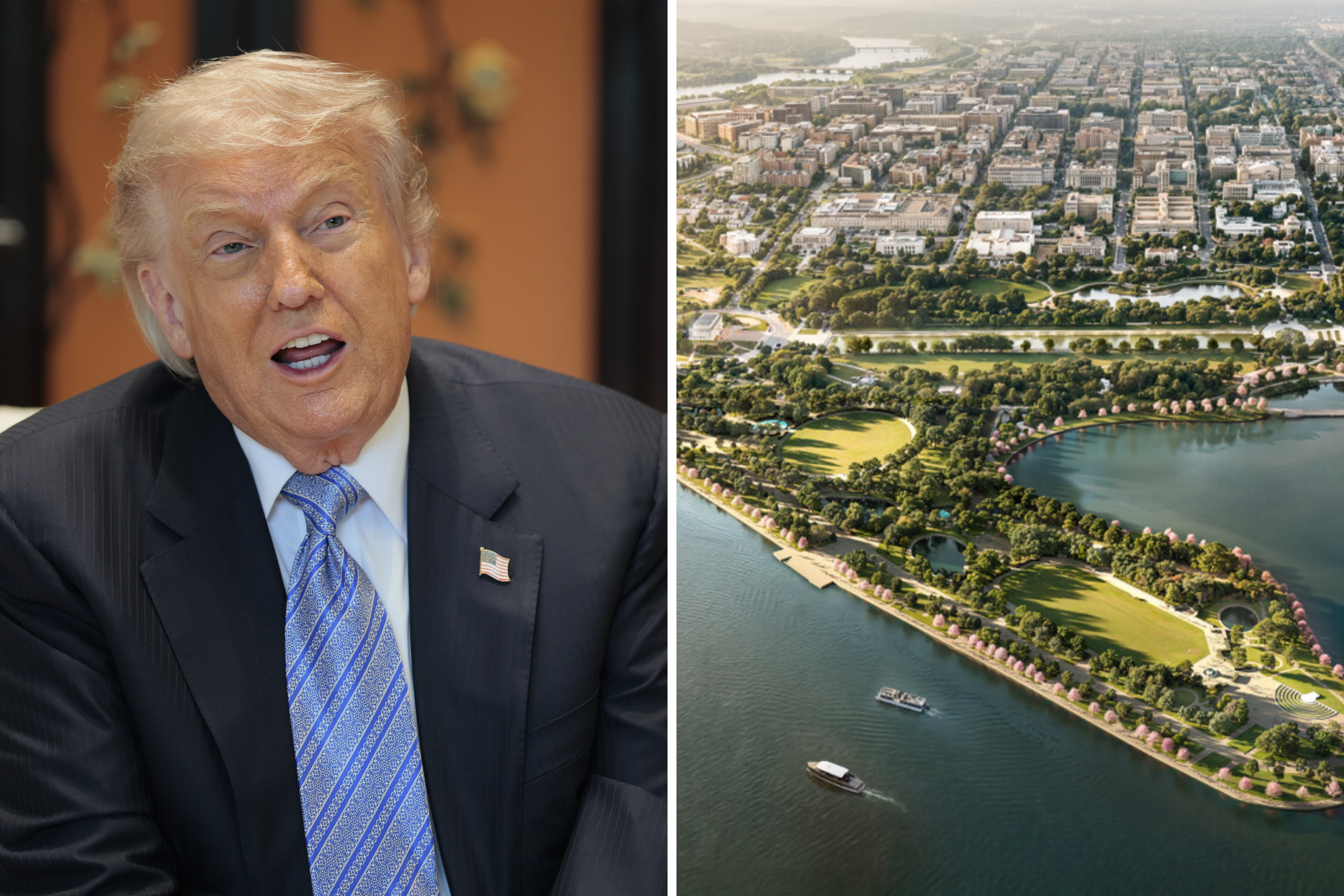
President Donald Trump said he has selected a site in West Potomac Park for his long‑proposed “National Garden of American Heroes” and set a target completion date of September 2028 for the divisive White House ballroom project, unveiling the updates in early morning Truth Social posts on Friday, highlighting what he described as major development efforts reshaping the capital.
The garden project, which Trump tied to celebrations of America’s 250th anniversary in 2026, revives a proposal first introduced during his first term to create a sprawling outdoor monument to “American heroes” spanning politics, the military, civil rights, sports and entertainment.
In his post, Trump cast the development as part of a broader push to remake Washington into the “safest and most beautiful capital in the world.”
A White House spokesperson told Newsweek the proposed addition to the capital would “be built to reflect the awesome splendor of our country’s timeless exceptionalism.”
The White House has not released details on the project’s final cost, construction timeline, or the full list of figures to be commemorated.
The latest update on the ballroom comes as Republicans seek $1 billion to fund it, despite the president previously saying it would cost $400 million and be funded exclusively by private donors. In his Truth Social post, Trump said, “China has a Ballroom, and so should the U.S.A.!” and insisted the project was ahead of schedule.
What Is the National Garden of American Heroes?
Trump’s latest announcement marks the most concrete step yet in a project that has been under discussion since 2020, when he first signed an executive order calling for a new statuary park celebrating “great figures of America’s history.”
The proposal envisions as many as 250 life-size statues and was pitched during a period of nationwide protests and monument removals, with Trump framing it as a response to what he described as efforts to “erase” U.S. history.
Although the project stalled after he left office, it has been revived during his second term, with Congress setting aside around $40 million in federal funding as part of the One Big Beautiful Bill Act.
Who’s on the List?
Trump’s 2021 executive order proposing the National Garden of American Heroes included a wide-ranging and sometimes unexpected mix of political leaders, civil rights figures, scientists, artists and celebrities.
Among the most notable names are:
- George Washington
- Thomas Jefferson
- Abraham Lincoln
- Martin Luther King Jr.
- Frederick Douglass
- Harriet Tubman
- Susan B. Anthony
- Albert Einstein
- Alexander Graham Bell
- Thomas Edison
- Neil Armstrong
- Sally Ride
- Walt Disney
- Mark Twain
- Frank Lloyd Wright
- Louis Armstrong
- Elvis Presley
- Whitney Houston
- Muhammad Ali
- Jackie Robinson
- Kobe Bryant
- Babe Ruth
- Julia Child
- Alex Trebek
The list—spanning roughly 244 proposed figures—was designed to cover what Trump described as the full breadth of American achievement, from founding-era politics to modern pop culture.
What Monuments Are Already in West Potomac Park?
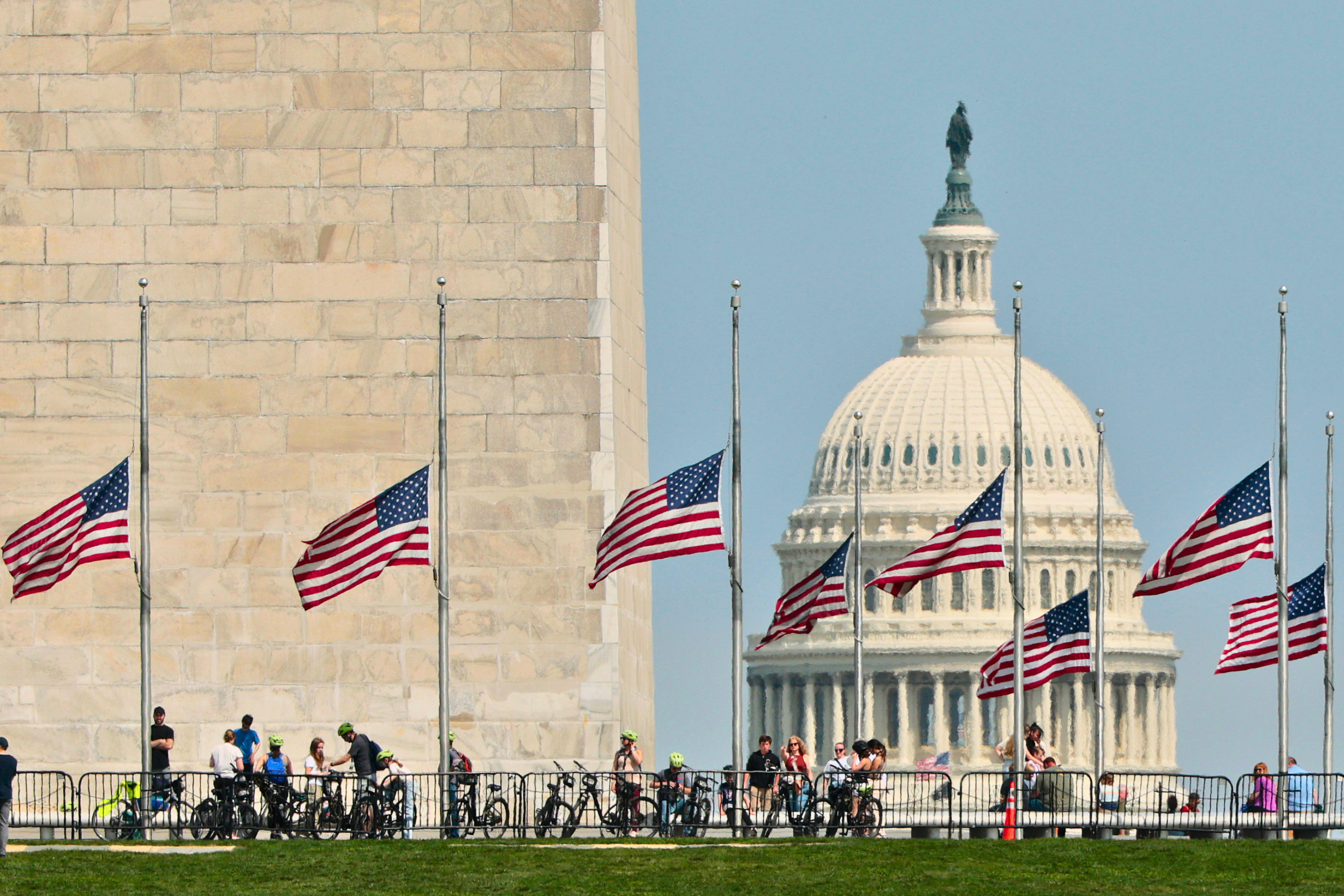
West Potomac Park is already home to some of Washington’s most prominent memorials.
The park contains the Martin Luther King Jr. Memorial, dedicated in 2011, which features a towering granite statue of the civil rights leader and was the first memorial on the National Mall grounds honoring an African American and a non‑president.
Nearby is the expansive Franklin Delano Roosevelt Memorial, a multi‑acre complex that commemorates the 32nd president’s four terms in office through a series of outdoor rooms, waterfalls and bronze sculptures reflecting the Great Depression and World War II.
West Potomac Park sits adjacent to—though does not formally include—other major landmarks such as the Jefferson Memorial and the World War II Memorial, placing it at the center of one of the nation’s most heavily visited and historically significant commemorative corridors.
Beyond monuments, the park is also widely used for recreation and tourism, particularly during Washington’s annual cherry blossom season, when thousands of visitors gather along the Tidal Basin.
The presence of existing large‑scale memorials is likely to intensify scrutiny of Trump’s plan, as any new development in the area would face environmental reviews, historic‑preservation concerns and federal approval processes governing construction near the National Mall.
White House Ballroom Timeline
Trump’s plan to add a massive ballroom to the White House has rapidly progressed since 2025, amid significant controversy. On July 31, 2025, the White House formally announced a new 90,000-square-foot “State Ballroom” to host up to 650 guests (triple the East Room’s capacity). Construction was set to begin that September and finish by 2028, with Trump and private donors covering the roughly $200 million cost and “not one dime” of taxpayer funds needed except for added security measures.
The plan soon ballooned—Trump privately expanded capacity to 999 people and the project cost climbed toward $250 million by fall. In a rush to break ground, crews began demolishing the East Wing on October 20, before formal design approval by federal planners. Days later, Trump fired all six members of the Commission of Fine Arts (an independent design review board) and appointed new members aligned with him, effectively sidestepping oversight of the project’s esthetics. The swift, unilateral teardown of part of the 1902 East Wing sparked outcry from preservationists, and the National Trust for Historic Preservation sued, arguing no president can alter the White House so drastically without Congressional approval.
That legal battle and other disputes intensified in 2026 as construction forged ahead. On March 31, a federal judge barred further work, ruling that Congress must authorize Trump’s ballroom project (a temporary injunction the administration is appealing). Two days later, the National Capital Planning Commission—chaired by a Trump ally—voted 8-1 to give final approval to the ballroom’s design, despite more than 35,000 public comments (97 percent opposed) and criticism that the 90,000 sq ft hall “competes” with the main White House in scale. Funding and ethics questions have also roiled the project.
Trump’s team initially pegged the cost at $200 million (all privately funded), but by spring 2026 Trump was citing “something less than $400 million.” A partial donor list named tech giants and defense contractors (including Amazon, Google, Meta and Microsoft) pledging funds, spurring bipartisan concern about potential “pay-to-play” influence and calls for transparency.
In April, after an attempted assassination attempt against the president at the White House Correspondents’ Dinner, Trump and GOP allies cited it to justify a “drone-proof” ballroom and introduced bills seeking $400 million to $1 billion in federal funds for security upgrades tied to the East Wing project. Democrats blasted that as a flip-flop on Trump’s no-taxpayer-money pledge.
What Happens Next
Trump has not yet released detailed construction timelines, design renderings or a full list of figures to be included in the West Potomac Park version of the garden. It is also unclear how quickly the project could advance through the required federal approvals process.
Related Articles