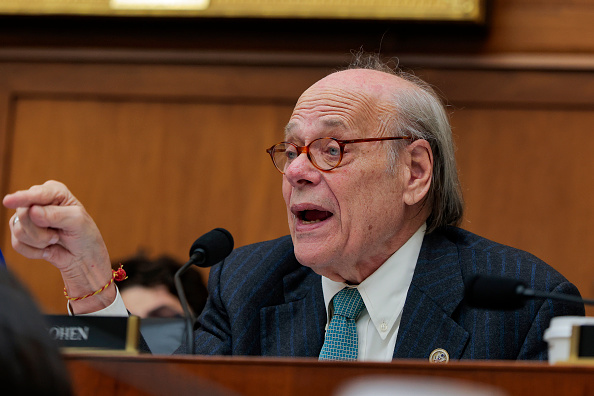
Democratic Representative Steve Cohen of Tennessee announced Friday that he will not seek another term in Congress, saying the state’s newly approved congressional map has left him without a viable path to reelection.
His decision comes amid a wave of redistricting battles across the South following a recent U.S. Supreme Court ruling that significantly weakened federal Voting Rights Act protections for minority communities.
Cohen, who has represented Tennessee’s 9th Congressional District—a majority‑Black district centered in Memphis—for nearly two decades, said the new map “was drawn to beat me,” and that he would consider reentering the race only if a court challenge restores the district’s previous boundaries.
Why It Matters
Earlier this month, Tennessee Republicans enacted a U.S. House map that splits Cohen’s Memphis‑based district into multiple GOP‑leaning seats. The move is part of a broader strategy by national Republicans, including President Donald Trump, to protect the party’s narrow House majority heading into the November midterm elections.
Tennessee was the first state to approve new congressional lines after the Supreme Court’s ruling, and lawmakers in Louisiana, Alabama, and South Carolina are considering similar steps. Voting‑rights advocates warn that the changes could diminish the political influence of Black voters across the region.
Cohen said the new map could leave Tennessee with an entirely Republican congressional delegation, a shift he argued may weaken the state’s influence in Washington when Democrats next control the White House.
A Longtime Memphis Democrat Steps Aside
Cohen, 76, is one of the last white Democrats representing a majority‑Black district in the South. First elected in 2006, he has built a reputation as a progressive voice on the House Judiciary Committee, focusing on voting access, civil rights, and criminal justice reform.
He is also known for his colorful moments on Capitol Hill. In 2019, during a Judiciary Committee hearing that then‑Attorney General William Barr declined to attend, Cohen brought a bucket of fried chicken to the dais, saying Barr was “not brave enough” to face questioning.
Tennessee Democratic Party Chair, Rachel Campbell, said in a statement: “We are forever grateful for Congressman Cohen’s tireless dedication, leadership, and service. He has always fought with heart, with persistence, and with Memphis always at the center. He carried Tennessee into rooms where our voices might not otherwise have been heard. Congressman Cohen gave everything to this city and to this state. No lines on a map can erase what he built. Thank you, Congressman. Memphis, and the entire state of Tennessee, is better because of you.”
Redistricting Sparks Protests and Fallout in Nashville
The redistricting fight has also triggered political turmoil in Tennessee’s state legislature. After the House approved the new map, activists protested from the gallery and several Democratic lawmakers linked arms at the front of the chamber in opposition.
Days later, House Speaker Cameron Sexton stripped Democratic members of all committee assignments, accusing them of encouraging disorder during the vote.
Representative Justin Jones, a Nashville Democrat, called the move “a pattern of racial discrimination and authoritarian abuse,” while House Democratic Leader Karen Camper described the map as “one of the most troubling abuses of power this legislature has seen in recent memory.”
Republicans hold 75 of 99 seats in the Tennessee House.
Related Articles