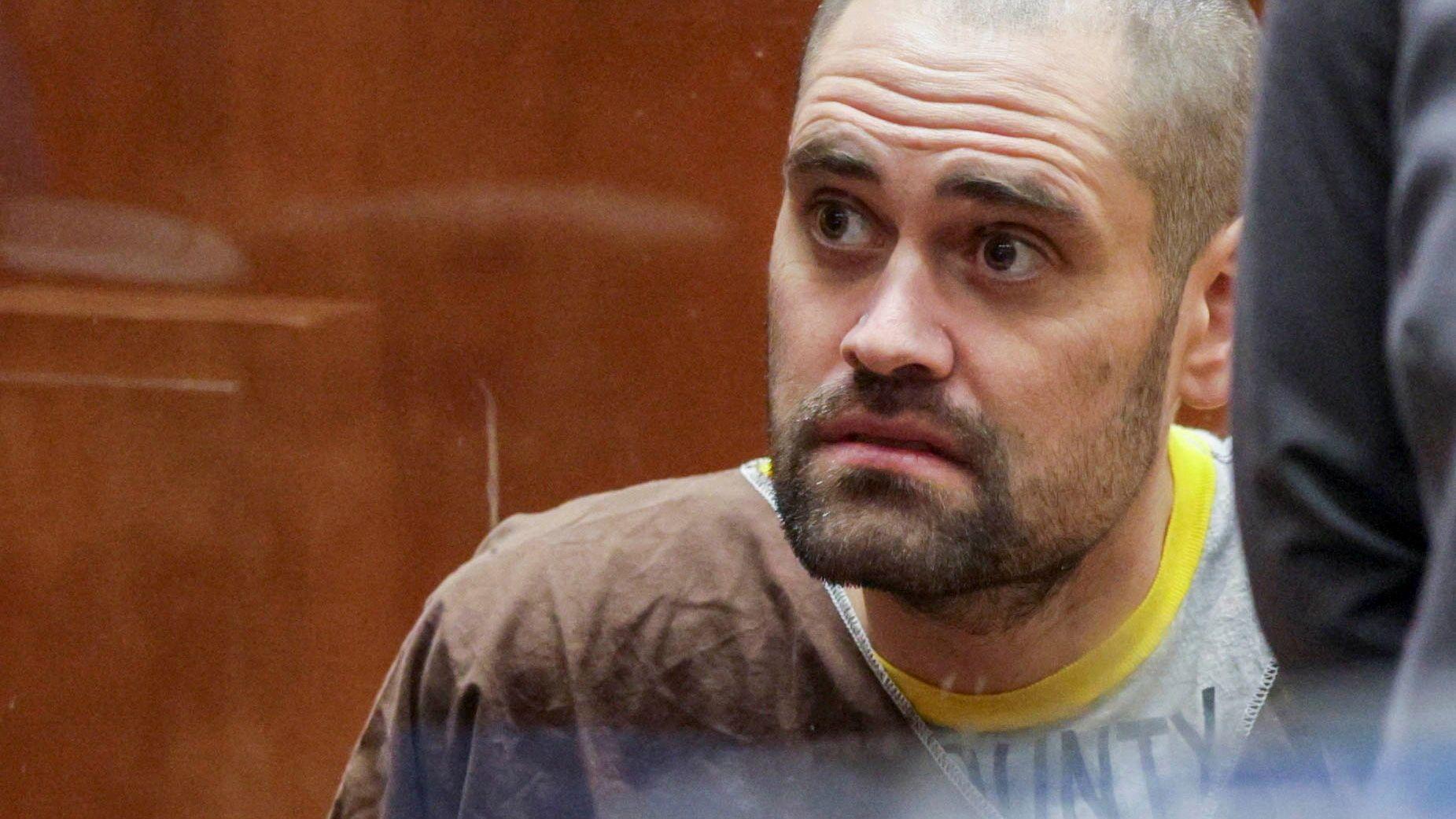
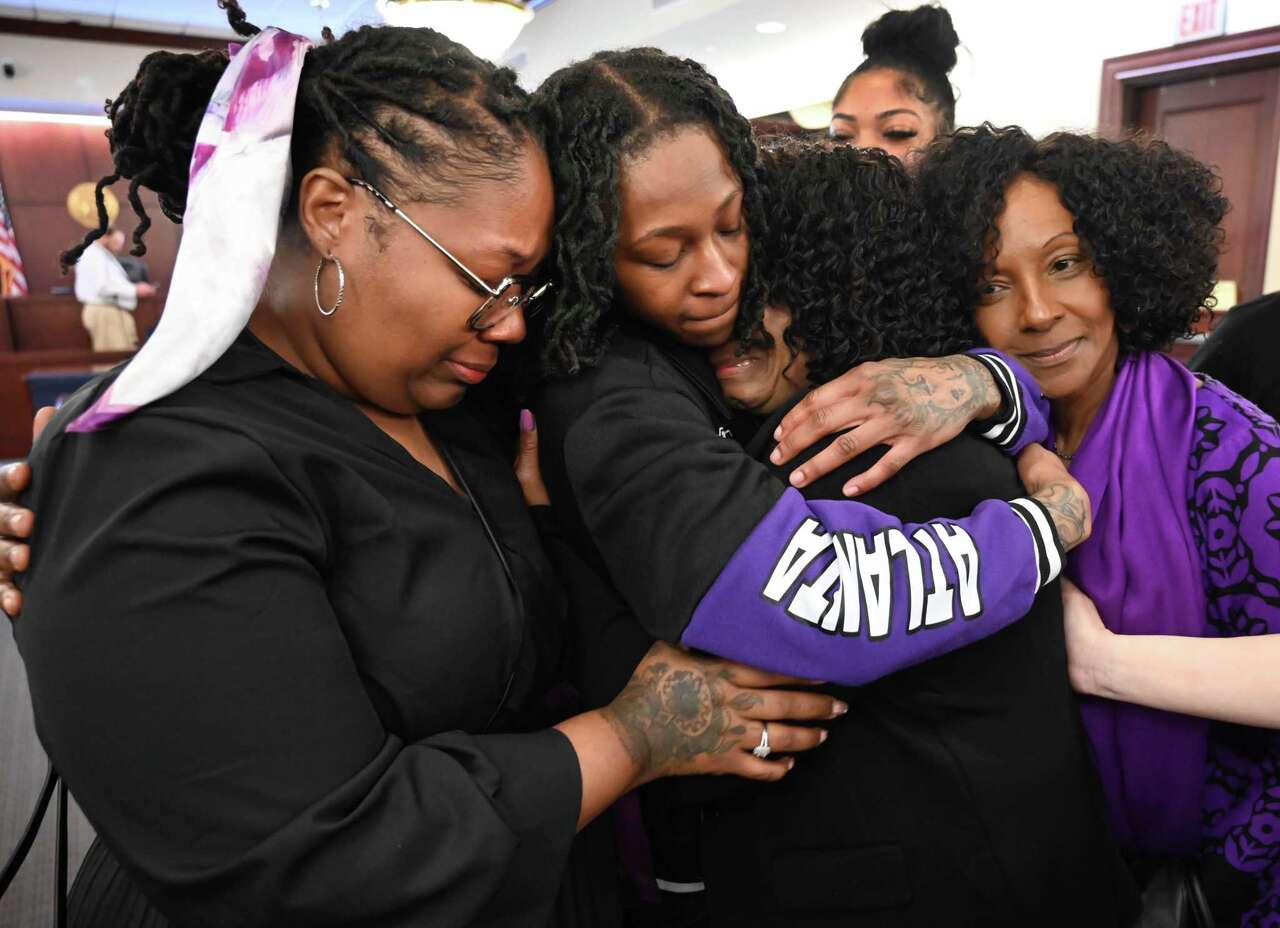
ALBANY - Sherodd Craft, who was released from state prison a year ago after a judge vacated his conviction for a 2001 shooting that killed a teenage girl in Albany, on Tuesday filed a federal lawsuit against the city of Albany and three former city detectives who had integral roles in the investigation.
Craft, 46, was sentenced in July 2003 to 50 years to life in prison after an Albany County jury convicted him of murder and attempted murder. But he and his attorneys have always maintained that he was innocent and that his conviction was the result of coercive tactics that were used by former detectives - and sanctioned by top officials in the department - to obtain purported confessions from suspects or incriminating statements from alleged witnesses.
In Craft's case, like other murder and attempted murder cases that have been overturned in recent years in Albany, there was no forensic evidence or eyewitnesses tying him to the murder of Shakira Chambers. She was hit by five rounds while sitting on the front steps of a South End residence next to Javonn Morton when two men wearing hoodies and armed with guns jumped out of a vehicle and opened fire. Morton, according to police, had been the intended target but Chambers was killed in the crossfire.
"After more than 20 years in prison, I am grateful to finally be home with my family," Craft said in a statement provided to the Times Union. "But nothing can give back the time I lost or the moments I missed with my children and loved ones. This case is about seeking accountability and making sure what happened to me does not happen to anyone else."
His release from prison came a year after his co-defendant, Alfonzo Davis, had his conviction vacated in the same Albany County courtroom where Craft's conviction was overturned. Davis was released after serving 23 years in prison for a murder his attorneys also said he didn't commit. In both cases, Albany detectives were accused of using coercion to obtain witness statements and, in Craft's case, fabricating evidence claiming he had admitted to taking part in the shooting when he was alone in an interrogation room with one detective.
Key evidence used against Craft included an affidavit from a witness - Samuel Frazier - who had testified that Craft admitted to him that he was involved in the shooting.
But more than 15 years later, Frazier admitted he had been pressured by former Albany Detective Kenneth P. Wilcox to sign a statement implicating Craft. Frazier noted that he was high from using drugs when he said Wilcox began interrogating him in a detective office following his arrest on drug charges five months after the shooting. During the trial, Frazier was so uncertain of what he had been alleged to have said in the statement that he had to read from it during his testimony.
In September 2024, Frazier signed an affidavit affirming his allegation that Wilcox had promised to let him go on a felony drug charge - which he later did - if Frazier signed the statement implicating Craft.
"Detective Wilcox prepared a statement for me to sign. The statement claimed that Sherodd Craft confessed to me that he was involved in a shooting. This statement was completely false," the affidavit from Frazier reads. "All of the information in the statement was provided by Detective Wilcox. Sherodd Craft never told me that he had been involved in any shooting. I never told Detective Wilcox that Sherodd Craft had admitted any involvement in a shooting to me."
The lawsuit filed this week by Craft, whose attorneys are with Emery Celli Brinckerhoff Abady Ward & Maazel, a Manhattan law firm, names the city of Albany and former Albany detectives Anthony Ryan and Ronald Matos as defendants. The estate of Wilcox, who died in a 2006 car crash, is also listed as a defendant in the case.
Like Wilcox, the lawsuit also accuses Ryan and Matos of fabricating evidence and using coercion to obtain statements from witnesses.
"There was no weapon connecting him to the crime," said Nick Bourland, one of Craft's attorneys. "And at trial, there was literally not a single piece of physical or forensic evidence tying him to the crime. The entire case was built on these fabricated statements."
For Craft, a father of two daughters, his release from prison last year was the culmination of a more than eight-year battle by his attorneys to free the man they said has always maintained his innocence and had never given up hope that he would be vindicated. He served more than 24 years in prison.
Wilcox left behind a tainted legacy that included a string of homicide convictions against defendants who were later cleared of their convictions of murder or attempted murder.
Last week, a similar case was made public when a man who spent nearly three decades in state prison for his 1998 conviction on charges of attempting to fatally shoot two city police officers was set free after a legal proceeding determined he was innocent.
The investigation that led to the prosecution and conviction of then-29-year-old Corey Young was among a series of cases in which defendants have been released from prison after new evidence emerged that cast doubt on their guilt.
The cases have further exposed the questionable tactics of Albany detectives who in the 1990s and early 2000s were known to use coercive tactics to get signed confessions from suspects. Those same tactics also were used by certain detectives to obtain incriminating statements from witnesses who were sometimes threatened that they or their family members might face legal peril if they did not implicate the suspects of the police.
The overturning of the conviction of Young, who will turn 57 in June, adds to the tainted legacy of Wilcox, who was once revered for his ability to get suspects - especially in homicide cases - to sign typewritten confessions.
The investigation that led to the murder convictions of Craft and Davis began in June 2001 when Broderick Green was fatally shot in Albany. The shooting of Chambers and Morton occurred later that day in the city's South End and was allegedly carried out in retaliation for the death of Green.
Days later, Wilcox and another detective arrested a man who was a bystander near the scene of the shooting. He allegedly identified one of the shooters as a man known as "Up Top." That man, Anthony Malloy, was arrested on June 19, 2001, for an unrelated charge. He had no alibi but was never pursued as a suspect in the shooting.
Instead, Malloy signed a statement witnessed by Matos and Ryan, who is chief of investigations for the state Justice Center for the Protection of People with Special Needs, alleging Craft had told him that he and Davis had been the shooters who killed Chambers and wounded Morton.
In 2013, Malloy posted a video on YouTube in which he said that Wilcox and Ryan had pressured him to implicate Craft and Davis in the shooting. According to court records, that pressure had included Wilcox threatening to charge Malloy with the murder if he refused to sign the statement - but letting him go if he did.
Related Reading
Democrats propose state-funded fix for 400,000 losing health coverage in NY
Cohoes police officer charged with promoting child sexual performance
Don't work on Sunday: 10 odd and outdated laws in New York
Subscribe
There’s more to Albany with the Times Union. Subscribe today for just 25¢.Read this story on timesunion.com