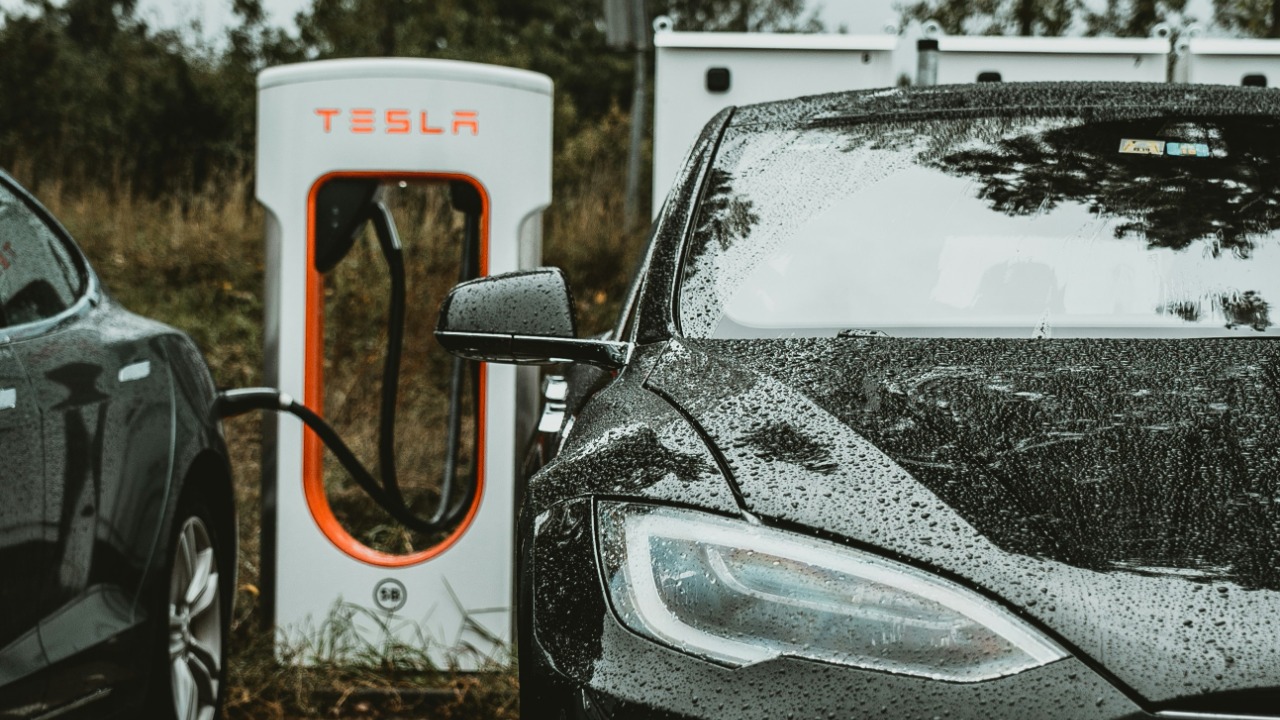
Buy a used Tesla, drive it off the lot, and pull into the nearest Supercharger on the way home. Sounds simple. But for a growing number of secondhand buyers, the charging stall they’re parked at won’t recognize their car. The vehicle sits there, plugged in and going nowhere, while Tesla’s app processes an ownership transfer that can take up to 48 hours.
That frustration is about to share the road with a new one. This week, Tesla filed permit applications for two Supercharger stations in the Phoenix metro area – one in Chandler with 56 V4 stalls, another in Mesa – that would be closed to the public entirely. Both are designated for fleet use only, built to serve Tesla’s forthcoming robotaxi operation rather than the drivers who already own the company’s cars. The filings were first reported by Electrek, which reviewed the permit documents.
Together, these developments point to a widening gap between Tesla’s expanding charging footprint and the access that individual owners can actually count on.
Fleet-only stations arrive in Arizona
The Chandler and Mesa permits are the clearest sign yet that Tesla intends to build dedicated charging depots for its autonomous vehicle fleet. Both applications explicitly state the stations are not open to the public. For Tesla owners who live or travel through the Phoenix area, these chargers will appear on the map but remain off-limits – new hardware that adds zero capacity for everyday drivers.
The timing tracks with Tesla’s broader robotaxi ambitions. The company launched its supervised autonomous ride-hail service in Austin in June 2025 and has signaled plans to expand into additional markets. Fleet vehicles running continuous routes need reliable, high-throughput charging that doesn’t compete with public demand, which explains the private designation. But for owners watching new stalls go up in their neighborhood that they’ll never be allowed to use, the strategic logic doesn’t soften the sting.
Phoenix already has dozens of public Supercharger locations, so 56 restricted stalls won’t cripple local coverage. The concern is precedent. If the fleet-only model scales alongside Tesla’s robotaxi expansion, the share of Supercharger infrastructure reserved for corporate use could grow in every city the service enters.
Used-car buyers hit a different wall
While fleet-only stations represent a future access problem, the ownership-transfer lockout is happening right now. Tesla’s own support documentation confirms that anyone who buys a Tesla from a private seller or third-party dealer must claim the vehicle through the Tesla app before gaining full access to features, including Supercharging. The review process can take up to 48 hours.
During that window, the car may be limited to destination chargers, home charging, or third-party DC fast chargers from other networks. For a buyer in a dense metro area with plenty of alternatives, that’s an inconvenience. For someone purchasing a used Model 3 in a rural stretch where the nearest non-Tesla fast charger is 80 miles away, it’s a genuine problem – especially if the battery is already low when they take delivery.
No public data quantifies how many buyers experience the full 48-hour delay versus a shorter review. Tesla does not publish metrics on transfer processing times, so the practical impact varies case by case with no transparency about the average experience.
The fine print gives Tesla broad authority
Beyond the transfer delay, Tesla’s general terms of service grant the company sweeping power over Supercharger access. The language authorizes Tesla to take action to protect network availability, including “limiting or blocking” a vehicle’s ability to charge at Supercharger stations for behavior that violates company policies. Commercial use under certain conditions is listed as one potential trigger.
That phrasing is broad enough to encompass ride-hail drivers, delivery operators, or anyone Tesla decides is using the network outside its intended scope. The terms do not describe a public appeals process or explain how drivers are notified when access is restricted. Whether Tesla has exercised this authority at meaningful scale or holds it primarily as a contractual backstop is unclear – the company publishes no transparency reports on Supercharger restrictions.
For the growing population of Tesla owners who depend on their cars for gig work or small-business operations, the ambiguity is unsettling. A policy that exists on paper but is rarely enforced still shapes behavior, because drivers can’t be sure where the line is.
The federal funding question
One major unknown hangs over the Arizona fleet stations: money. The federal National Electric Vehicle Infrastructure (NEVI) Formula Program, created by the 2021 Infrastructure Investment and Jobs Act, channels billions of dollars toward public charging buildout. Stations funded through NEVI must meet strict open-access requirements, including interoperability, uptime standards, and the ability for any EV driver to charge regardless of brand.
No available filing or Tesla statement confirms whether the Chandler and Mesa stations would seek or qualify for NEVI funding. If Tesla finances them entirely with private capital, no federal open-access mandate applies, and the company is free to restrict use to its own fleet. If any public subsidy is involved, the calculus changes – those stations could be required to serve all EV drivers. Until Tesla or a government agency clarifies the funding source, the regulatory status of these projects remains an open question that policymakers and EV advocates will be watching closely.
What this means for Tesla owners in April 2026
None of these access barriers affect every Tesla driver. Buyers who purchase new from Tesla face no ownership-transfer delay. Owners who charge at home rarely depend on the Supercharger network at all. And fleet-only stations in two Arizona cities don’t reshape the national charging map overnight.
But the pattern matters. Tesla is simultaneously growing its charging infrastructure and tightening the rules that determine who gets to use it. Some of those rules are technical – app-based ownership verification that gates access through software. Others are contractual – broad legal terms that let the company restrict charging for policy violations it defines on its own. And still others may ultimately be shaped by public policy, depending on whether specific projects draw on federal funds.
The result is a charging landscape where plugging in is no longer just about finding an open stall. Physical infrastructure, software controls, and regulatory conditions all interact to decide which drivers get access – and a Tesla in the driveway no longer guarantees a Tesla charger on the road.
More from Morning Overview
*This article was researched with the help of AI, with human editors creating the final content.