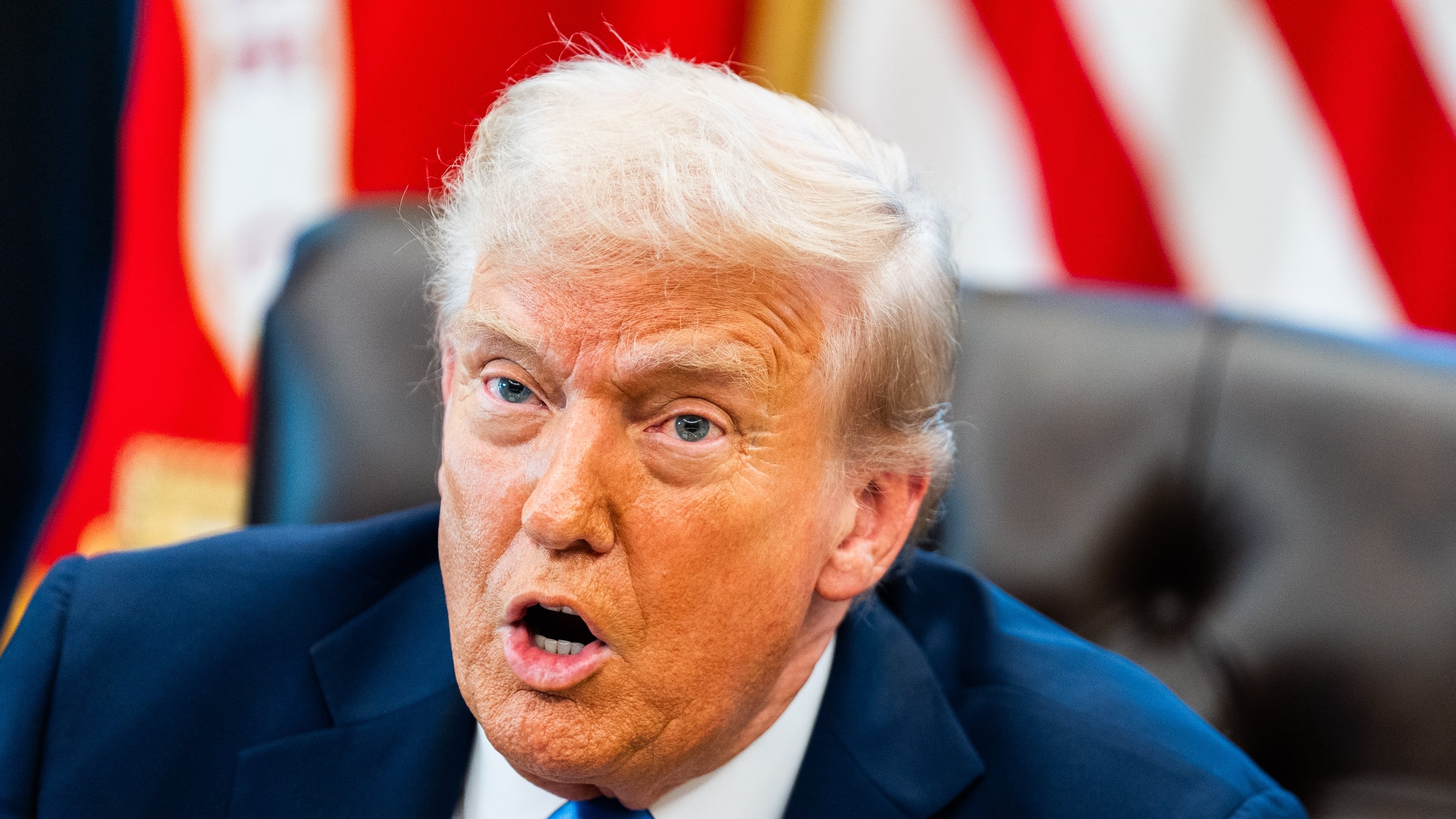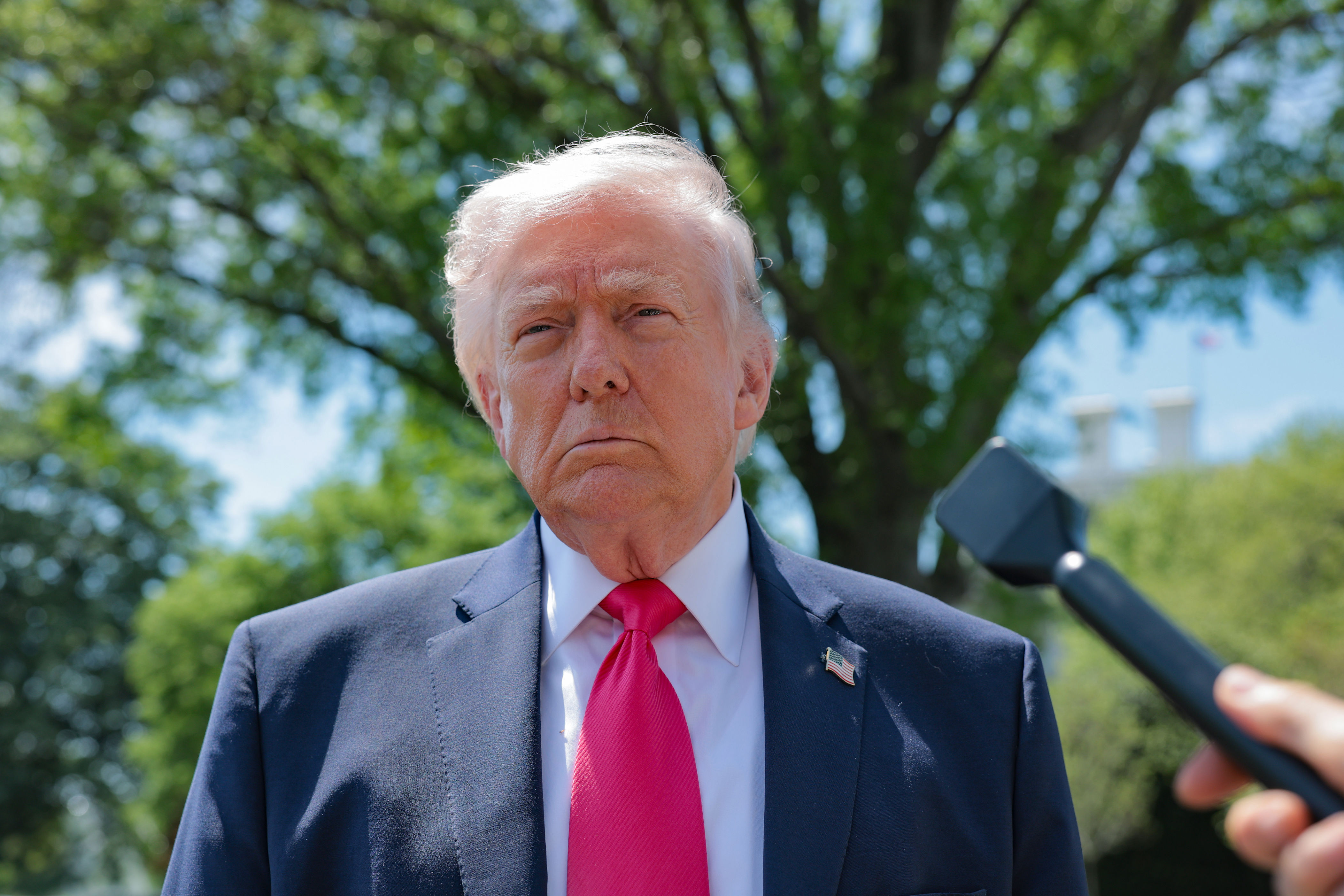
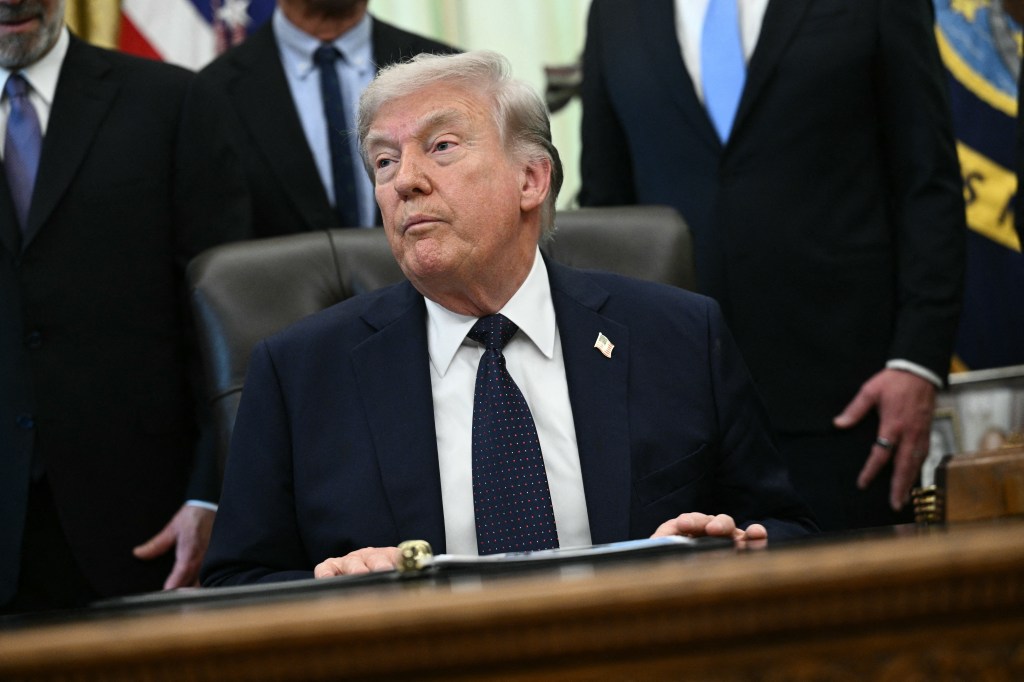
President Donald Trump ruled out using nuclear weapons against Iran at a White House press conference Thursday. When asked if he would employ nuclear weapons against Tehran, Trump responded: “No. Why would I need it? A nuclear weapon should never be allowed to be used by anybody.”
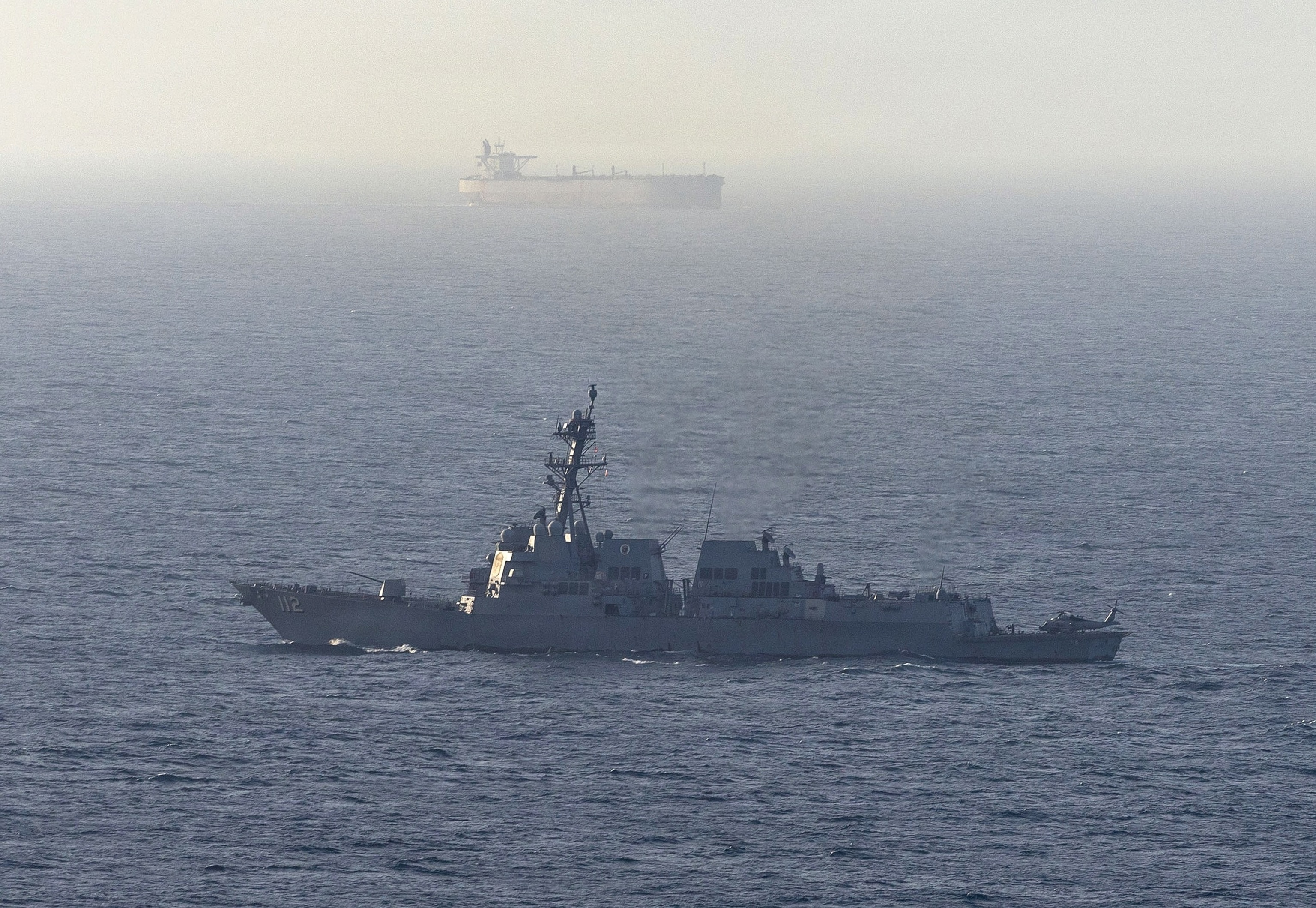
Trump’s comments came after he ordered the U.S. Navy on Thursday to target and destroy any Iranian boats caught planting mines in the Strait of Hormuz. The move follows recent seizures of commercial vessels by both countries, as diplomatic talks continue to collapse over the U.S. blockade of Iranian ports.
It also comes after weeks of mixed signals from Trump on the use of the American nuclear arsenal, including an April 7 warning that “a whole civilization will die tonight” if Iran did not meet U.S. demands—which many critics interpreted as a possible nuclear threat. The president’s post followed a similar message he gave during a press conference a day earlier, where he said the entire country of Iran could “be taken out in one night.”
While Trump did not specify that a nuclear weapon would be used, and no credible sources have made that claim, commentators across the political spectrum warned it was possible.
‘Shoot and Kill Any Boat’
On Thursday morning, Trump posted on Truth Social that he had given an order to “shoot and kill any boat” caught laying mines in the strait, adding that “there is to be no hesitation” in a U.S. response. “Our minesweepers are clearing the strait right now,” Trump wrote, suggesting operations would be accelerated to what he called a “tripled up level.”
Trump’s directive came as his administration extended a fragile ceasefire with Iran while maintaining a naval blockade that began on April 13. Iranian Foreign Minister Abbas Araghchi called the U.S. blockade “an act of war” and said the seizure of an Iranian tanker over the weekend violated ceasefire terms. The U.S., in turn, cited Iranian attacks on vessels in the strait as evidence that Tehran was not honoring the truce.
Iran’s navy said on Wednesday it had seized two container ships in the disputed waterway. The U.S. military, meanwhile, has seized at least four Iranian-flagged tankers attempting to violate the blockade, most recently the Majestic X in the Indian Ocean, the Pentagon announced Thursday. Neither side showed signs of backing down as tensions that erupted on February 28 entered their second month.
The escalating seizures mark a significant hardening of positions on both sides, just days after Trump extended the ceasefire through further negotiations. Hopes for renewed talks in Islamabad collapsed when the Trump administration refused to lift the blockade despite a brief reopening of the strait by Iran on April 17.
The failure has left the corridor, through which roughly 20 percent of global oil transits, effectively closed to Iranian commerce.
The Mine Question
On Thursday morning, Trump posted on Truth Social that he had given an order to “shoot and kill any boat” caught laying mines in the strait, adding that “there is to be no hesitation” in a U.S. response. “Our minesweepers are clearing the strait right now,” Trump wrote, suggesting operations would be accelerated to what he called a “tripled up level.”
On March 10, U.S. military intelligence reported that Iran had begun planting naval mines, and the U.S. military said it subsequently destroyed 16 Iranian minelayers. Reuters reported last week that Iran recently deployed about a dozen mines in the strait, though the location of those devices was not publicly known. Trump said all of Iran’s minelaying ships had been sunk, though officials voiced concern Tehran could deploy additional devices.
Despite the alarm, experts who spoke with Newsweek said the evidence that Iran has actually laid mines in significant numbers remains unclear. Since fighting began on February 28, no commercial vessels have been reported damaged by mines in the strait.
“There is no evidence and no reason for Iran to lay mines,” Ali Vaez from the International Crisis Group, told Newsweek on Thursday. “No vessel will take the risk as the traffic remains vulnerable to Iranian projectiles or seizure.”
Still, uncertainty has had a tangible effect. Even without confirmed damage, the Pentagon has told Congress that 20 or more mines may have been placed around the strait. Officials say clearing them could take as long as six months, and any sustained operation would likely be delayed until a stable ceasefire takes hold. In the meantime, insurers and shipowners remain reluctant to transit what is effectively a potential minefield, even as the U.S. military says it has begun efforts to neutralize the threat.
Mark Cancian, a senior adviser at the Center for Strategic and International Studies, told Newsweek that the biggest unknown is still how mine-clearing operations will unfold.
“The one area we don’t have insight into yet is the mine clearing,” Cancian said. He added that the U.S. would not send minesweepers into the strait without protection. “We’re not sending minesweepers out there alone. There’s going to be a tremendous amount of support for them, such as aircraft overhead.”
While technology can enable remote checks and the removal of mines, clearing the Strait of Hormuz would be a slow, multistep process. The U.S. is expected to use drones, explosive‑laden robots and helicopters to reduce risks, but de‑mining crews could still be vulnerable to Iranian attacks.
“Essentially, we’re going to be daring the Iranians to shoot,” Cancian said. “If they shoot, then we’ll shoot back, and we may end up in another shooting war again.”
Lebanon Crisis Deepens
The military standoff in the strait intensified even as diplomatic talks on Lebanon continued in Washington. On Thursday, Israeli and Lebanese officials were expected to hold a second round of negotiations aimed at extending a ceasefire between Israel and the Iran-backed group Hezbollah. The truce has been in place since April 16 but is set to expire on Sunday.
The talks came amid renewed violence in southern Lebanon. On Wednesday, Israeli airstrikes killed at least five people, including journalist Amal Khalil of the newspaper Al Akhbar. Lebanese officials said Khalil had taken shelter during strikes in the town of Tayri when the building she was in was hit in what they described as a “double-tap” strike. Rescue workers initially attempted to reach her but withdrew after coming under Israeli fire, according to Lebanon’s Ministry of Public Health.
A second strike then hit the same building where Khalil and another journalist had sought refuge. Her colleague, freelance photojournalist Zeinab Faraj, was seriously wounded.
Lebanon’s prime minister accused Israel of war crimes following the strike, saying attacks on media workers had become “an established method.” More than 2,400 people have been killed in Lebanon since Israel launched its offensive and subsequent invasion of southern Lebanon.
The strikes took place as Lebanese and Israeli representatives prepared for U.S.-mediated talks in Washington. Lebanese President Joseph Aoun said Beirut would seek an extension of the 10-day ceasefire brokered by the United States, which is set to expire on Sunday.
The Committee to Protect Journalists said Israel was responsible for two-thirds of journalist and media worker deaths in 2025 and said Israeli forces were responsible for the endangerment of Khalil and the injuries to Faraj. United Nations experts also called for an independent international investigation after Israeli forces killed three reporters in Lebanon earlier this month, including one working for a Hezbollah-run broadcaster.
The incidents came amid ongoing tensions between Israel and Hezbollah. Hostilities resumed on March 2 after Israel killed Iran’s Supreme Leader Ali Khamenei. The Israeli military said Hezbollah violated the ceasefire, alleging the group launched a “hostile aircraft” toward Israeli forces operating in southern Lebanon.
Global Markets in Turmoil
Trump’s post came on the same day that the Pentagon released footage of U.S. troops seizing another tanker associated with smuggling Iranian oil, adding that the Majestic X had been boarded in the Indian Ocean. This is at least the fourth Iranian-flagged tanker diverted by U.S. forces after three other vessels were intercepted off India, Malaysia and Sri Lanka.
Iran has fired on three ships in the strait and seized two of them on Wednesday. Around one-fifth of the world’s energy used to transit through the strait.
Trump extended a fragile truce while maintaining an American blockade of Iranian ports, and with no diplomatic breakthrough imminent, the price of Brent crude, the international benchmark, was over $100 per barrel on Thursday, about a 40 percent increase from prewar levels.
Separately, Israeli and Lebanese officials were due to meet in Washington on Thursday for a second round of talks aimed at extending a ceasefire in Lebanon, where Israel’s military has targeted Hezbollah.
Related Articles