
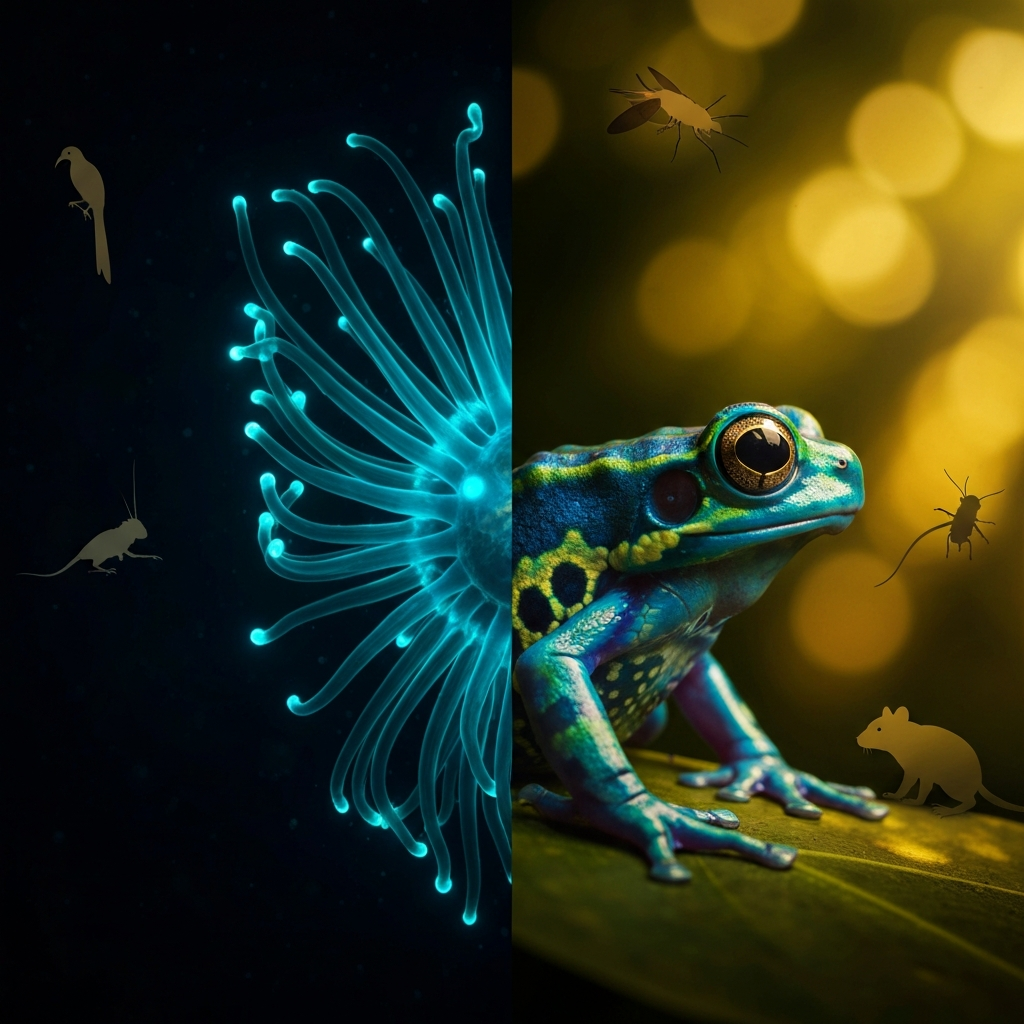
The natural world continues to astound scientists with its hidden diversity. Despite centuries of exploration and classification, researchers estimate that 80% of Earth’s species remain undiscovered or unidentified. Each year brings remarkable revelations about creatures that have been living quietly alongside us, waiting for science to catch up.
From the deepest ocean trenches to remote rainforest canopies, 25 rare species scientists only recently confirmed exist showcase the incredible biodiversity still being uncovered on our planet. These discoveries, made within the last decade, represent more than just additions to taxonomic databases—they’re windows into evolutionary processes, ecosystem dynamics, and the urgent need for conservation efforts in an era of rapid environmental change.
The stories behind these discoveries are as fascinating as the creatures themselves, involving cutting-edge DNA analysis, deep-sea exploration technology, and the persistent dedication of researchers willing to venture into Earth’s most remote corners.
The Hidden Frontiers of Discovery
New species emerge from places you might not expect. While tropical rainforests remain hotspots for biodiversity discoveries, scientists are finding remarkable creatures in urban environments, cave systems, and even laboratory collections that have been misidentified for decades.
The deep ocean represents perhaps our greatest frontier for species discovery. The Clarion-Clipperton Zone alone has revealed dozens of new species in recent years, with scientists estimating that over 90% of deep-sea species remain unnamed. Meanwhile, advances in genetic sequencing allow researchers to distinguish between species that look nearly identical but are evolutionarily distinct.
Remote islands, mountain peaks, and underground rivers continue yielding surprises. Many recently confirmed species were hiding in plain sight, living in areas scientists thought they knew well. Others inhabit environments so extreme or inaccessible that only modern technology has made their discovery possible.
25 Rare Species Recently Confirmed by Science
1. Northern Green Anaconda (Eunectes akayima)
Year of Discovery: 2024
Location: Amazon Basin, South America
Key Characteristics: This massive serpent can reach lengths exceeding 20 feet and weighs up to 200 pounds. Despite being one of the world’s largest snakes, it was only recently distinguished from its southern relative through genetic analysis.
Significance: The discovery revealed that what scientists thought was one species of green anaconda was actually two distinct lineages that diverged nearly 10 million years ago, highlighting how much we still don’t know about even well-studied animals.
2. Darth Vader Isopod (Bathynomus vaderi)
Year of Discovery: 2020
Location: Roti Island, Indonesia
Key Characteristics: This deep-sea giant isopod grows up to 1.3 inches long and features a distinctive helmet-like head structure that inspired its Star Wars-themed name.
Significance: Found at depths of 810 to 2,140 feet, this crustacean demonstrates the incredible diversity of life in deep-sea environments and represents the largest known member of its genus in the region.
3. Tom Hardy Spider (Venomius tomhardyi)
Year of Discovery: 2023
Location: Queensland, Australia
Key Characteristics: This orb-weaver spider features a distinctive black abdomen with white markings that researchers said resembled the Venom symbiote character, leading to its Hollywood-inspired name.
Significance: The discovery required establishing an entirely new genus, Venomius, highlighting gaps in our understanding of Australian spider diversity despite extensive previous research.
4. Carnarvon Flapjack Octopus (Opisthoteuthis carnarvonensis)
Year of Discovery: 2023
Location: Deep waters off Western Australia
Key Characteristics: This adorable deep-sea cephalopod has large fins resembling elephant ears and typically measures about 4 inches across. Its flattened body and fin structure give it a distinctive “flapjack” appearance.
Significance: Found at depths exceeding 6,500 feet, this species adds to our understanding of deep-sea octopus evolution and adaptation to extreme pressure environments.
5. Principe Scops Owl (Otus bikegila)
Year of Discovery: 2022
Location: Principe Island, Gulf of Guinea
Key Characteristics: This small owl, measuring about 6 inches tall, has distinctive rufous and brown plumage with intricate barring patterns. It produces a unique “tuu” call every 10-12 seconds.
Significance: Already considered critically endangered due to habitat loss on its tiny island home, this owl’s discovery underscores the vulnerability of island endemic species.
6. Plains Spotted Skunk (Spilogale interrupta)
Year of Discovery: 2021 (reclassified)
Location: Great Plains, North America
Key Characteristics: This small skunk weighs only 1-2 pounds and features broken white stripes across its black fur. Unlike other skunks, it can perform handstands as a warning display.
Significance: Previously considered the same species as the Eastern Spotted Skunk, genetic analysis revealed they diverged over 1 million years ago, demonstrating how molecular techniques continue reshaping taxonomy.
7. DiCaprio’s Snail-Eating Snake (Sibon irmelindicaprioae)
Year of Discovery: 2022
Location: Panamanian and Colombian rainforests
Key Characteristics: This slender, 2-foot-long snake specializes in eating soft-bodied prey like slugs and snails. It features distinctive brown and tan coloration with darker banding.
Significance: Named after Leonardo DiCaprio’s mother in honor of the actor’s conservation efforts, this discovery highlights the biodiversity crisis in Central American rainforests.
8. Rose-Veiled Fairy Wrasse (Cirrhilabrus finifenmaa)
Year of Discovery: 2022
Location: Maldives “twilight zone” reefs
Key Characteristics: This stunning fish displays brilliant pink, purple, and orange coloration and inhabits mesophotic reefs at depths of 130-230 feet. Males develop more vibrant colors during breeding season.
Significance: This became the first fish species to be formally described by a Maldivian researcher, representing an important milestone in local scientific capacity building.
9. Bamboo Tarantula (Taksinus bambus)
Year of Discovery: 2022
Location: Thailand
Key Characteristics: This medium-sized tarantula lives exclusively inside bamboo culms, creating silk-lined tubes within the hollow stems. It has adapted specifically to this unique microhabitat.
Significance: The species demonstrates remarkable ecological specialization and required establishing a new genus, Taksinus, named after ancient Thai king Taksin the Great.
10. Fluffy White Longhorn Beetle (Excastra albopilosa)
Year of Discovery: 2023
Location: Queensland rainforests, Australia
Key Characteristics: This striking beetle is covered in dense white hairs that give it a fluffy appearance. It measures about 0.8 inches long and has proportionally long antennae.
Significance: The discovery demonstrates that even well-studied regions like Australian rainforests continue yielding new species, particularly among invertebrate groups.
11. Madagascar’s Most Beautiful Frog (Guibemantis pulcherrimus)
Year of Discovery: 2023
Location: Madagascar
Key Characteristics: This small tree frog displays vibrant green coloration with intricate white markings. It measures about 1 inch long and inhabits montane forest canopies.
Significance: Its Latin name “pulcherrimus” literally means “most beautiful,” and its discovery adds to Madagascar’s reputation as a biodiversity hotspot with exceptional endemism rates.
12. Seth MacFarlane’s Treefrog (Hyloscirtus sethmacfarlanei)
Year of Discovery: 2022
Location: Ecuadorian cloud forests
Key Characteristics: This green treefrog features distinctive call patterns and reproductive behavior, including male parental care of eggs. It inhabits bromeliad plants in cloud forest environments.
Significance: Named after the “Family Guy” creator for his conservation support, this species highlights the incredible but threatened diversity of Andean cloud forests.
13. Mizoram Parachute Gecko (Gekko mizoramensis)
Year of Discovery: 2023
Location: Mizoram state, India
Key Characteristics: This gecko features enlarged skin flaps along its body and limbs that help it glide between trees. It displays cryptic brown coloration that provides excellent camouflage.
Significance: The discovery expands our understanding of gliding gecko evolution and highlights the biodiversity of India’s northeastern states, which remain under-explored scientifically.
14. Greta Thunberg’s Rainfrog (Pristimantis gretathunbergae)
Year of Discovery: 2022
Location: Panamanian montane forests
Key Characteristics: This tiny frog measures less than 1 inch and lacks a free-swimming tadpole stage, instead developing directly within eggs. It has distinctive skin texture and coloration.
Significance: Named after climate activist Greta Thunberg, this species faces immediate threats from climate change, as rising temperatures are shrinking suitable mountain habitat.
15. Tapir Frog (Synapturanus danta)
Year of Discovery: 2022
Location: Peruvian Amazon
Key Characteristics: This unique frog has an elongated snout resembling a tapir’s trunk, which it uses to probe for small invertebrates in leaf litter. It measures about 2 inches long.
Significance: The distinctive morphology suggests specialized feeding behavior and demonstrates the evolutionary creativity found in Amazonian biodiversity hotspots.
16. Mindanao Gymnure (Podogymnura intermedia)
Year of Discovery: 2023
Location: Mindanao, Philippines
Key Characteristics: This “hairy hedgehog” relative has coarse, dark fur and a pointed snout. It’s larger than previously known gymnure species, weighing up to 1.5 pounds.
Significance: The discovery on Mindanao, one of the Philippines’ largest islands, suggests that significant mammal diversity remains undocumented even in relatively well-studied areas.
17. Walking Shark (Hemiscyllium tavonensis)
Year of Discovery: 2022
Location: Tavon Peninsula, Indonesia
Key Characteristics: This small shark “walks” across coral reefs using its fins like legs. It grows to about 3 feet long and can survive in very shallow water during low tide.
Significance: Walking sharks represent a recently discovered group of highly specialized reef predators, with multiple new species identified in Indonesian waters over the past decade.
18. Lilliputian Beetle (Scydosella musawasensis)
Year of Discovery: 2023
Location: Nicaragua
Key Characteristics: Measuring just 0.325 millimeters, this beetle is among the smallest known insects. Its tiny size required specialized microscopy techniques for proper identification and description.
Significance: The discovery demonstrates that the microfauna world remains largely unexplored, with countless tiny species likely awaiting discovery even in well-studied regions.
19. Clarion-Clipperton Amphipods (24 species)
Year of Discovery: 2024-2026
Location: Clarion-Clipperton Zone, Pacific Ocean
Key Characteristics: These deep-sea crustaceans inhabit seafloor sediments at depths exceeding 13,000 feet. The discovery included a new family (Mirabestiidae) and superfamily (Mirabestioidea).
Significance: This massive discovery represents the largest single description of new amphipod species in deep-sea environments, critical for understanding biodiversity before potential deep-sea mining operations begin.
20. Yunnan Box Turtle (Cuora yunnanensis)
Year of Discovery: 2023
Location: Yunnan Province, China
Key Characteristics: This medium-sized freshwater turtle has a highly domed shell with distinctive coloration patterns. It inhabits mountain streams and small rivers.
Significance: The discovery occurred through genetic analysis of museum specimens previously misidentified as other species, highlighting how collections continue yielding taxonomic surprises.
21. Borneo Rainbow Toad (Ansonia vidua)
Year of Discovery: 2020 (redescribed)
Location: Borneo
Key Characteristics: This colorful toad displays brilliant reds, purples, and yellows. It lives on high tree branches in primary rainforest and has specialized toe pads for arboreal life.
Significance: Though first collected in the 1920s, proper scientific description only occurred recently, demonstrating how some species remain in taxonomic limbo for decades.
22. Vietnamese Crocodile Lizard (Shinisaurus crocodilurus vietnamensis)
Year of Discovery: 2020
Location: Northern Vietnam
Key Characteristics: This semi-aquatic lizard has crocodile-like scales and behavior, growing up to 16 inches long. It spends much of its time in or near water and can remain submerged for extended periods.
Significance: Previously considered the same species as the Chinese crocodile lizard, genetic analysis revealed sufficient differences to warrant species status, highlighting cryptic diversity in Southeast Asian reptiles.
23. Attenborough’s Long-Beaked Echidna (Zaglossus attenboroughi)
Year of Discovery: 2023 (confirmed alive)
Location: Cyclops Mountains, Indonesia
Key Characteristics: This spiny monotreme has a long, curved beak for feeding on earthworms and insects. It’s smaller than other long-beaked echidnas, weighing about 15 pounds.
Significance: Known only from a single specimen collected in 1961, this species was confirmed to still exist through recent expedition footage, representing one of the world’s rarest mammals.
24. Dwarf Kingfisher (Ceyx sangirensis)
Year of Discovery: 2021
Location: Sangihe Island, Indonesia
Key Characteristics: This tiny kingfisher measures just 4 inches long and displays brilliant blue and orange plumage. It inhabits primary forest and feeds on small insects rather than fish.
Significance: Endemic to a single small island, this species faces immediate extinction threats from deforestation, making it one of the world’s most endangered birds.
25. Glass Sponge Reef Species (Multiple species)
Year of Discovery: 2020-2024
Location: British Columbia, Canada
Key Characteristics: These ancient sponges create massive reef structures in deep, cold waters. Individual sponges can live for thousands of years, with some specimens dating back 11,000 years.
Significance: Multiple new species have been identified from these reefs, which represent some of the oldest living animal communities on Earth and provide crucial habitat for deep-sea fish populations.
The Significance of Ongoing Discoveries
Mapping Earth’s Biodiversity
Each newly discovered species represents a piece in the massive puzzle of life on Earth. Scientists estimate that between 8-100 million species exist globally, yet only about 1.5 million have been formally described. The 25 rare species scientists only recently confirmed exist demonstrate that biodiversity discovery remains one of science’s most active frontiers.
These discoveries aren’t just academic exercises—they provide crucial data for understanding ecosystem health, evolutionary processes, and the interconnected web of life that sustains our planet. Every new species fills gaps in our knowledge about how life adapts to different environments and challenges.
Conservation Challenges and Opportunities
Many recently discovered species face immediate conservation concerns. Climate change, habitat destruction, and human encroachment threaten newly identified animals before scientists can fully study them. The Principe Scops Owl and Greta Thunberg’s Rainfrog exemplify species that may disappear as quickly as they’re found.
However, discovery also creates conservation opportunities. Protected area designations often expand to include newly identified species’ habitats. The deep-sea amphipods of the Clarion-Clipperton Zone, for instance, are already influencing international discussions about deep-sea mining regulations.
Unlocking Scientific Knowledge
New species often reveal unexpected biological innovations. The Bamboo Tarantula’s specialized habitat use, the walking shark’s unique locomotion, and the parachute gecko’s gliding adaptations all represent evolutionary solutions to environmental challenges. These discoveries can inspire biomimetic technologies and advance our understanding of life’s possibilities.
Additionally, many new species possess unique biochemical properties that could benefit medical research, agriculture, or environmental restoration. The race to catalog biodiversity becomes more urgent as species extinction rates accelerate.
The Future of Species Discovery
Despite centuries of scientific exploration, taxonomists believe we’ve likely identified less than 20% of existing species. Advances in DNA sequencing, environmental DNA sampling, and artificial intelligence are accelerating discovery rates. Citizen scientists equipped with smartphones and digital cameras are also contributing significantly to species identification efforts.
The deep ocean remains largely unexplored, with new species discovered on nearly every research expedition. Tropical rainforests continue yielding surprises, particularly among invertebrates. Even urban environments are producing unexpected discoveries as scientists look more carefully at supposedly well-known ecosystems.
Climate change adds urgency to these efforts. Rising temperatures and changing precipitation patterns are shifting species distributions and potentially driving extinctions faster than scientists can document existing biodiversity. The window for comprehensive species discovery may be narrowing, making current research efforts more critical than ever.
The 25 rare species scientists only recently confirmed exist represent just the beginning of what remains to be discovered. Each finding reminds us that Earth’s biological wealth extends far beyond our current understanding, inspiring continued exploration and conservation efforts to preserve these remarkable discoveries for future generations.
Frequently Asked Questions
How many new species are discovered each year?
Scientists describe approximately 15,000-18,000 new species annually, though this represents only a fraction of estimated undiscovered biodiversity. Most new discoveries are insects and other invertebrates, while vertebrate discoveries like the species featured here are much rarer.
Why are scientists still finding new species in well-studied areas?
Many factors contribute to ongoing discoveries in familiar places: improved technology reveals previously undetectable differences, genetic analysis distinguishes look-alike species, exploration of new microhabitats, and increased research in understudied groups like deep-sea organisms and invertebrates.
What’s the difference between discovering a new species and rediscovering a lost one?
New species discoveries involve animals or plants never before known to science, while rediscoveries involve relocating species thought to be extinct. The species in this list are genuine new discoveries, though some were hiding in museum collections under incorrect identifications.
How do scientists decide if something is truly a new species?
Species designation typically requires detailed morphological analysis, genetic testing, and comparison with existing specimens. Scientists must demonstrate that the new organism is reproductively isolated from related species and represents a distinct evolutionary lineage.
Are there more species waiting to be discovered?
Absolutely. Scientists estimate that 80-90% of all species remain undescribed, with particularly high discovery potential in tropical regions, deep-sea environments, soil ecosystems, and among microscopic organisms. The actual number of species on Earth may be 10-100 times higher than currently documented.
Why should people care about new species discoveries?
New species discoveries help scientists understand ecosystem health, evolutionary processes, and potential medical or technological applications. They also highlight biodiversity conservation needs and demonstrate the remarkable complexity of life that shares our planet.
These remarkable discoveries remind us that Earth continues revealing its secrets to persistent, dedicated researchers. The 25 rare species scientists only recently confirmed exist showcase the incredible diversity of life that surrounds us, much of it still waiting to be discovered and understood.