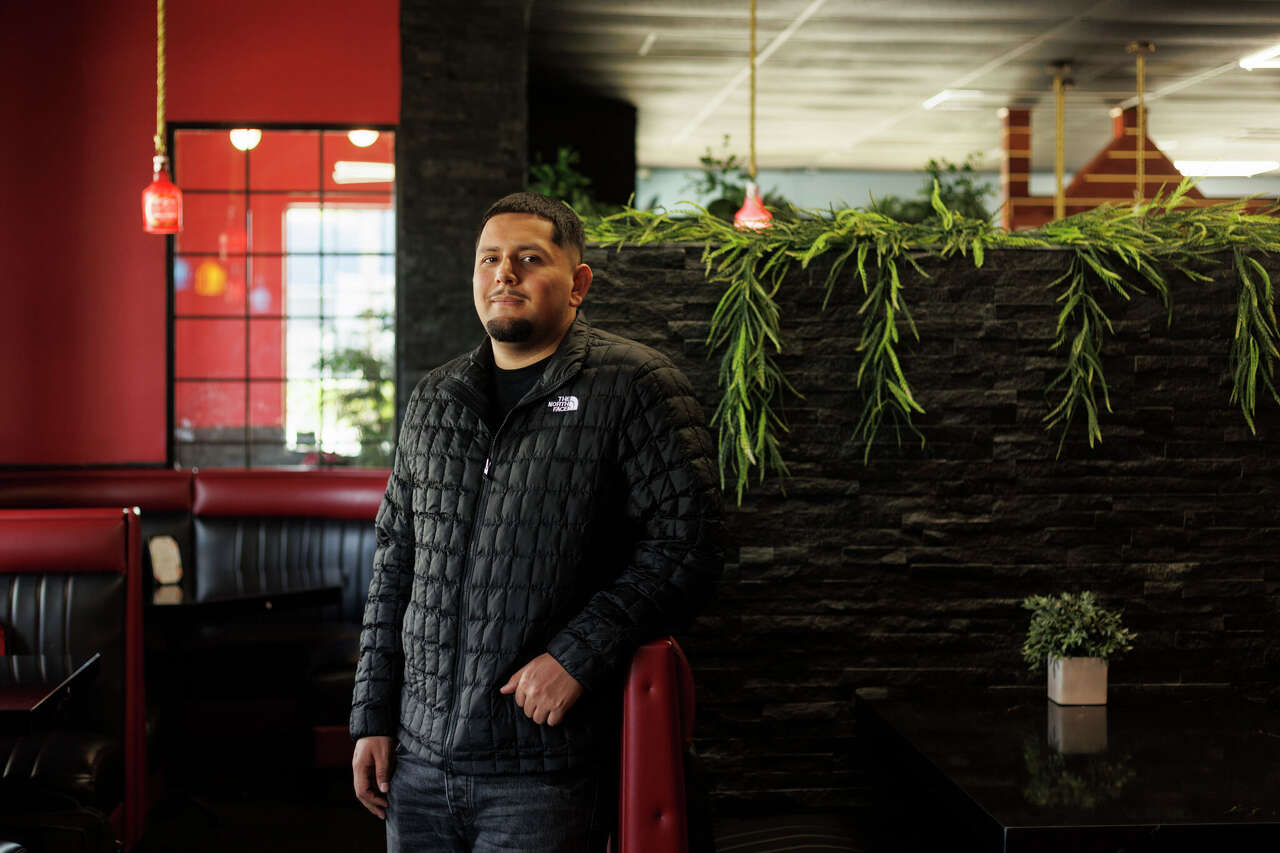
Juan Loya's family left the Bay Area at the height of the pandemic, selling their home and landscaping business in Hayward to join the tide of families heading east to Modesto.
Loya, 21 at the time, had only visited the Central Valley city to swim in his cousins' pool on the hottest days of childhood summers. But rising expenses in Hayward were making his parents' dream of opening a restaurant hazier. When the family found a commercial space they could afford near downtown Modesto in 2020, they didn't hesitate.
"It was time for a change, and it was an opportunity," Loya said. "When people move from the Bay Area, they move here."
Of the estimated 56,000 households that moved to Stanislaus County between 2015 and 2024, about 1 in 3 came from the Bay Area. As a new home for Bay Area movers, Stanislaus County stood out: It saw among the highest share of migrants without college degrees, even while Santa Cruz and San Joaquin counties remained more popular destinations overall. Only Tulare County, which had much fewer incomers, had a higher share.
It isn't hard to see why working-class families might see the appeal. The typical home in Modesto had a value of about $450,000 in March 2026, according to online real estate brokerage Zillow. That was up by about $50,000 compared to the city's typical value in 2019, after adjusting for inflation, but it's still only about half of Hayward's typical home value and less than a third of San Francisco's.
As Modesto, the county seat, swells to accommodate the influx, some community leaders are wary of newcomers with limited local connections. While Bay Area transplants - sometimes locally called "BATs" - are not a new phenomenon in the city, many said the recent influx remains especially tied to the Bay Area by their jobs, families and friends.
Loya, now 27, manages the finances of his family's business, Sofia's Bar and Grill. The warmly lit Mexican restaurant serves colorful margaritas, roasted chiles rellenos and - Loya's favorite - brocheta de camarón, charred shrimp and vegetable skewers.
Loya has been able to put to use some of the business courses he took at Chabot College in Hayward before he left school. That background was helpful while he navigated the city's permitting process and renovations to the space, a long road before the restaurant was able to open last year.
Loya lives close enough to the restaurant that he sometimes walks to work. But he knows that arrangement is unique - many of his friends in Modesto travel several hours daily to work in the Bay Area. Loya often makes the trip himself, to visit the mother of his 2-year-old son and baby daughter.
"I thought it was a good idea to come here and start something new," Loya said, adding that if it weren't for the restaurant, he'd "probably be commuting. … As far as jobs here, I don't think there's much unless you're working in a field."
The average commute time for workers who live in Stanislaus County was about 30 minutes, similar to the average in Alameda County, according to data from the U.S. Census Bureau's American Community Survey. But super-commuting was more common - nearly 9% of Stanislaus County residents with a job spent at least 90 minutes commuting to work, compared to 3% for Alameda County.
The concentration of commuters makes Modesto a "bedroom community," said Marian Kaanon, president of the nonprofit Stanislaus Community Foundation.
"We're extracting our workforce from our community and sending them over the Altamont," Kaanon said. "We're on the receiving end of the Bay Area's affordability crisis, but we get very little support from the state or from Bay Area foundations to mitigate that crisis."
Although thousands of people cross the Altamont Pass every day, it "might as well be Mount Everest" for how different life is on either side of the highway stretch that divides the Bay Area and the Central Valley, Kaanon said.
Modesto, which takes its name from the Spanish word for "modest," is a sleepy, sunny city of about 220,000 people, surrounded by almond, cherry and apricot orchards. Agriculture still drives its economy, but it also boasts a ballet, a symphony orchestra and a minor league baseball team. "It's a community of neighborhoods," Kaanon said. "It's a generous community."
Many recent arrivals from the Bay Area are still on the fringes of that community, even as they quietly reshape it. Keristofer Seryani, president of United Way of Stanislaus County, said the housing market had been overwhelmed with newcomers. Prices have crept up since the pandemic, he said, pushing some longtime residents out - to Merced, Fresno or Sonora (Tuolumne County).
"But if I look at who are the leaders of the community, it's still predominantly people who have been here for a long time," Seryani said. "I don't know if people are just using this as a location to sleep. I just haven't seen them really integrate into the fabric of society."
Latricia Beasley-Day, 58, understands the pull that keeps transplants coming back to the Bay Area. A native San Franciscan, she moved to Modesto as a pastor in 2009, where she enjoyed the built-in community of her new church. But she spent years commuting back to her family's church every week in San Francisco to worship with friends and family.
In the nearly two decades since, Beasley-Day has seen the surrounding community go from mostly "cows and land" to something "really built-up," with an increasingly walkable downtown. But the stores and entertainment options still can't rival what she left behind in the Bay Area, she said, and she still drives back regularly.
"I go to a theater or a concert, or I go downtown shopping, or I go for sentimental things like funerals," Beasley-Day said. "I dip in and I might go eat at a spot, and then I get back on the road and come home."
Many newcomers to Stanislaus County arrive without much expendable income or friends in the area, said Wendy Byrd, president of the Modesto/Stanislaus NAACP. Under those circumstances, she said, it can be hard for them to integrate quickly into the broader community.
"I know they're here," Byrd said. "When I'm in the grocery store, I see a lot of new faces, especially a lot of new African American faces. … But they're still going back and forth to the Bay for just about all of their social things."
This summer, the NAACP chapter is planning a slate of monthly First Friday gatherings in downtown Modesto in hopes of drawing more of those people in, Byrd said. Even if the newcomers have felt out of reach, she's still excited by the prospect of a younger, diversifying Stanislaus County.
Modesto Mayor Sue Zwahlen said the city's attitude toward newcomers is friendlier than it was two decades ago, when the BAT moniker was more prevalent. She's seen the most meaningful integration among families who stay in Modesto long enough for their children to grow up there.
When Zwahlen's own six children played high school sports in the area, she said, many of their teammates had parents that worked in the Bay Area and couldn't get home to bring them to and from practice.
"It wasn't us versus them," Zwahlen said. "When their parents were in the Bay Area, they had phone numbers of people to call. We're neighbors, and we pick up the pieces and help each other when we can."
The idea of raising his own young family in Modesto is part of what keeps Loya there, he said. At the restaurant, his son, Adrian, can lounge on a nest of blankets in Loya's office watching "Teletubbies" on a tablet. Loya's parents, Juan Sr. and Veronica, work a few steps away in the kitchen.
Eventually, Loya hopes to expand the restaurant to a few more locations. His work there keeps him busy, but sometimes he's able to get away to barbecue with his family on the banks of one of the lakes that surround the city. He's made friends with other business owners through the Stanislaus Latino Chamber of Commerce, and he tries to cater their events for free as often as he can. He has no plans to move back to the Bay Area.
"For now, I'm here," Loya said. "Where I lived in the Bay Area, people were just living their lives, but there weren't really kids outside playing. Here, everyone smiles."
Related Reading
Bay Area neighbors are turning their blocks into Trump resistance networks
Beach homes under $400,000: This is the last affordable city on California's coast
California gas prices hit dreaded milestone amid upward surge
Subscribe
There’s more to San Francisco with the Chronicle. Subscribe today for just 25¢.Read this story on sfchronicle.com