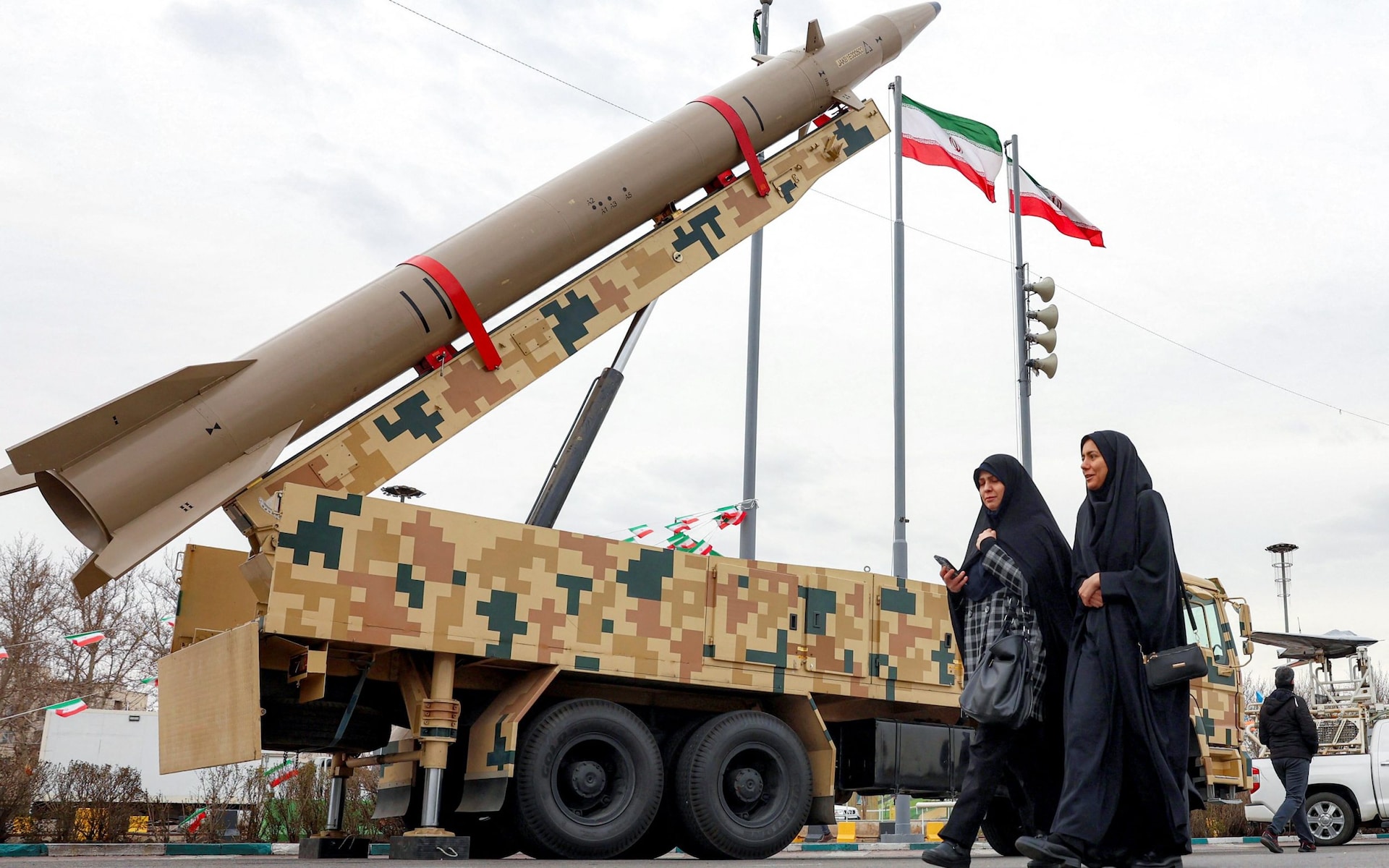
Iran has rebuilt most of its missile infrastructure along the Strait of Hormuz, according to US intelligence assessments.
The regime has reportedly restored operational access to 30 of its 33 missile sites along and around the narrow maritime chokepoint through which roughly a fifth of the world’s oil supply passes.
According to people with knowledge of the assessments, Tehran has also retained roughly 70 per cent of its pre-war missile stockpile and mobile launchers.
About 90 per cent of its underground missile storage and launch facilities are now considered “partially or fully operational”, The New York Times reported.
The stockpile includes ballistic missiles, which can be used to target neighbouring countries, and a smaller supply of shorter-range cruise missiles.
Iran has used its mobile missile launchers to move its munitions to other locations, protecting them from US strikes.
The findings suggest that Iran retains the ability to threaten commercial shipping and US naval forces operating in the Gulf despite the intensive US-Israeli air campaign, known as Operation Epic Fury, launched in February.
The assessments also challenge repeated claims by Donald Trump and senior US officials that Iran’s military capabilities had been crippled during the conflict.
Last month, Pete Hegseth, the US defence secretary, claimed that the operation had rendered Tehran “combat-ineffective for years to come”.
On Tuesday, Mr Trump said reports that Iran was “doing well” were “fake news” and amounted to “virtual treason”.
“All it does is give Iran false hope when none should exist,” he wrote on Truth Social.
“They have no navy, their air force is gone, all technology is gone, their ‘leaders’ are no longer with us, and the country is an economic disaster. Only losers, ingrates, and fools are able to make a case against America!”
The US president also insisted that he had not expected to rely on Xi Jinping, China’s president, to help resolve the crisis, even as hopes for a lasting peace agreement appeared to fade.
“I don’t think we need any help with Iran,” Mr Trump told reporters on Tuesday before a crucial summit in Beijing. “We’ll win it one way or the other, peacefully or otherwise.”
More than one month after a tenuous ceasefire took effect, the two sides have made no progress on an agreement to end hostilities.
Iran, meanwhile, has appeared to firm up its control over the Strait of Hormuz.
It has cut deals with Iraq and Pakistan to ship oil and liquefied natural gas from the region, according to sources with knowledge of the matter.
A report by Iran’s Fars news agency cited an Islamic Revolutionary Guard Corps (IRGC) official as saying Iran had expanded its definition of the Strait of Hormuz into a zone stretching from the coast of the eastern city of Jask to Siri Island in the west.
Asked about the intelligence assessments, Olivia Wales, a White House spokesman, repeated Mr Trump’s claims that Iran’s military had been “crushed”, saying Tehran understood that its “current reality is not sustainable”.
Ms Wales added that anyone who believed that Iran had rebuilt its military capabilities was “either delusional or a mouthpiece” for the IRGC.
She also pointed to Mr Trump’s Truth Social post, describing suggestions that Iran’s military remained effective as “virtual treason”.
Joel Valdez, the acting Pentagon press secretary, also attacked coverage of the intelligence findings, accusing The New York Times of acting as a “public relations agent” for Iran in its “disgraceful” reporting on Operation Epic Fury.
The assessments, however, appear to suggest that the Trump administration overestimated the long-term damage inflicted on Iran’s missile infrastructure and underestimated Tehran’s ability to restore its operational capability after the strikes.
Last month, The New York Times reported, citing US officials, that Iran had retained about 70 per cent of its pre-war missile stockpile.
The Washington Post reported last week that Tehran still possessed roughly three quarters of its mobile missile launchers and about 70 per cent of its pre-war missile arsenal.
Recommended
Iran still has 70 per cent of its missiles, says CIA
The findings also add to growing concerns that the US is burning through its stocks of several critical munitions, including Tomahawk cruise missiles, Patriot interceptor missiles, Precision Strike and ATACMS ground-based missiles.
Defence manufacturers, including Lockheed Martin, a US military aircraft and defence manufacturing company, have claimed that replenishing inventories could take years because of limited industrial production capacity and supply chain constraints.
Pentagon officials, however, insist the US military retains plenty of capability for ongoing operations.
Gen Dan Caine, the chairman of the joint chiefs of staff, told politicians this week that the military had “sufficient munitions for what we’re tasked to do right now”.
Sean Parnell, the chief Pentagon spokesman, said the military had everything it needed to carry out its mission.
“We have executed multiple successful operations across combatant commands while ensuring the US military possesses a deep arsenal of capabilities to protect our people and our interests,” he told The New York Times.