The Trump administration has moved to seize more than 14 acres of land owned by the Catholic Diocese of Las Cruces to expand border‑wall infrastructure near Mount Cristo Rey in southern New Mexico, according to court documents reported by KVIA.
The effort puts federal border‑security construction on a collision course with religious‑freedom protections tied to one of the region’s most significant Catholic pilgrimage sites.
If approved by a judge, the action could disrupt annual pilgrimages and set a legal test for using eminent domain against religious institutions along the U.S.-Mexico border.
The civil case was filed at the request of Homeland Security Secretary Markwayne Mullin and seeks to acquire 14.259 acres of church‑owned land south of Mount Cristo Rey through eminent domain.
In a statement emailed to Newsweek on Tuesday, a U.S. Customs and Border Protection (CBP) spokesperson said the agency “is working across the Southwest border to acquire land necessary for the construction of Smart Wall, to include a steel bollard wall, along with roads, detection technology, cameras, and lighting.
“It is always CBP’s preference to obtain real estate interests voluntarily, however, if CBP is unable to acquire the necessary access voluntarily within a reasonable timeframe, CBP refers the matter to the Department of Justice to acquire any necessary property interest(s) through eminent domain.”
What to Know
According to the government’s complaint, the land is needed to “construct, install, operate, and maintain” border‑security infrastructure, including roads, fencing, lighting, cameras, sensors and other structures. Maps filed with the lawsuit show a roughly 190‑foot‑wide strip of land running north from the U.S.-Mexico border, KVIA reported.
Mount Cristo Rey marks the final unfenced stretch of the El Paso metropolitan area, making the site a strategic gap in existing border infrastructure.
The Department of Homeland Security has estimated the land’s value at $183,071, according to the National Catholic Reporter (NCR). If a judge grants the government’s request for a Declaration of Taking, the federal government could gain immediate access to the property while compensation is litigated.
Federal courts have previously allowed DHS to take immediate possession of private land for border‑wall construction while compensation disputes are resolved.
In a 2021 case in Texas, a federal judge ruled that the government could take “immediate possession” of private land along the U.S.-Mexico border for wall construction, even as landowners continued to challenge the seizure, CNN reported.
Doña Ana County, which includes Las Cruces, sits along the border in south‑central New Mexico and is home to about 225,000 residents, making it the state’s second‑most populous county, according to the latest census data.
Religious Freedom Challenge
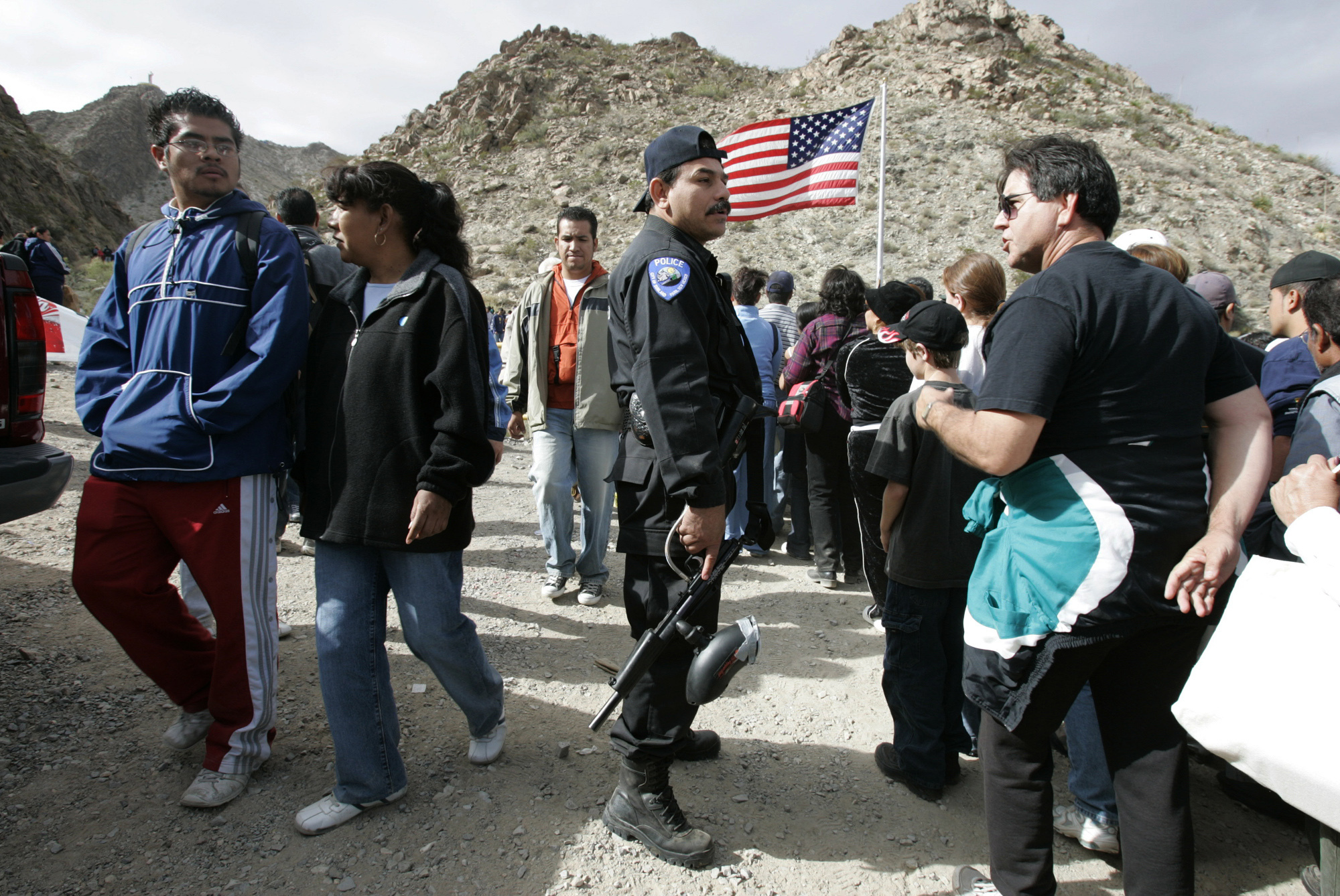
Mount Cristo Rey is a major religious and cultural site for Catholics across southern New Mexico and West Texas. The mountain is crowned by a 29‑foot limestone statue of Christ, built in 1940, and draws up to 40,000 pilgrims each year for the annual Cristo Rey feast, according to NCR. Many pilgrims traditionally climb the mountain barefoot or on their knees.
Under the Religious Freedom Restoration Act, the government must show that its actions place the least possible burden on religious exercise while advancing a compelling interest.
In legal filings cited by NCR, the Diocese of Las Cruces argues that federal seizure of the land would obstruct established pilgrimage routes, damage sacred terrain and violate protections under the First Amendment and the Religious Freedom Restoration Act. The diocese warned the project could “irreparably damage” the site’s religious and cultural sanctity and convert sacred space into “a symbol of division.”
Kathryn Brack Morrow, an attorney representing the diocese, told NCR that church leaders plan to use “all legal tools at their disposal” to challenge what she described as the government’s “heavy‑handed tactics.”
Franciscan Brother Joseph Bach, who works with immigrant communities in the region, also told NCR he was encouraged by the diocese’s legal stance. “This is an example of religious freedom — the ability to have this pilgrimage,” Bach said. “And if President Trump is taking that sacred site away, then he’s taking away the people’s freedom to exercise their faith.”
Newsweek contacted the Department of Homeland Security, the Catholic Diocese of Las Cruces and the Doña Ana County Treasurer by email on Tuesday for comment.
Why Mount Cristo Rey Has Been a Border Wall Flashpoint
Mount Cristo Rey remains the last major stretch of the El Paso metropolitan area without a continuous border fence and has long been a flashpoint for federal construction. In 2019, a privately funded wall project backed by Trump adviser Steve Bannon was built on the mountain’s eastern side, according to NCR reporting.
The dispute also comes amid heightened tensions between the Trump administration and the Vatican, which has repeatedly criticized the administration’s border‑wall expansion and immigration policies. The situation briefly escalated after Trump posted—and later removed—an AI‑generated image that some critics said depicted him as Jesus, though the president said he believed the image portrayed him as a healer.
In other areas of the border, wall construction has recently damaged Indigenous sacred sites, raising wider concerns among religious and cultural groups about the impact of border‑security projects.
What Happens Next
The case now moves to federal court, where a judge will decide whether the government can take possession of the land and how much compensation is owed. If the court grants the Declaration of Taking, DHS could begin work immediately, even as the diocese continues to challenge the seizure on religious‑freedom grounds.
If the court grants the government’s request, federal authorities could take control of the land within weeks.
A ruling could have broad implications for religious institutions, Indigenous communities and private landowners whose property lies along the U.S.-Mexico border.
Related Articles