Hummingbirds are one of nature’s most fascinating creatures. They’re the only birds that can fly backwards, upside down, and while hovering, and even though they weigh less than a nickel, they have lightning-fast metabolisms that require refueling every 10 to 15 minutes. These speedy miniature birds are migrating powerhouses with impressive stamina—some species clock 500 non-stop miles in one flight! They’ve even come up with a brilliant solution to surviving the dreaded North America winters: taking a long, balmy vacation.
Every year, hummingbirds spend their winters soaking up the warm weather and sunshine in Central America or Mexico before making the northward trek back to their breeding grounds. While they generally take flight at the end of February or beginning of March, it takes months of solo, low-altitude travel before they finally reach their destination. The wait is well worth it, though—there’s nothing like watching these vibrant birds dash from flower to flower, drinking up nectar.
So when should you put out your hummingbird feeder? As you can see, this migration map from Hummingbird Central uses color-coded symbols to track the sightings of specific species. Right now, according to the map, ruby-throated hummingbirds have already been spotted throughout parts of the Southwest, a majority of the Southeast, and the southernmost parts of the Midwest and Northeast. In fact, some have reached as far north as New York and New Jersey! Rufous and calliope hummingbirds have already flown through Washington and Vancouver, with some rufous varieties making it to British Columbia. There have been sightings of broad-tailed hummingbirds in Utah, Colorado, and New Mexico and Anna’s hummingbirds in Arizona and California.
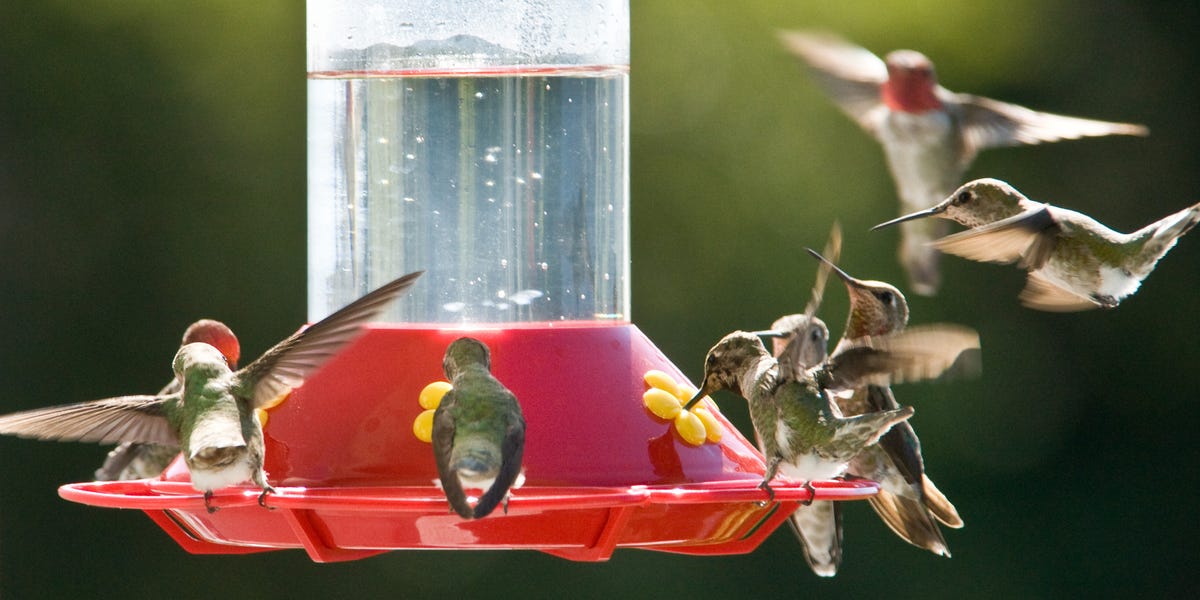
To nourish these birds in their journey, you can use the map to figure out when to set up your hummingbird feeder. As a general rule of thumb, it’s best to put your feeder out about two weeks before hummingbirds reach your area, so they can immediately rest and refuel. While every year’s path looks a little different depending on local weather conditions, this year’s migration is operating earlier than usual.
If you’re in the South, your window has already passed (many hummingbirds reached Texas, Louisiana, and Florida by mid-March), but for the mid-South and Southeast regions, now is the prime time to put your feeders out. As hummingbirds make their ascent north, anyone in the Midwest, Northeast, and Pacific Northwest have time to properly prepare for the hummingbirds’ return. Experts predict that hummingbirds will arrive in the Midwest by late April, the Northeast by mid-May, and the Pacific Northwest by late May, so be sure to hang up your hummingbird feeder a couple weeks prior to these dates.