
Investors appeared skeptical Sunday after President Donald Trump said the U.S. will work to “free” neutral shipping that’s been stranded in the Persian Gulf since the start of the war with Iran.
After an initial spike, Dow Jones Industrial Average futures lost their intraday gains and were down about 50 points, or 0.1%, as of 11 p.m. Eastern. S&P 500 futures and Nasdaq-100 futures also gave up early-session gains but were last trading slightly in the green. Bitcoin edged higher over the weekend, and was recently trading around the $80,000 level.
After initially falling 2% and briefly dipping below $100 a barrel, West Texas Intermediate crude futures the U.S. benchmark, were recently down 0.1%. Brent the global benchmark, was up slightly, to around $108 a barrel.
The moves came after Trump announced a new effort to at least partially reopen the strategic Strait of Hormuz. Iran has effectively closed the waterway since the U.S. and Israel attacked in late February, which has cut off a major part of the world’s oil supply.
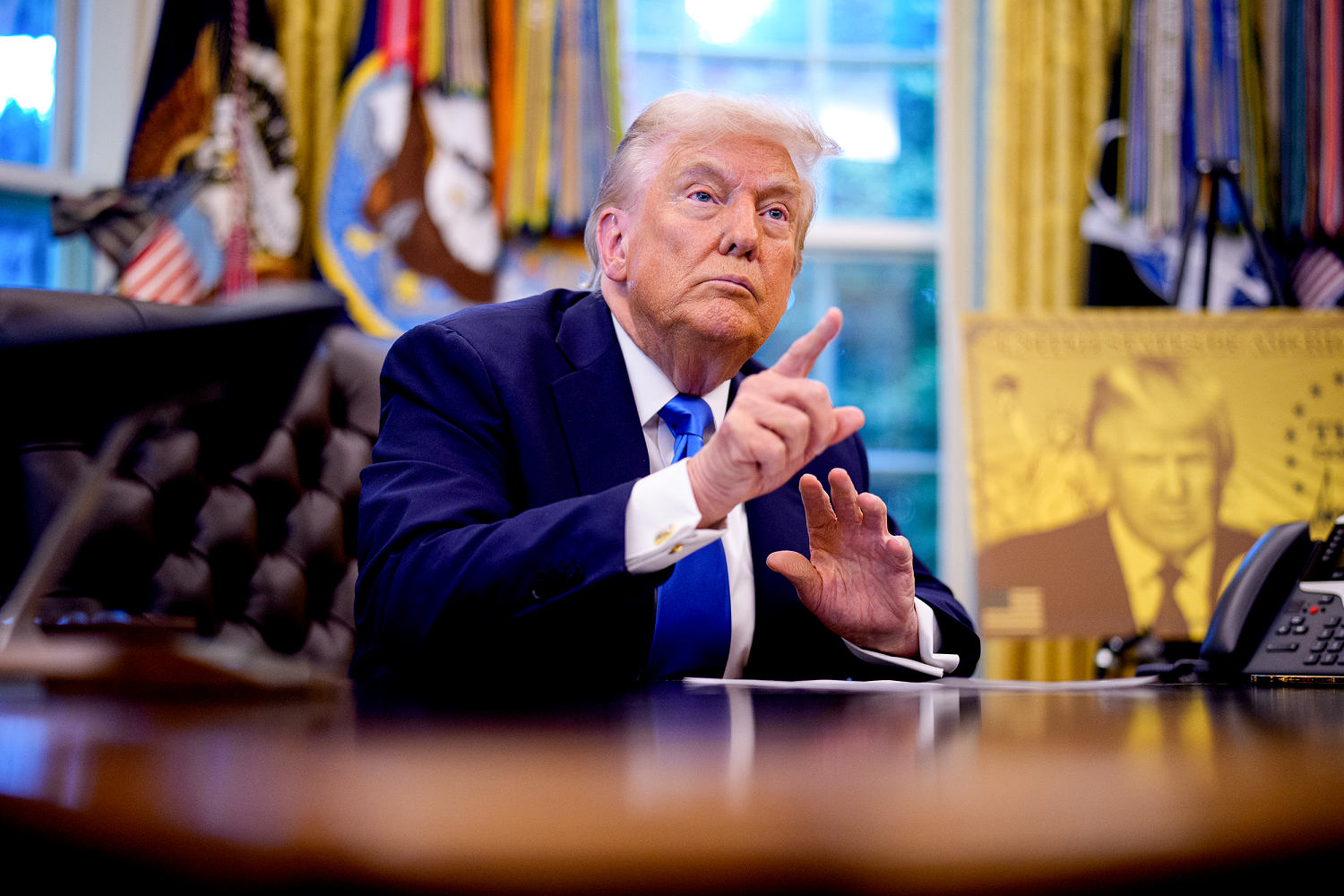
Shortly before futures trading began Sunday, Trump said in a social-media post that the U.S. will launch a project starting Monday to help get shipping from neutral countries — which he called “victims of circumstance” — moving through the strait. “We have told these Countries that we will guide their Ships safely out of these restricted Waterways, so that they can freely and ably get on with their business,” he said. On Sunday, a cargo ship was reportedly attacked near the Strait of Hormuz.
Trump added that there have been “very positive discussions” with Iran “that could lead to something very positive for all,” though he offered no details on either development.
In a social-media post, the U.S. Central Command confirmed it would “support merchant vessels seeking to freely transit through the essential international trade corridor,” using Navy destroyers and over 100 land- and sea-based aircraft. It did not provide additional details on how it will carry out that mission. The White House did not immediately respond to a request for comment.
“It could reframe the situation from confrontation to controlled stabilization,” Stephen Innes, managing partner at SPI Asset Management, said in a Sunday note about the shipping plan. “Of course, this is not without risk, as threats from [Iran] linger and uncertainty remains about President Trump’s plan, particularly whether the United States will ultimately provide naval cover.”
Earlier, Trump downplayed Iran’s latest peace offer, though Pakistani officials were reportedly still working to get the two sides back to the negotiating table.
Also on Sunday, the OPEC+ nations announced a modest increase in oil production in June, though the move is largely symbolic as long as the Strait of Hormuz remains closed.
Trading was muted Sunday night, partially because markets in London and Tokyo are closed Monday for holidays.
Stocks finished mostly higher Friday, with the S&P 500 and Nasdaq composite closed at record highs, and their fifth consecutive weeks of gains. The Dow slipped on Friday but still finished higher for fourth time in the past five weeks.
The S&P 500 is seeing its best performance in quarterly profit margin in more than 15 years, though that’s mostly thanks to Big Tech; Alphabet posted an 81% increase in net profit in the first quarter, while Amazon’s was up 77% and Meta’s rose 61%.
That reignites concerns that the market is being propped up by just a handful of companies that are spending billions of dollars on artificial-intelligence infrastructure. But “so long as the earnings and profit margins deliver, the stock rally is intact,” Jon Adams, chief investment officer at Calamos Wealth Management, told MarketWatch in an interview last week.
Read more: The market is riding high on an AI spending boom — but what could crack this rally?
After a slew of earnings by Big Tech companies last week, investors will be looking ahead to quarterly results from companies like McDonald’s and the Walt Disney Co. in the coming days, which should shed more light on the state of the American consumer. They’ll also be awaiting Friday’s April jobs report, along with other labor data scheduled to be released earlier in the week.