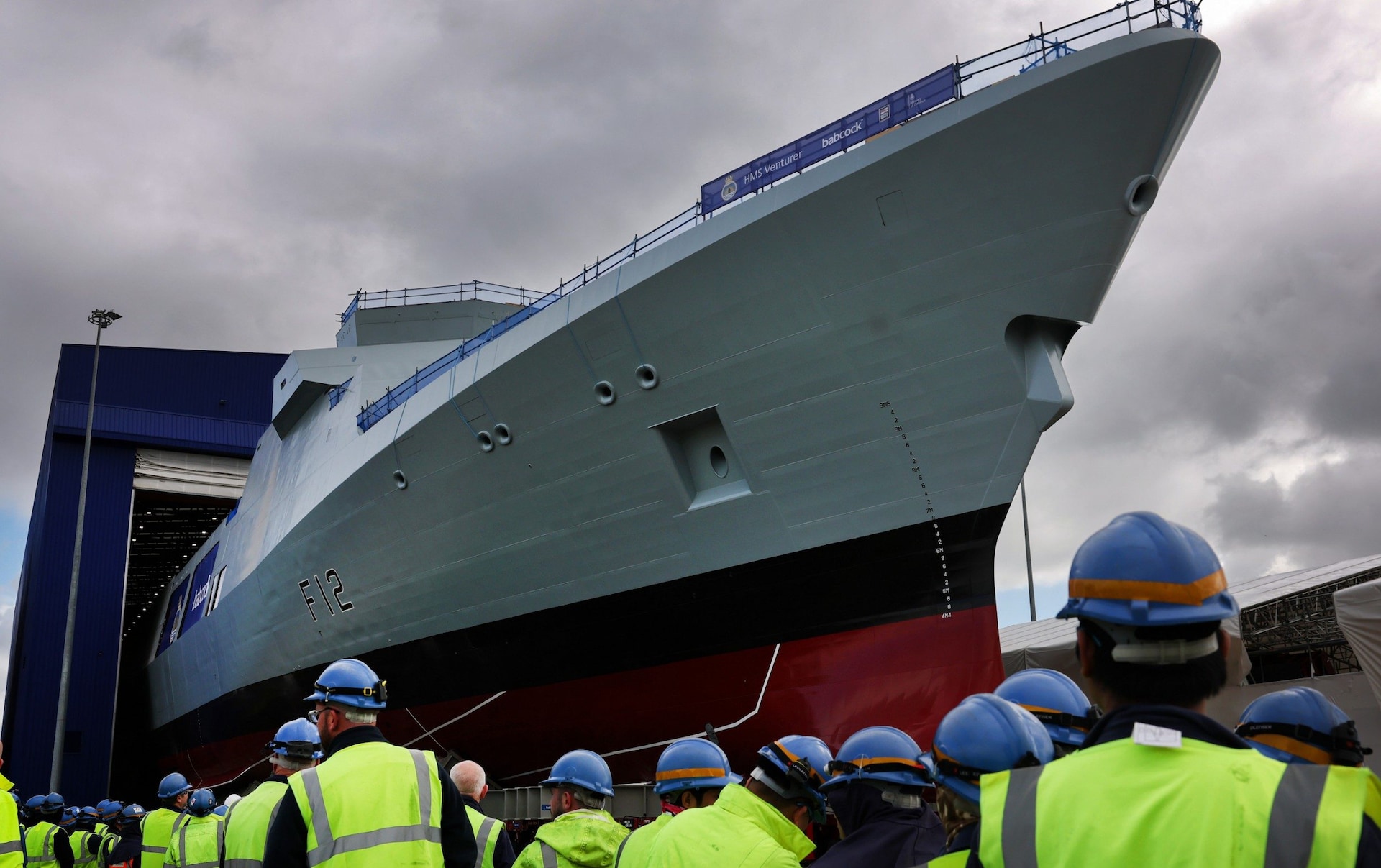
Work on a fleet of new Royal Navy warships has suffered a setback after two of them were assembled incorrectly.
The Royal Navy has positioned its five Type 31 frigates as the workhorses of its future fleet, equipped with helicopters, missiles, armed interceptor boats and drones to tackle anything from piracy and people smuggling to armed conflict.
But Babcock International, which holds the contract to make the warships, has admitted it built the first two in the wrong sequence, forcing it to spend months making £140m of changes.
In a trading update on Wednesday, Babcock said: “During the outfitting stage we have experienced higher-than-expected levels of rework as a result of design changes and the long-term impacts of out-of-sequence build activity earlier in the programme.
“Whilst the number of such rework events is not entirely unexpected, the work is being performed in the later stages of completion and therefore is more complex and more costly.”
The company also admitted that although the main problem was with the first of the five ships, HMS Venturer, some of the same errors were repeated on HMS Active.
It was originally hoped that HMS Venturer could go into service in 2023, a date that was later revised to 2027, with the whole fleet operating by the early 2030s. Babcock declined to comment on whether work to rectify the engineering blunders would cause further delays.
The news marks the latest challenge facing the Royal Navy as it seeks to renew Britain’s ageing sea defences. Just last week, the Navy effectively withdrew HMS Iron Duke from service, leaving it with only five active Type 23 frigates.
The 5,700-tonne Type 31 warships, which are meant to replace the Type 23s, will be around 450ft long, carry crews of 100 and be able to achieve speeds of 30mph – similar to high-speed motorboats.
However, some critics have dubbed them “Lidl frigates” because of their relatively low planned price of £250m each.
HMS Venturer and HMS Active have already been floated, ready for fitting out, while the keel has been laid for the third, HMS Formidable, and work has started on a fourth, HMS Bulldog.
Speaking at Babcock’s “frigate factory” shipyard in Scotland earlier this year, David Lockwood, the chief executive, described progress on the ships as a “powerful demonstration of the drive and delivery focus” of the Type 31 programme.
He added: “These milestones show the maturity of our facility, the success of the design and build process, and the skill and dedication of our Babcock team.”
The latest charge takes Babcock’s losses on the Type 31 to more than £300m. The defence and nuclear engineering group signed a fixed-price contract with the Ministry of Defence in 2019, meaning it is liable for any cost overruns.
Babcock now expects to report operating profits of £293m for the year to the end of March, down from £363m last year and below analysts’ expectations.
Bosses said underlying performance was strong for the year to the end of March, particularly in its nuclear and aviation divisions. Underlying operating profit excluding the charge rose 19pc to £433m, while revenue climbed 10pc to £5.3bn.
Around £100m of the £140m charge will be recognised as a revenue reversal in the 2026 financial year, with the balance added to contract loss provisions.
Babcock announced in January that Mr Lockwood will retire from the business. He will be succeeded by Harry Holt, previously head of the company’s nuclear division, who has assumed the role of deputy chief executive and will join the board next month.
A government spokesman said the Type 31 contract was “providing world class ship building in Rosyth” and “sustaining 1,250 jobs for Scottish shipbuilding”.