A version of this story appeared in CNN’s What Matters newsletter. To get it in your inbox, sign up for free here.
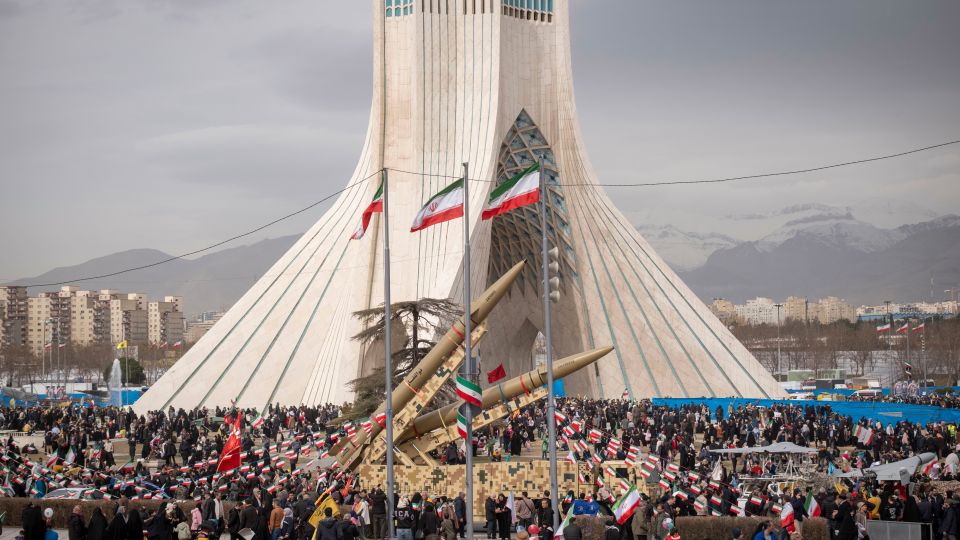
One of the Trump administration’s key talking points on the Iran war is that the Islamic Republic’s military capabilities were devastated in US-Israeli bombing campaigns before the ceasefire began in April.
But intelligence reports that have not been made public suggest Iran’s military — in particular its missile capabilities — is not quite as destroyed as the US has made it out to be.
Reporting the fact of those intelligence assessments, Trump suggested Tuesday, is “virtual TREASON.”
What the intelligence says about Iran’s missiles
In early April, CNN reported on an intelligence assessment that said Iran maintained a significant portion of its drone capability and a large percentage of its coastal missile systems.
The intelligence assessment contradicted Trump’s argument in remarks to the nation that same week, when he offered this definitive assessment of Iran:
In the intervening six weeks, Iran has utilized the ceasefire to dig out launchers that might have been buried in previous strikes, according to CNN’s report from this month.
This helps explain why Iran has so effectively shut down the Strait of Hormuz and squeezed the worldwide energy supply so effectively.
All this while, Trump has used words like “decimated” to refer to Iran’s capabilities and to argue the US could end the war tomorrow if it wanted to.
The intelligence cited in CNN’s report also suggests that Iran can last for up to four months of the current US blockade of its ports without completely destabilizing its economy, according to sources familiar with the intelligence.
This week The New York Times reported on a US intelligence assessment that Iran has “operational access” to all but three of its 33 missile sites along the Strait of Hormuz.
‘Virtual TREASON’
While Trump did not specifically cite the Times article, he did lash out in a social media post after it was published:
Note he did not say in the post that Iran does not have access to its missile sites along the strait.
The facts are classified
Chairman of the Joint Chiefs of Staff Gen. Dan Caine was directly asked during a Senate hearing Tuesday whether the Times report contradicted Trump’s previous claim that 80% of Iran’s missile capability has been destroyed.
The nation’s top general respectfully declined to confirm or deny the president’s claim.
“All of our battle damage assessment matters are classified and it would be inappropriate for me to comment in this forum on that,” Caine said. “I appreciate the question, but I’m not going to answer it.”
Defense Secretary Pete Hegseth said something similar.
“Why would I validate what people may leak or not leak?” he said. “We don’t talk about those things.”
Back in April at the Pentagon, however, Hegseth made a bold claim about Iran’s missile capability.
What is the administration saying behind closed doors?
This week, Democratic Sen. Chris Murphy suggested the administration says different things about Iran’s capabilities in classified settings than it does in public. During the hearing Tuesday Murphy asked Hegseth to confirm there are essentially no military means by which the US can open the Strait of Hormuz, something Hegseth denied.
“There most certainly are military means by which we could open the strait, both targets on land and also with what we do with our naval capabilities, not to mention our naval blockade,” Hegseth said.
Murphy countered, “That’s not what has been testified to us in private briefings” and wondered why, if there are military options, the administration hasn’t pursued them.
Hegseth said the preference is for a longer-term deal that allows for trade from all over the world to flow through the strait, which does make sense.
Some pre-war intelligence was on target
But it’s worth noting here that the only reason the strait is currently closed is that Iran retaliated to being bombed by exerting the leverage that was available to it, which should not have been a surprise to the US since it was a logical scenario included in military war planning.
Nor should it have been surprising that assassinating Iran’s supreme leader at the beginning of the war would not topple the regime. That was also within US intelligence assessments presented to Trump before he decided to launch the war, according to CNN’s reporting in January, before the war.
Retired Adm. James Stavridis praised the US intelligence community for its work even if the message it delivers is unwelcome news.
“If these reports are accurate, this is what you want your intelligence agencies to do,” Stavridis, a former NATO supreme allied commander, said on CNN Wednesday.
A larger pattern of distortion
The Trump administration has often used hyperbole or exaggeration in efforts to advance its agenda.
It is not just hardened criminals being swept up in the mass deportation effort.
It is not just woke ideology and fraud being targeted with spending cuts.
There is no evidence of widespread fraud perpetrated by noncitizens in US elections.
And some White House arguments about the war in Iran seem to fit within this pattern.
For more CNN news and newsletters create an account at CNN.com