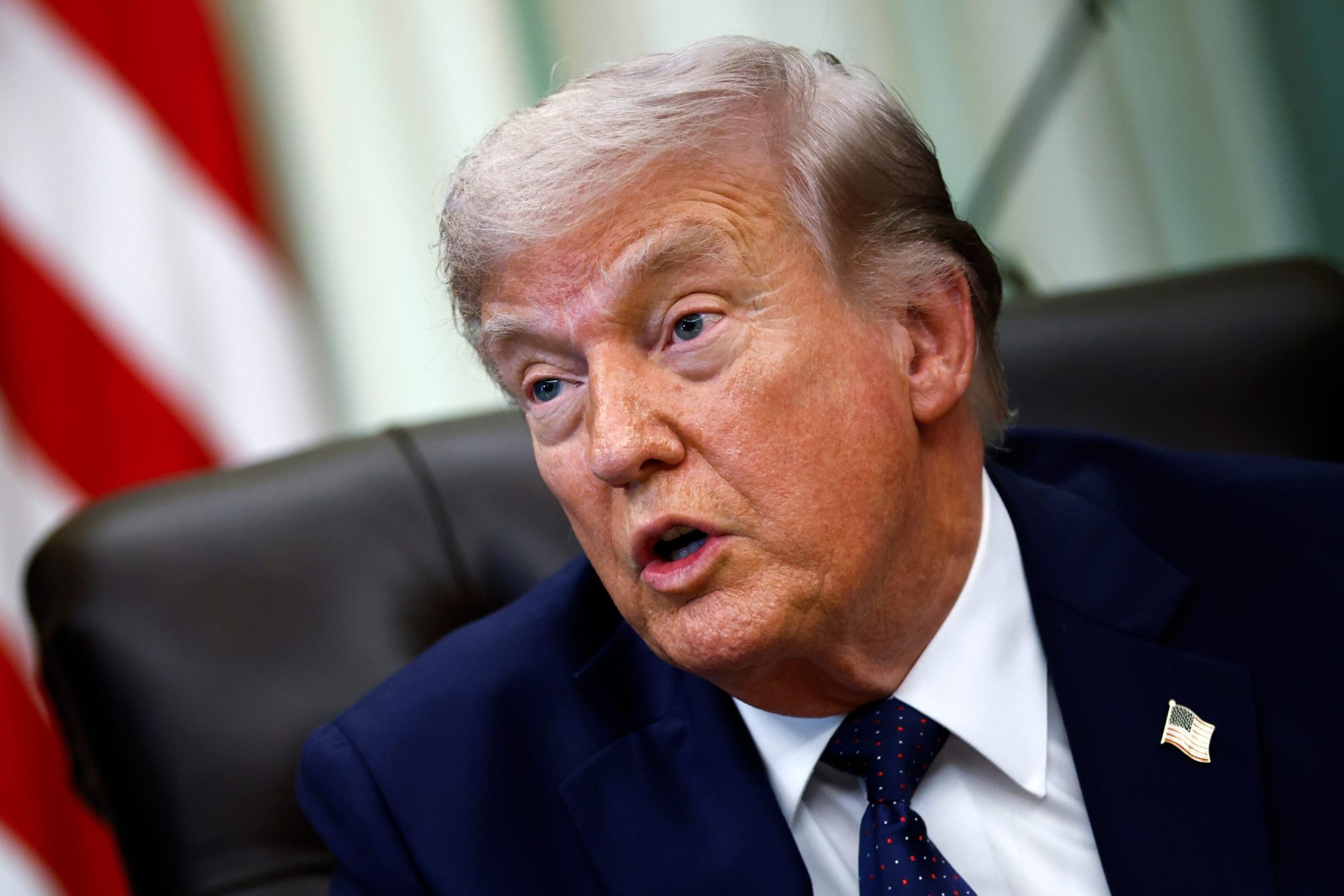
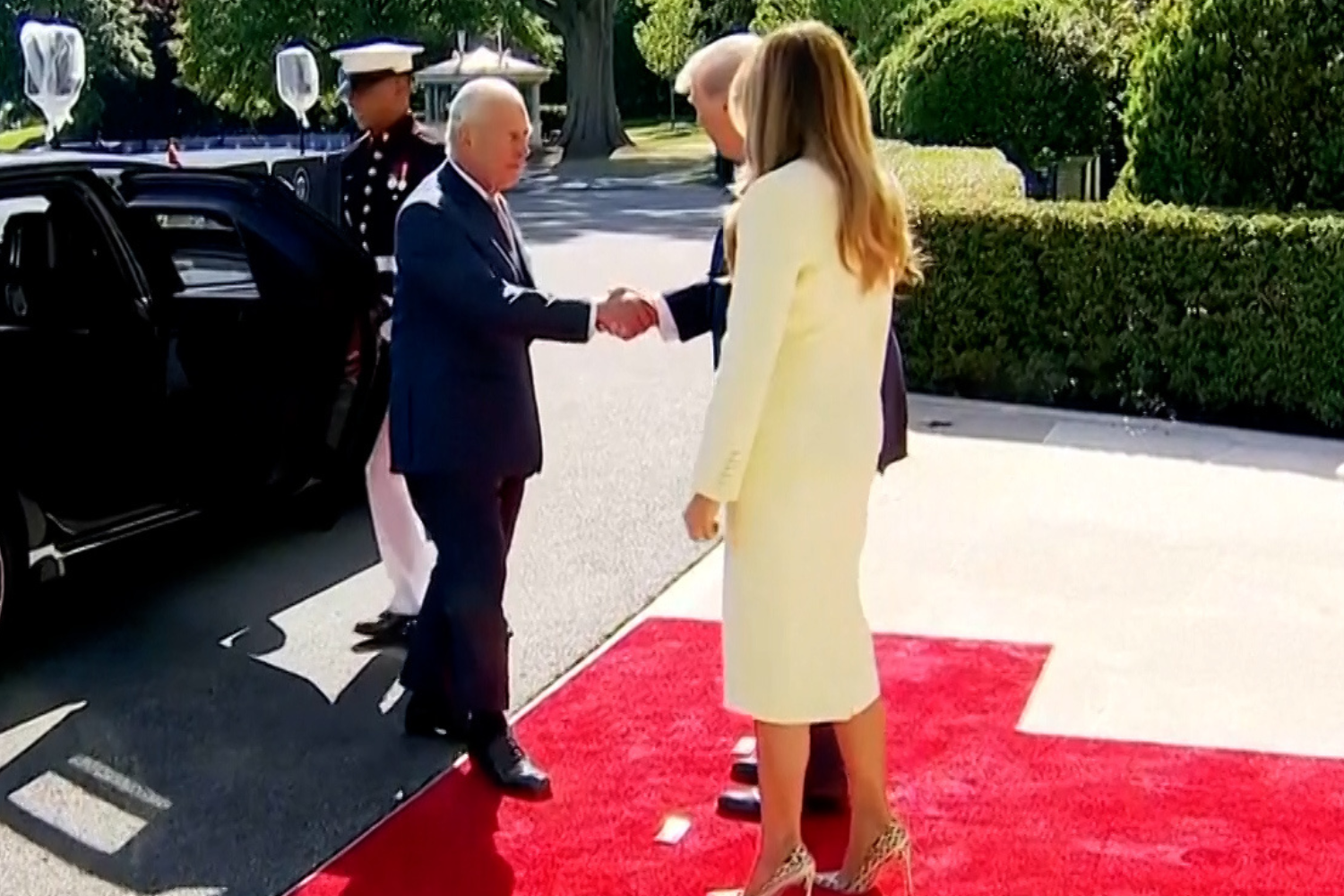
President Donald Trump appeared to deploy his well‑documented firm handshake while greeting King Charles III at the White House on Monday, as the British monarch began a formal state visit to the United States.
Footage from the South Portico shows Trump gripping the king’s hand during their greeting with a strong pulling motion—a handshake style the president has consistently exhibited during public meetings with foreign leaders.
While brief, the exchange formed part of a carefully choreographed diplomatic reception marking the start of Charles’ first official state visit to the U.S. as monarch.
Why King Charles Is in Washington
Charles and Queen Camilla arrived in Washington, D.C., on April 27 for a four‑day state visit aimed at reinforcing the U.S.-U. K. relationship at a moment of heightened political tension linked to the conflict involving Iran and broader disagreements between the two governments.
The visit coincides with preparations for the 250th anniversary of American independence, lending additional historical resonance to the trip. It also represents Charles’ most-significant diplomatic engagement with the United States since ascending to the throne in 2022.
In keeping with the conventions established during the reign of Queen Elizabeth II, the king’s itinerary emphasizes ceremony and symbolism rather than policy intervention.
The program includes meetings at the White House, a formal garden party hosted by the British Embassy, and a scheduled address to a joint session of Congress—an appearance that will make Charles only the second British monarch ever to speak before Congress, following his mother in 1991.
Trump’s Handshake—and Why It Stands Out
Trump’s handshake has long attracted attention in diplomatic settings, not because of any single encounter but because of its consistent and recognizable characteristics across years of meetings with foreign leaders.
Across interactions with allies and adversaries alike, Trump has repeatedly greeted counterparts with a firm grip, an extended hold, and, at times, a subtle pulling motion toward his own stance.
This approach has frequently been described as a “signature” or “trademark” feature of his public interactions, setting him apart from the more neutral and fleeting handshakes that typically define diplomatic protocol.
Notable examples include Trump’s greetings with then‑Japanese Prime Minister Shinzo Abe and former Canadian Prime Minister Justin Trudeau, both of whom were observed adjusting their posture or stance as the prolonged handshake unfolded, turning what are usually transitional moments into prolonged photo opportunities.
In 2018, Trump shared an unusually emphatic handshake with the president of Portugal, which prompted comparisons to his earlier interactions with European leaders.
Trump has exhibited similar behavior in meetings with members of European royal families. During the 2025 NATO summit, Trump’s physical positioning and greeting style again drew attention as a brief exchange with King Willem‑Alexander of the Netherlands became one of the most closely examined moments of the visit.
The most frequently cited precedent remains Trump’s interactions with French President Emmanuel Macron. During Macron’s 2018 visit to Washington, D.C., the two leaders engaged in an extended handshake lasting more than 26 seconds, with neither appearing willing to release their grip. Since then, the length of their handshakes are often a noteworthy part of meetings between Macron and Trump.
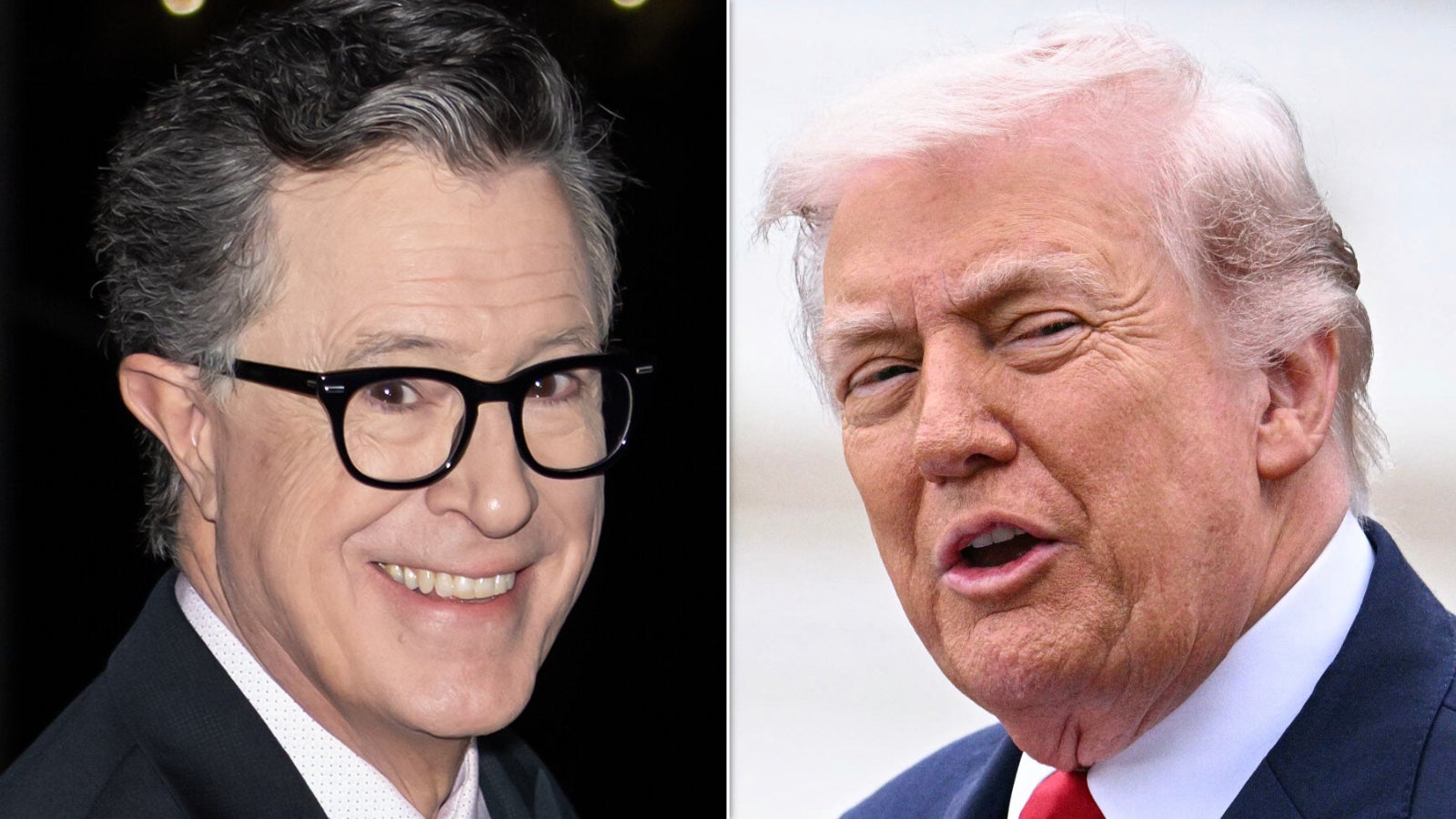
The phenomenon has been substantial enough to enter late‑night satire. In October 2025, The Late Show With Stephen Colbert began with a cold‑open segment titled “How To Avoid Trump’s Aggressive Handshakes,” playfully advising world leaders on how to brace themselves during public greetings. While comedic in tone, the sketch reflected how firmly established the gesture had become in the public imagination.
Trump’s handshake also stands out because it often contrasts with protocol‑driven settings where the physical choreography is traditionally restrained—something that is particularly noteworthy in royal settings.
In formal meetings with the British monarch, a handshake is customary, particularly when greeting foreign heads of state at state visits or official receptions. However, royal protocol places a premium on brevity and restraint. Unlike political summits, where body language can evolve organically, royal greetings are typically designed to be brief, neutral and carefully staged, minimizing any sense of physical dominance or informality.
Against this backdrop, Trump’s greeting of Charles was notable not because it broke protocol—it did not—but because it echoed a personal mannerism the president has applied across vastly different contexts, from NATO summits to White House visits by foreign royals.
In diplomacy, handshakes are meant to blend into the background, serving as seamless transitions between formalities and substance. Trump’s, by contrast, have repeatedly drawn attention precisely because they do not disappear—instead becoming part of how his presence is registered on the world stage.
Related Articles