
The 2ZR-FE Was One of the Good Ones
Toyota’s 2ZR-FE is generally known to be reliable. You’ll find it in the 2009-2013 Corolla and a handful of other Toyotas, quietly shrugging off missed oil changes, long commutes, and the kind of neglect that would sideline most.
That said, high-mileage Corollas from this era are everywhere – unless one crosses paths with a botched repair. That’s exactly what happened here: a 260,000-mile engine showed up with connecting rods poking right through the block, as seen in a recent I Do Cars teardown.
According to the driver, the car started losing power on the road, but instead of stopping, the driver floored it. The engine answered with a bang, but that wasn’t exactly the main culprit here.
Oil Pressure Problems
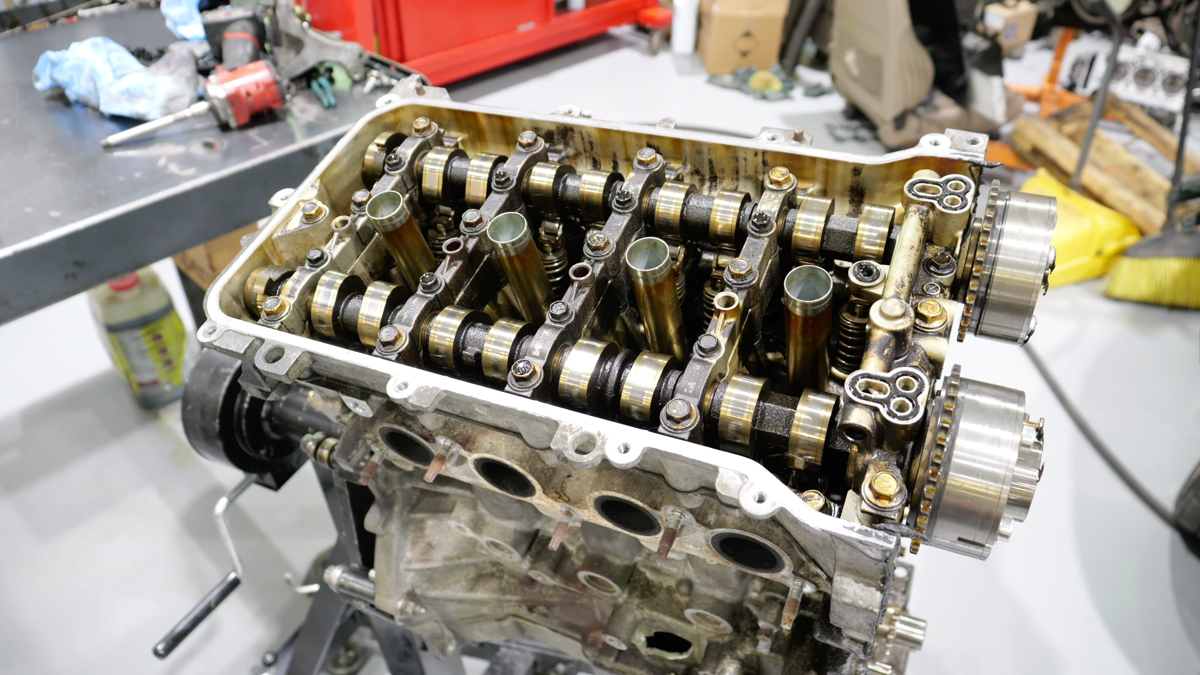
The teardown began with removing the valve cover, which revealed sludge and metallic flakes in the oil. As expected, the oil filter was even worse, packed with metal shavings from chewed-up bearings. More importantly, with the chain, guides, and tensioners looking fresh, it was clear someone had just worked on the timing parts, but the way they were installed looked sketchy. The engine had excessive RTV sealant smeared across multiple areas, several bolts appeared incorrect or missing, and parts of the oiling system looked improperly assembled.
As revealed in the teardown, the real culprit was the damaged/badly installed O-ring – a $1 part – near the oil filter housing. That tiny seal is what keeps oil pressure where it needs to be. Get it wrong, and oil leaks inside the engine, starving the bearings bit by bit.
The more the teardown progressed, the more damage began to appear. One rod bearing appeared to have overheated due to a lack of oil, failed, and the rod tore through the block, spraying metal everywhere. When the engine finally came apart, the oil pan was full of metallic sludge instead of oil.
Cheap Parts Causing Expensive Problems
This teardown isn’t really about Toyota reliability. It’s about how even tough engines like the 2ZR-FE can’t survive sloppy repairs. Miss a seal or get an oil passage wrong, and you’re asking for trouble. And if your car starts losing power or making strange noises, hoping it’ll fix itself is wishful thinking.
For buyers shopping for an older, high-mileage used car, a pile of repair receipts is a good thing to have. But what really matters is how well the work was done. A new timing chain or a thick folder of service records doesn’t mean the job was done right, and in this case, unfortunately, it wasn’t.