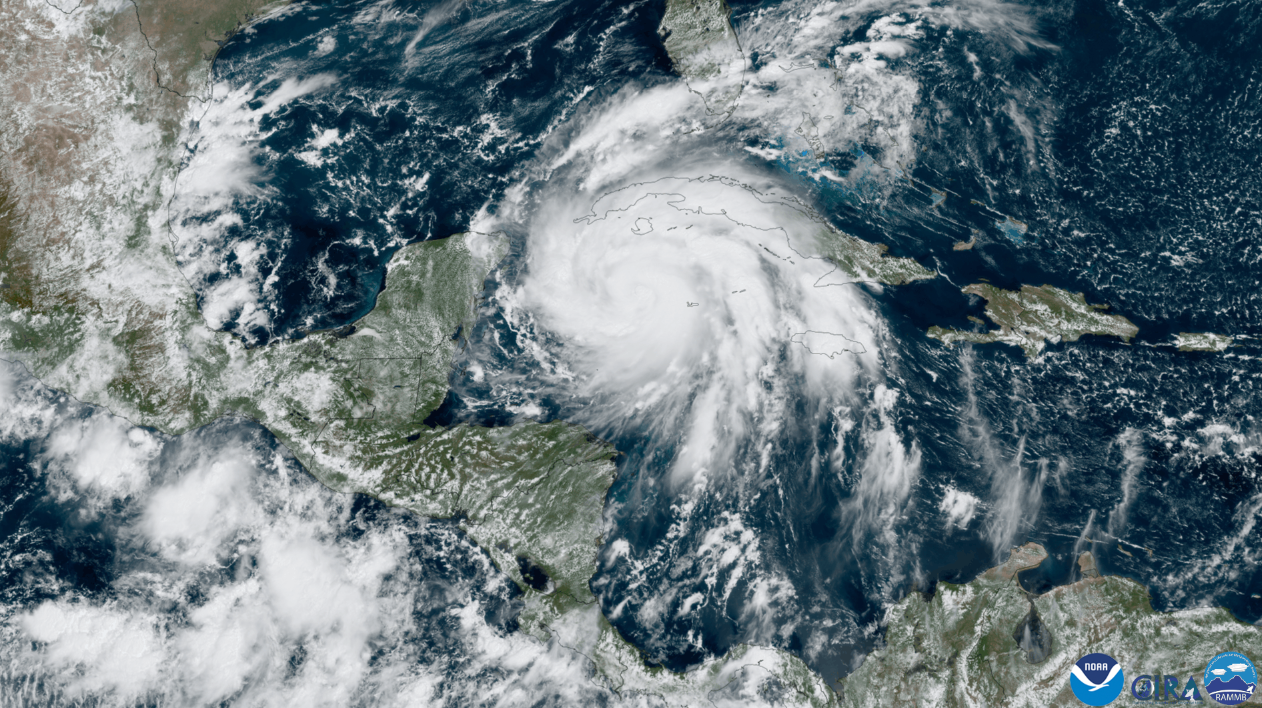
It’s been over 100 years since a hurricane struck Tampa, and 34 since Miami suffered a direct hit. Some forecasters consider both cities “overdue.”
AccuWeather forecasts have highlighted the unusual "hurricane hiatus" in both cities, along with southern New England, and research compiled by Michael Ferragamo, a freelance hurricane researcher and soon-to-be graduate of the University of Oklahoma, shows an unusually long stretch of quiet in those areas.
"In all of these regions, populations have grown substantially since the last major impacts," AccuWeather hurricane expert Alex DaSilva told USA TODAY. "Many residents have never experienced a hurricane and may not be familiar with evacuation zones or proper preparation, which increases the risk."
Start the day smarter. Get all the news you need in your inbox each morning.
Why are Florida's Miami and Tampa so vulnerable to hurricanes?
In Florida, both Tampa and Miami are "very vulnerable," DaSilva said. "Both are low-lying and highly prone to storm surge flooding, and both have seen rapid development in recent decades. Tampa was very fortunate when Hurricane Milton passed just to the south. If that track had shifted slightly north, the impacts could have been catastrophic."
Miami: 'Eerily quiet' hurricane seasons
"Miami and the entire east coast of Florida has been eerily quiet since 2004," Klotzbach said. "The only hurricane landfall along the Florida east coast since Jeanne in 2004 was that sprawly mess Nicole in 2022. Of course, Miami had quite the scare from Irma in 2017," he said.
DaSilva said, "Miami is one of the most overdue areas. The average return interval for a hurricane there is about every six to eight years, yet it has been since 2005 since a direct hit. That puts South Florida well beyond its historical frequency."
1992's Hurricane Andrew remains South Florida's worst storm on record in terms of structures damaged or destroyed, and it remained the costliest in monetary terms until Hurricane Irma topped it 25 years later.
Ferragamo also said that Florida's east coast has had very few hurricane landfalls recently, "which is quite the contrast from the seven hurricanes that struck between 1945 and 1950!"
Tampa: 'Very, very lucky' hurricanes missed
Florida's second-most populous metro area (behind Miami) hasn't taken a direct hit since 1921, when an unnamed storm slammed into the city, killing eight people and leaving behind $10 million (equivalent to $170 million to $185 million today) in damages.
Hurricane Milton in 2024 was a very close call for Tampa. However, "Tampa's remarkable streak of avoiding a direct hit from a major hurricane continued with Milton," DaSilva said.
While Milton brought impacts, the worst of the storm ‒ and the storm surge ‒ missed the city. DaSilva said there's no geographical or topographical reason ‒ or even a meteorological reason ‒ for Tampa's long streak. "They got very, very lucky," he said.
"The typical 'return interval' there is around 10 years, so depending on how you classify Milton, Tampa could still be considered overdue for a more direct and severe hit." (A return interval, or return period, is the average amount of time between hurricanes at a specific location, based on historical data ‒ not a schedule or prediction.)
Colorado State University hurricane researcher Phil Klotzbach agreed with DaSilva: "Tampa is another good example of a city with several close calls but no direct landfalls in recent years," citing Hurricanes Charley (2004), Irma (2017), and Idalia (2023).
When is 2026 hurricane season in Florida?
The 2026 Atlantic hurricane season is June 1 to Nov. 30 every year, with August, September and October being the most active months, particularly in Florida. In several years past, however, hurricane season has started early, with tropical systems named as early as April or May.
Which Florida counties are at greatest risk in 2026 hurricane season?
Below are the Top 10 Florida counties with the highest hurricane potential in 2026. The listed percentages refer to the probability that each county will see a named storm, hurricane or major hurricane come within 50 miles, respectively. For Monroe County, for example, there's a 39% probability this area will see a named storm, 22% probability for a hurricane, and 12% probability a major hurricane will come within 50 miles.
An interactive graphic below also illustrates this.
- Monroe County, 39%, 22%, 12%
- Brevard, 32%, 12%, 4%
- Miami-Dade, 32%, 16%, 10%
- Broward, 31%, 16%, 7%
- Collier, 31%, 15%, 9%
- Palm Beach, 31%, 15%, 6%
- Lee, 29%, 13%, 8%
- Charlotte, 28%, 12%, 7%
- Duval, 28%, 10%, 2%
- Escambia, 28%, 12%, 5%
What are Florida's overall odds for 2026 hurricane season?
According to Colorado State University, there is a 74% probability that a named storm will pass within 50 miles of Florida's coast and a 21% chance that a major hurricane could do the same during the 2026 hurricane season. The climatological average is 86% for a named storm and 29% for a major hurricane.
What are the storm names for the 2026 hurricane season?
- Arthur
- Bertha
- Cristobal
- Dolly
- Edouard
- Fay
- Gonzalo
- Hanna
- Isaias
- Josephine
- Kyle
- Leah
- Marco
- Nana
- Omar
- Paulette
- Rene
- Sally
- Teddy
- Vicky
- Wilfred
Stay informed. Get weather alerts via text.
Sarah Perkel is a South Florida Connect Reporter for the USA TODAY Network's Florida Connect team. You can get all of Florida’s best content directly in your inbox each weekday day by signing up for the free newsletter, Florida TODAY.
This article originally appeared on USA TODAY: These 2 Florida cities considered 'overdue' for direct hurricane hits