Welcome to another grueling week in the House.
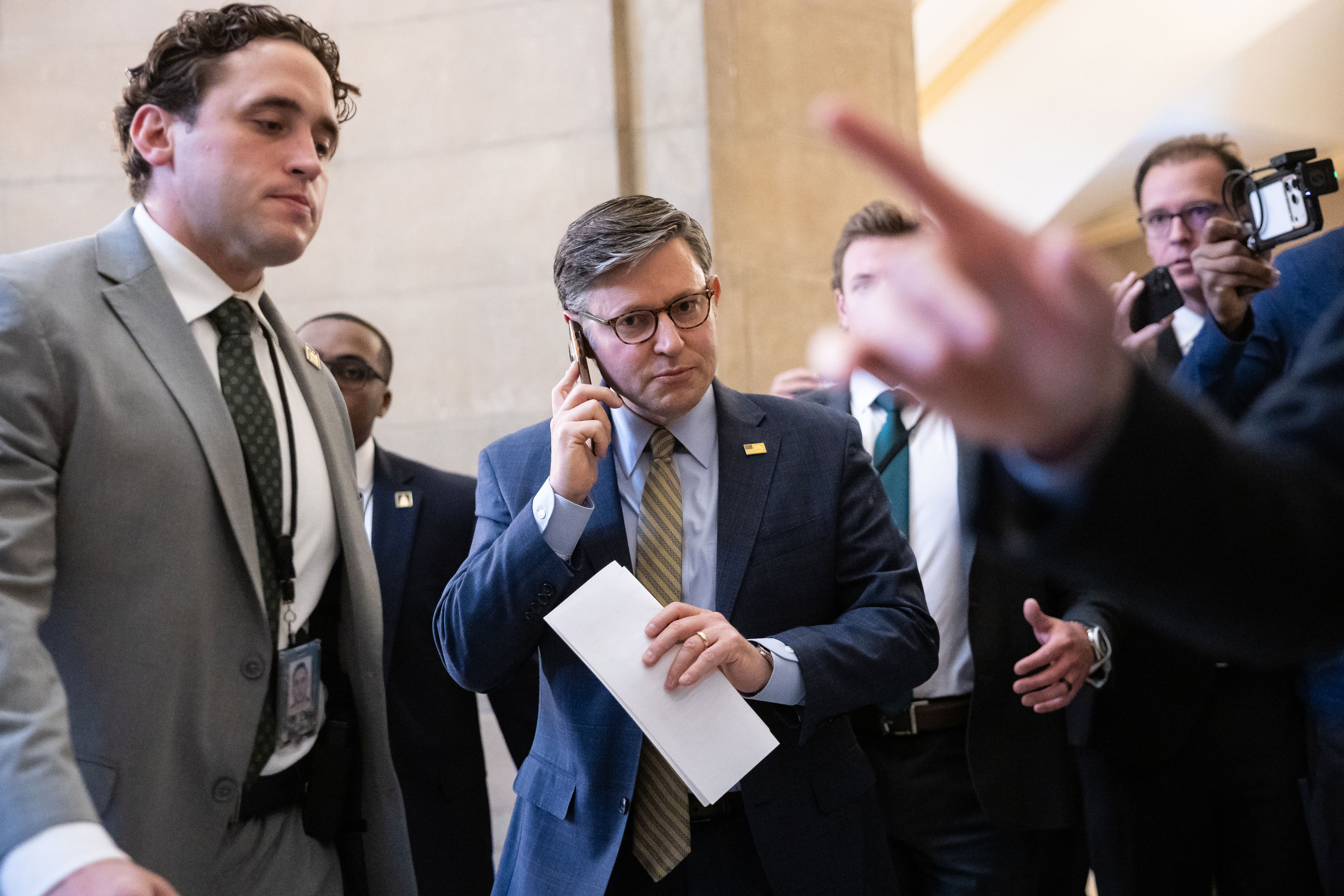
A growing list of deadlines is bearing down on Speaker Mike Johnson as House Republicans try to push through an extension of an expiring government spy power Tuesday, a budget plan to end the Department of Homeland Security shutdown Wednesday and a farm bill many members say is key to midterm victories Thursday.
Each legislative undertaking is deeply complicated and rife with intraparty warfare — from a MAHA revolt over the farm bill to a rebellion from ultraconservatives who blocked Johnson’s last bid to reauthorize Section 702 of the Foreign Intelligence Surveillance Act and could do so again.
Johnson is also facing a rebellion from his rank-and-file all the way up to some of his senior members over his plan to move ahead with the budget resolution the Senate advanced last week that would only address immigration enforcement funding. Hard-liners insist they need a comprehensive follow-up to last summer’s tax and spending megabill to help them stave off massive losses in the November elections.
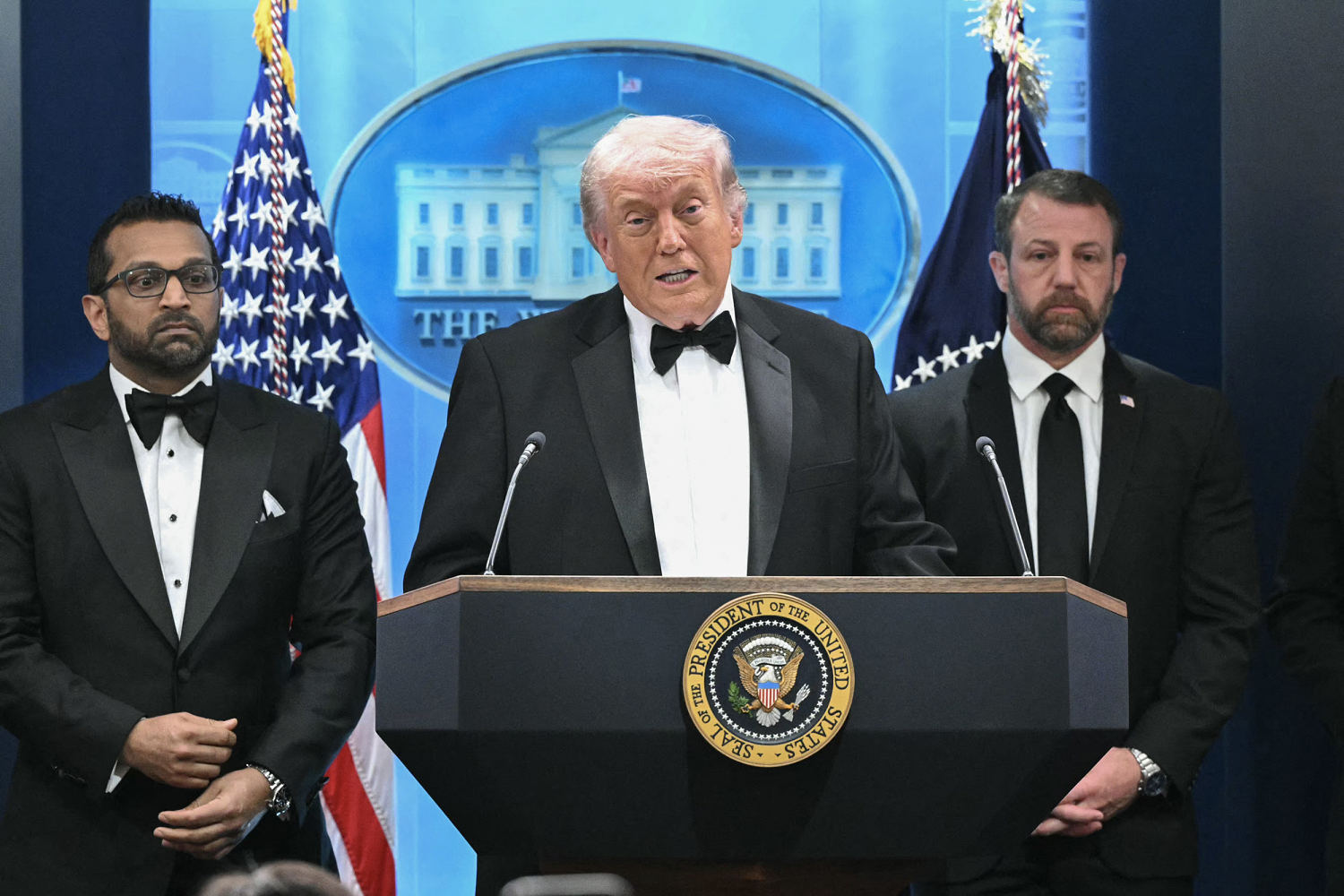
Hanging over it all are the events of this past weekend’s White House Correspondents Dinner, where a gunman fired shots near a ballroom where the president, vice president, the Speaker of the House and Cabinet officials in the line of presidential succession were all dining.
It’s not clear yet how it will affect negotiations around extending Section 702 or passing an immigration funding bill by April 30 and June 1, respectively, but lawmakers late Saturday night and the weekend said it underscored the need to quickly reopen DHS, which houses the Secret Service.
The speaker will need nearly every Republican to advance all three of these critical items that hold enormous political and policy consequences; none are guaranteed to survive the week.
“It’s going to be a circus,” one Republican said.
“The week from hell,” another added.
GOP leaders are already losing precious floor time Tuesday when King Charles III, who is in town for a state visit at the White House, will address a joint session, forcing leaders to cut off House votes by noon, according to two people with knowledge of the plans. Republican leaders are now in further talks surrounding security protocols for the royal visit, which could result in additional delays for the House GOP early in the week.
This week will also mark 60 days since the start of the conflict with Iran, and some Republicans are growing anxious over the economic uncertainty it has wrought, especially concerning energy prices. This is the time, some GOP lawmakers have warned, they could break rank and vote with Democrats on legislation to rein in Trump’s military authority overseas, though, many Republicans are pointing to the ceasefire — though tenuous — as a reason to continue opposing war powers resolutions for the time being.
And in another blow, Johnson is down one GOP vote as Rep. Tom Kean Jr. (R-N.J.) has been away from Capitol Hill since March 5, with little more explanation than his team saying he’s dealing with a personal health matter.
AfterPOLITICO reported that New Jersey House Republicans have called and texted Kean, only to get “radio silence,” Johnson released a statement late last week saying he spoke “by phone” with Kean last Thursday. He added: “He is attending to a personal health matter and expects to be back to 100% very soon.”
Perhaps the biggest political landmine for Johnson will be the budget resolution needed to allow Republicans to write and pass a filibuster-skirting reconciliation bill funding immigration enforcement activities under DHS. Trump is demanding such a bill on his desk in a little over a month, at which point the House is expected to finally pass a bipartisan measure funding all other DHS operations and end the record-setting shutdown.
But Rep. Warren Davidson of Ohio and other Republicans have warned the budget resolution will fail on the floor if Johnson pushes ahead with the narrow Senate plan rather than a more expansive policy package. Republican leadership needs to convince these members to go along with the Senate budget plan for immigration funding now — by promising to move another partisan package of other GOP priorities later.
“We will not get a third reconciliation bill,” Davidson said in a statement. “We need to use reconciliation 2.0 to deliver the full agenda the American people sent us to accomplish. The train is leaving the station, and we need to load it up.”
Leaders plan to discuss the matter in closed-door meetings throughout the week, conference-wide and in smaller groups. The speaker will also try to put some more meat on the bones of general ideas Republicans could pursue in a later party-line package during the weekly House GOP conference meeting Tuesday, according to two people with direct knowledge of the matter.
Changes to the blueprint, Johnson and his allies caution, would punt the measure back to the Senate and almost certainly cause Republicans to miss Trump’s deadline. The White House and Homeland Secretary Secretary Markwayne Mullin are warning the administration is running out of money to pay a swath of DHS employees, increasing the urgency to move quickly.
Some senior House Republicans believe the shooting at the White House Correspondents’ Dinner could spur some GOP lawmakers to put aside their various gripes and support the budget resolution now, recognizing national security risks without a fully operational DHS, according to three people granted anonymity to speak candidly.
“I think Congress should pass DHS funding — it needs to be everything,” said Rep. Marlin Stutzman (R-Ind.) in an interview Sunday. “I think it's going to be a much higher priority.”
Many Republicans said the events of Saturday night should prompt Democrats to end the impasse over the Trump administration’s immigration enforcement agenda and just vote to reopen all agency operations without conditions. Democratic leaders were signaling Sunday their calculus hadn’t changed, however, underscoring the need for Republicans to pursue a party-line approach to immigration funding if other department functions stand a chance of coming back online in the coming weeks.
The Secret Service is still getting paid through emergency funding, lowering that pressure point for now.
The Saturday shooting also has had the adverse effect of ginning up enthusiasm among hard-liners to expand the pending budget resolution to allow construction of the White House ballroom to proceed despite legal challenges, with members arguing increased political violence necessitates a secure place for elected officials to gather safely.
“Any consideration of DHS reconciliation instructions this week & beyond should provide for construction of a secure ballroom on White House grounds,” Rep. Chip Roy (R-Texas) posted on social media.
Budget Chair Jodey Arrington, Judiciary Chair Jim Jordan and Rep. August Pfluger — who helms the Republican Study Committee of 189 Republicans — spent last week agitating for broadening out the upcoming party-line package beyond just stalled immigration funding. They all stood up during a closed-door conference meeting last week to make their case, according to four people granted anonymity to share details of the discussion.
Then there’s legislation to renew section 702 in time to both meet the expiration deadline and give the Senate time to clear it for Trump’s signature.
Johnson unveiled a reworked, three-year extension late last week but he has to sell it to a group of House Freedom Caucus members who want guardrails on the government’s warrantless surveillance practices. Many hard-liners are still not backing down from demands that leadership agree to advance a ban on a central bank digital currency as part of a reauthorization.
And finally there’s the farm bill. Activists with the Make America Healthy Again movement — a coalition that helped President Donald Trump win the presidency in 2024 — say they’ve been betrayed by the GOP over a provision in the legislation that would shield pesticide makers from lawsuits.
Some Republican lawmakers are so angry about the leadership-sanctioned plan that they’re now working with a group of House Democrats to strip out the provision or kill the whole bill, according to four people involved in the conversations.
Farm state Republicans, who are aligned with the powerful pesticide industry, don’t think the pushback will be successful; they argue the farm bill simply clarifies labeling rules and national standards for popular pesticides and herbicides used by the agriculture sector. But threats from the opposition could present a major headache and draw attention to larger party dysfunction.
Several conservatives are privately warning they could take down the farm bill and Johnson’s DHS funding plans if he tries to steamroll them on a Section 702 extension that relies on some bipartisan support.
“They are all connected,” one House Republican warned of the trio of bills.