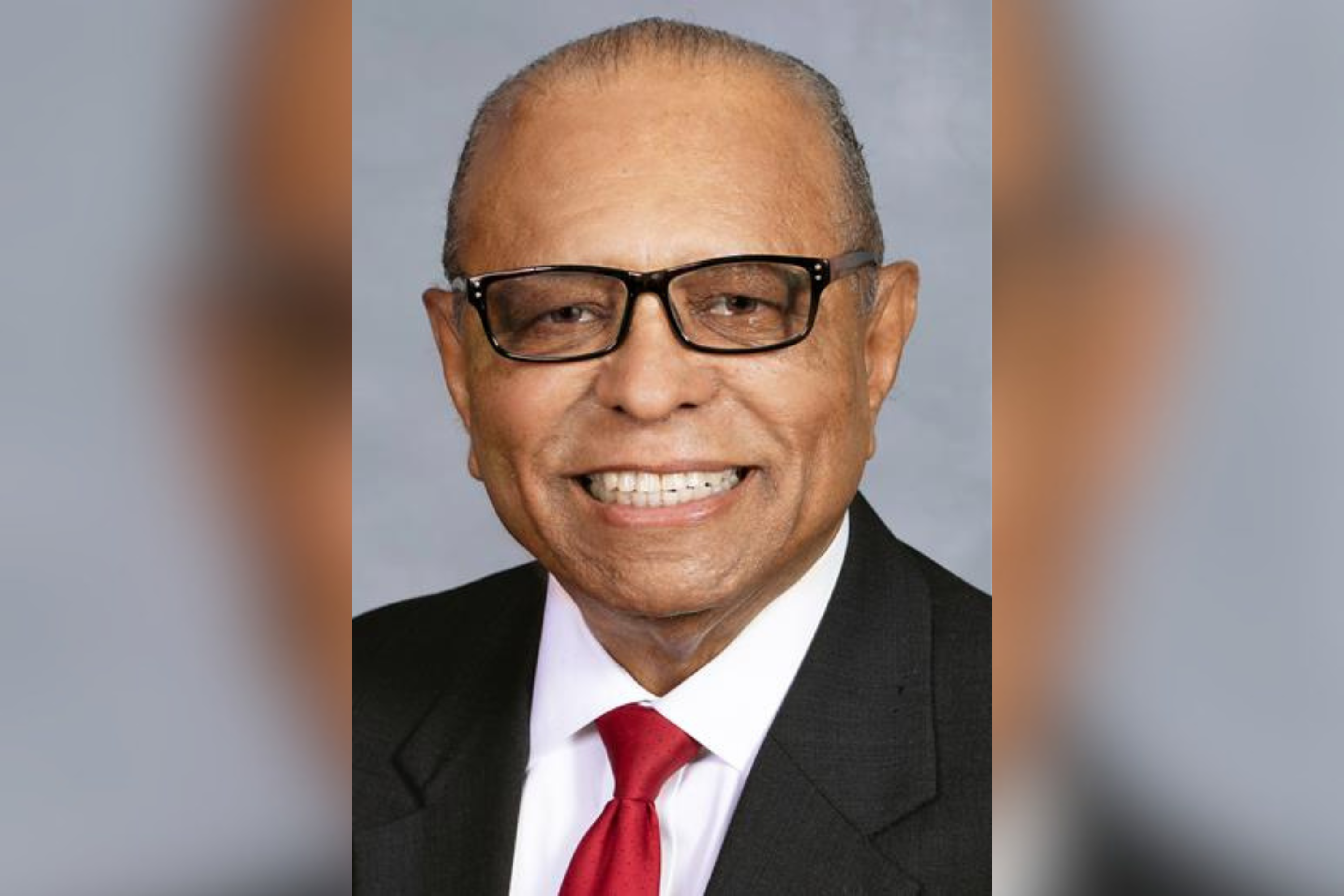
North Carolina state Representative Nasif Majeed left the Democratic Party to become an independent member of the state legislature, weeks after losing in the primary election, he announced on Monday.
He follows Representative Carla Cunningham, who last week announced she would also be leaving the Democratic Party to become an independent. Both Charlotte-area legislators lost their primaries against more progressive Democrats. Republicans hold a large majority in the state legislature, but their party switches leave them as key swing votes on votes to override any vetoes from Democrat Governor Josh Stein for the remainder of their terms.
Newsweek reached out to the North Carolina Democratic Party for comment via email.
Nasif Majeed, Carla Cunningham Leave Democratic Party
Majeed revealed his decision to become an independent in a statement on Monday
“After deep reflection and conversations with constituents across District 99, I have made the decision to disaffiliate from the Democratic Party and serve as an Independent. This decision is rooted in my responsibility to represent people—not party agendas—and to remain grounded in integrity, fairness, and truth,” he said in a press release provided to Newsweek.
He said he has “witnessed and experienced actions within the political landscape that I believe could be perceived as misleading or inconsistent with the spirit of fair elections,” adding that “I cannot, in good conscience, remain aligned where those concerns are not adequately addressed.”
Majeed drew scrutiny from some Democrats last year after he voted with Republicans to override Governor Josh Stein’s veto of a bill dealing with sexuality and religion in schools. Majeed said at the time he had “some moral issues and I had to lean on my values,” reported The News & Observer.
He represents a district in Mecklenburg County, home to Charlotte.
Cunningham, who also represents a Charlotte-area district in the state legislature, left the party just days earlier.
She told the Observer she made the decision after she “came to realize that I want to serve the people, not a party.”
“Being an independent thinker does not align with party politics, and I will never compromise the needs of my constituents to satisfy a political agenda,” she said.
Cunningham also drew scrutiny from Democrats last year after voting with Republicans on a bill that would increase cooperation between local law enforcement and U.S. Immigration and Customs Enforcement (ICE). She helped override Stein’s veto of the bill. She said on the floor at the time of her vote that she believes “all cultures are not equal.”
“Some immigrants come and believe they can function in isolation,” she continued. “I suggest they must assimilate. Adapt to the country they want to live in.”
Wesley Harris, chair of the Mecklenburg County Democrats and a former state representative, told Newsweek he “felt we shared similar values as Democrats.”
“Their actions last year did not align with what I expected of them, nor what the voters expected, which is why they both lost their primaries in March. I am disappointed when anyone leaves the Democratic Party, but I think the voters made it clear what and how they expect to be represented in Raleigh, and I sincerely hope that both remember that the remainder of their terms in office this year,” he said.
What the Party Switches Mean for Veto Overrides in North Carolina
Their decision to become independents may have limited impacts on the business of the state legislature because they were already voting with Republicans on controversial legislation, Christopher Cooper, a political scientist at Western Carolina University, told Newsweek.
However, he said there could be areas where they will remain decisive because there is only one seat preventing Republicans from obtaining a supermajority.
“If this tilts them toward Republicans on something where they might not likely have been vote with them before—what I would look at is permitless carry, the idea that you can carry a gun without a permit, that’s one that both Majeed and Cunningham seem to be more aligned with the Democratic Party. I’ll be very curious to see if they change,” he added.
Cooper said he does not view this as part of a larger trend Democrats should be worried about.
“If you go after somebody and you win and they’re still in office, they’re not going to be happy about it,” he said. “So I think these are more one-offs.”
Steven Greene, professor of political science at North Carolina State University, told Newsweek state Democrats “recognized that these are safe Democratic seats and they wanted legislators in them that would follow the party line on high-profile party votes.”
If these members represented swing districts, the party likely would have given them more leeway to break from the party, he said.
“If the Democratic party believed that these legislators needed to defect from the party to better represent their constituents and help preserve their electoral viability in a general election race, they would not have supported primary challenges,” Greene added.
The two members may be “inclined than before to support the Democratic party” for the remainder of their time in office, but it’s not clear that will be much of an issue in the short session, he said.
North Carolina GOP Reacts to Majeed, Cunningham Leaving Party
Matt Mercer, director of communications for the North Carolina Republican Party, reacted to the news in a statement to Newsweek.
“Rep. Majeed and Rep. Cunningham saw first-hand how intolerant and vindictive the leadership the Democratic Party led by Gov. Josh Stein and Chair Anderson Clayton is. It’s no surprise Republicans have become the majority party of common sense in North Carolina while Democrats continue to shrink under the banner of the radical left,” he said.
Lawmakers Who Have Changed Party Since Trump Returned to Office
Party switches are rare but do occur from time-to-time. A handful of Democratic legislators have left the party since President Donald Trump returned to office last January.
South Dakota state Representative Peri Pourier announced her exit from the party in September 2025, becoming a Republican
Kentucky state Senator Robin Webb said in May 2025 she would flip parties to the GOP.
“While it’s cliché, it’s true: I didn’t leave the party—the party left me,” Webb said at the time. “The Kentucky Democratic Party has increasingly alienated lifelong rural Democrats like myself by failing to support the issues that matter most to rural Kentuckians.”
So far in 2026, two other lawmakers elected as Democrats, South Carolina state Representative Lucas Atkinson and Hawaii state Representative Elle Cochran, have left the party to become Republicans.
Others have become independent. Those include Idaho state Representative Todd Achilles, Maine state Representative W. Edward Crockett, and Florida state Senator Jason Pizzo.
Some Republicans have also become Democrats.
Oregon state Representative Cyrus Javadi told Newsweek in September 2025 he became a Democrat “because the Republican Party abandoned the principles that drew me to it in the first place: limited government, fiscal responsibility, free speech, free trade, and, above all, the rule of law.”
New Hampshire state Representative David Nagel also left the Republican Party to become a Democrat.
On the federal level, Representative Kevin Kiley of California also became an independent after voters allowed lawmakers to redraw the state’s congressional map to become more favorable to Democrats. His district was one that shifted from light-red to more solidly Democratic ahead of the 2026 midterm elections.
Related Articles