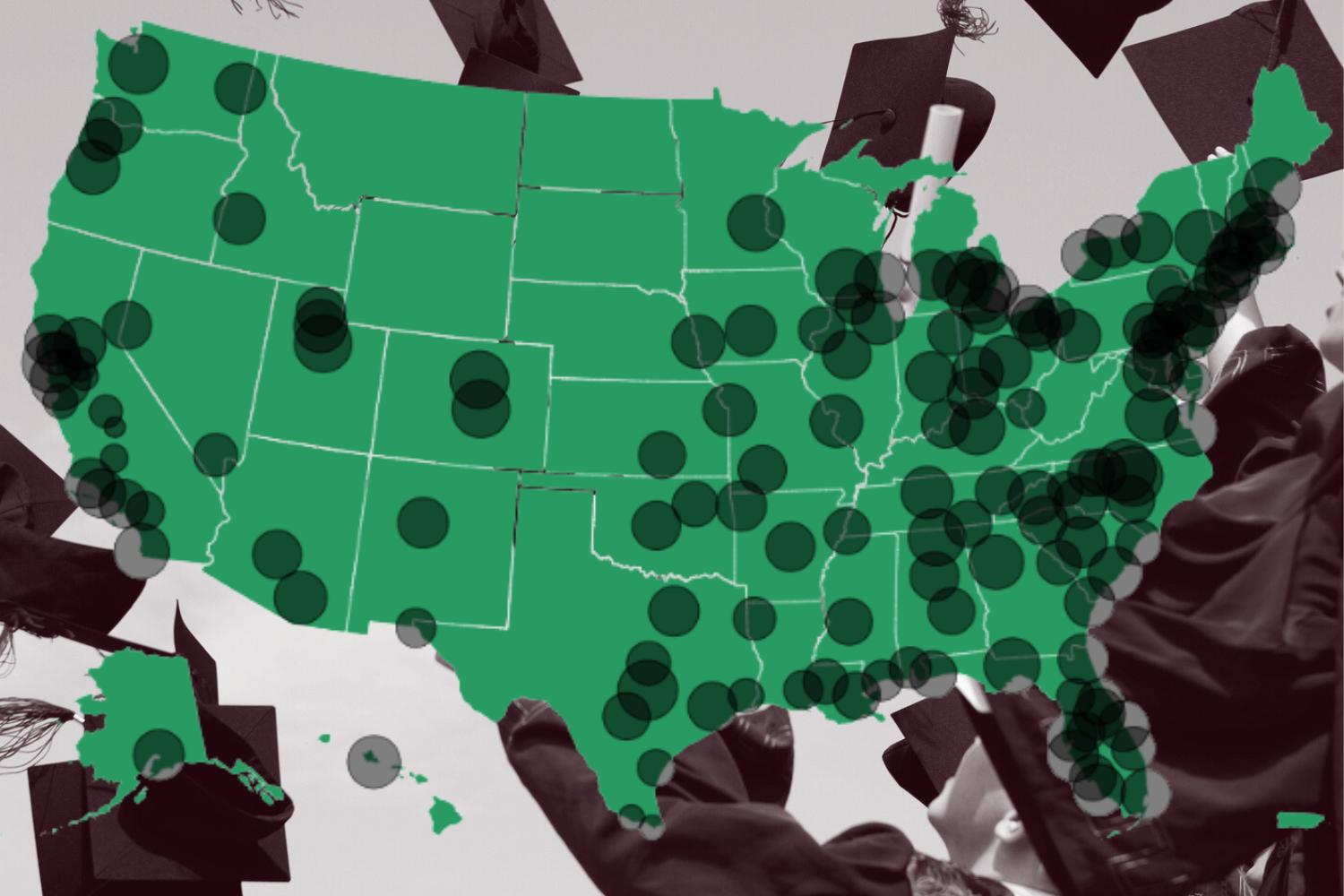
A city in the agricultural heart of California has been named the place with the least educated people in the U.S., according to recent survey results from WalletHub.
Personal finance website WalletHub, compared the 150 most populated U.S. metropolitan statistical areas (MSAs) across 11 education-related metrics to rank cities from those with the most educated people to the least.
To come up with the rankings, WalletHub looked at two main factors: how many people in each city have reached different levels of education, and how good the local education system is overall.
This included things like the percentage of adults who finished high school, went to college, or earned advanced degrees. It also considers how well local schools and universities perform, and whether all groups, regardless of race or gender, have equal access to educational opportunities. These elements were then used to create a total score out of 100.
Least Educated U.S. Metro Cities
At the bottom of the list is Visalia, California, with an overall score of just 9.12 out of 100. The metro area ranks 149th in educational attainment and 147th in quality and attainment gap, placing it firmly last among the 150 largest U.S. cities.
Visalia was followed by two Texas cities, Brownsville-Harlingen and McAllen-Edinburg-Mission, followed by California's Bakersfield.
Many of these cities report low levels of college attainment, and most face persistent gaps in educational opportunity, particularly for low-income and minority students.
Regional Trends and Structural Challenges
The findings reveal a striking geographic trend: eight of the bottom 10 cities are in the South or West, with California accounting for five.
In contrast, the most educated metro areas in the country include Ann Arbor, Michigan, Durham-Chapel Hill, North Carolina, and Madison, Wisconsin, are all home to top-tier universities and strong local investment in education.
"The locations in WalletHub's list correlate to the sites of some of the most prestigious universities in the country, hence why they are the "most educated" places," Tyeshia Redden, assistant professor of urban planning at the University of Toronto, told Newsweek. "Accordingly, those places will have a populace with higher than average incomes to pay property taxes which will in turn fund K-12 education and the social capital necessary to demand higher quality K-12 education for their children."
In Ann Arbor, Michigan, nearly 96 percent of adults ages 25 and older having at least a high school diploma, over 58 percent having a bachelor's degree and 31 percent having an advanced degree, all of which are among the highest rates in the country.
Similarly in the next most educated area, Durham in North Carolina, over 52 percent of adults ages 25 and older have at least a bachelor's degree, and 26 percent have a graduate or professional degree.
Why It Matters
Education is one of the most powerful drivers of economic opportunity, public health, and social mobility. "Higher education doesn't guarantee better financial opportunities in the future, but it certainly correlates with it," WalletHub analyst Chip Lupo said. "The most educated cities provide good learning opportunities from childhood all the way through the graduate level."
"Education still remains the top factor in social mobility in the United States and its relationship to place has long allowed education experts and social policy planners to track the continuity of social affluence or the likelihood of mobility according to one's ZIP code," agreed Redden.
Update 7/3/25, 11:22 a.m. ET: This story has been updated with additional comment from Tyeshia Redden and information about federal education funding.
Related Articles