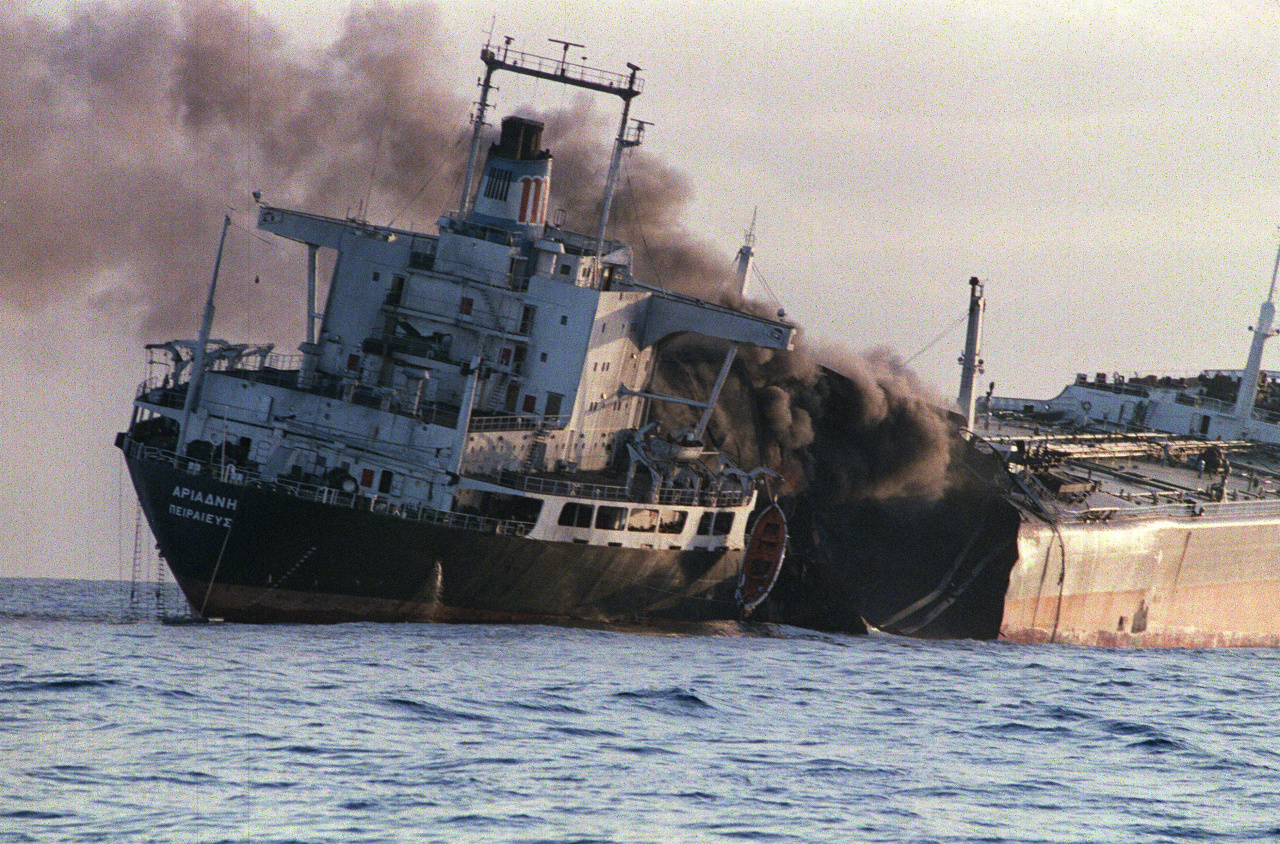
During the Tanker War of the 1980s, Iran used missiles, mines and speed boats to assert its control over the Strait of Hormuz. Back then, it took an extensive naval operation, including the destruction of command posts on offshore oil platforms by U.S. Marines, to break Tehran’s hold.
This time around, in addition to its earlier playbook, Iran has a legion of attack drones which are serving as a significant force multiplier. And the U.S. Navy has so far decided not to send warships to escort tankers and other vessels trapped in the Persian Gulf.
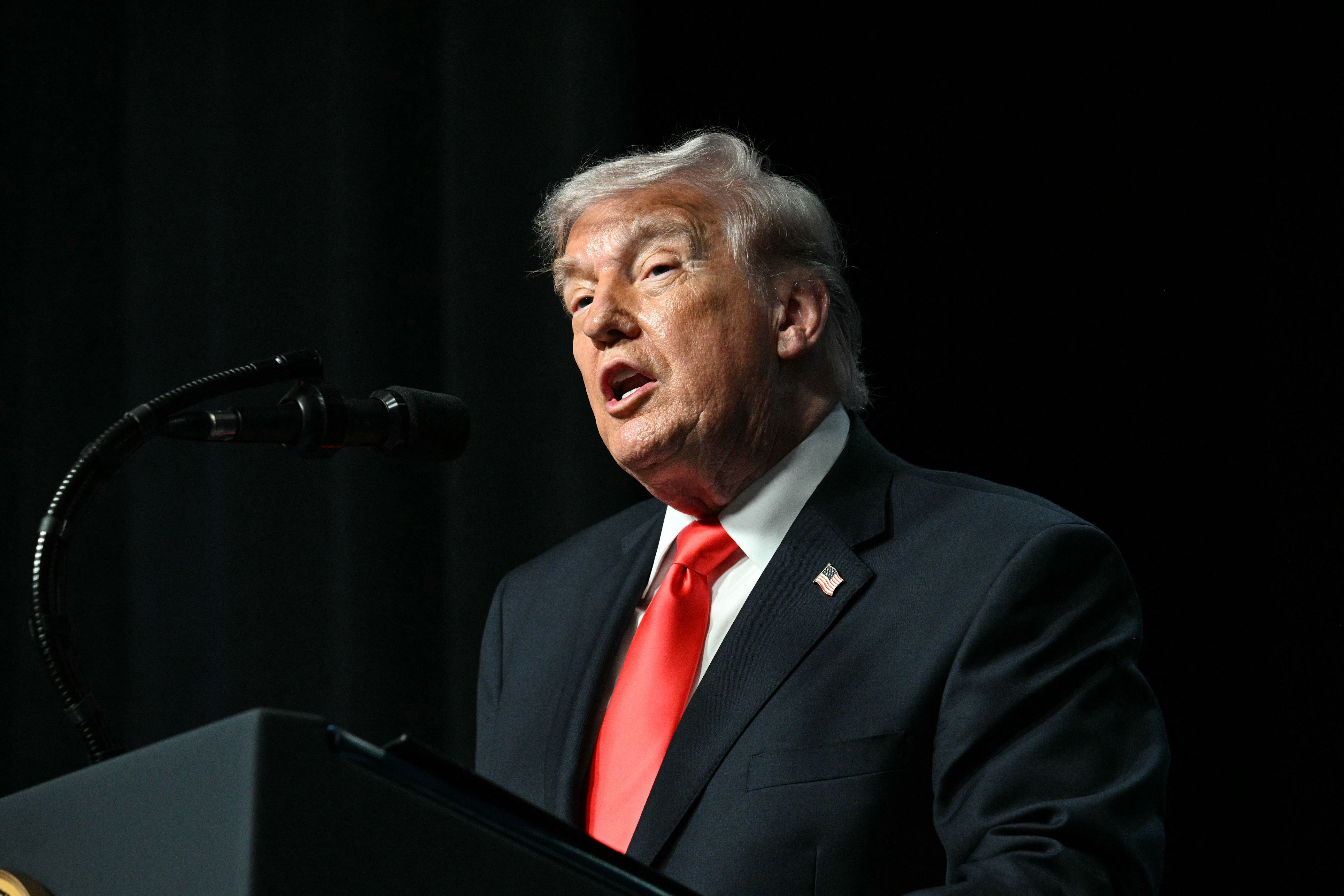
After nearly a month of relative quiet around the strait amid a U.S.-Iran cease-fire, an initiative from President Trump to protect ships appeared to spark new Iranian attacks on vessels Monday.
In fundamental ways, today’s standoff is very different from the Tanker War, which got its name from attacks both Iraq and Iran mounted on oil infrastructure during their lengthy conflict during the 1980s. Then, the U.S. intervened to protect a handful of oil tankers caught in the crossfire.
“Same actors, same patch of water, but very different politics and threat environment today,” said Tom Duffy, a retired U.S. diplomat and naval officer who this year published a book, “Tanker War in the Gulf.”
Duffy said: “Arguably the Iranian strategy hasn’t changed in 50 years, a cost-imposition strategy” designed to put itself in control of regional waters.
As Washington weighs responses in the current conflict, that war within a war four decades ago could still hold lessons.
On Sunday, Trump said the U.S. would seek to guide ships aiming to transit the strait. Senior U.S. officials said that would involve sharing the location of mines and assessing what routes are the safest to navigate. They said there was no current plan for the kind of complex escorts that in dozens of missions starting in 1987 put Navy ships directly in Iran’s firing line.
Shippers expressed skepticism about whether anything less would be enough to ensure safe passage for hundreds of stuck vessels. Iran warned mariners against attempting to pass through the strait without permission from Tehran and warned U.S. forces to stay away.
Since being attacked by the U.S. and Israel two months ago, Iran’s Islamic Revolutionary Guard Corps has opened fire on more than 25 commercial ships, seized two and managed to keep the U.S. Navy at arm’s length—effectively closing off the narrow waterway vital for global oil shipments.
As it did in the Tanker War, Iran is leveraging its geographic advantages to menace shipping. But its goal then was driving up oil prices without drawing the U.S. into conflict, said Kenneth M. Pollack, vice president for policy at the Middle East Institute.
Iran’s hard-line leaders are now trying to choke regional oil exports to hurt the global economy amid a fight for their lives. Whereas the regime was young in the 1980s, the country today enjoys alliances with Russia and China. It is also armed with modern weaponry including an arsenal of drones that allow it to target commercial vessels and warships in ways that are difficult and costly to counter.
When President Ronald Reagan reluctantly inserted the U.S. Navy into the Tanker War to keep crude flowing, the Navy deployed around 30 of its roughly 600 ships to the operation, and U.S. frigates sailed deep into the Persian Gulf.
Today, the Navy has no frigates and is about half the size. U.S. Central Command is taking on Iran from a distance, and it has dedicated around a dozen ships and over 100 aircraft to intercepting commercial vessels going to and from Iranian ports.
The idea is to blockade Tehran, pressure its deeply wounded economy and force the regime to abandon its own blockade of the strait. The operation is located outside strait—in the Gulf of Oman and farther afield.
“We do seem to be understandably concerned about being hit, and the Iranians know that,” said Duffy.
Unlike the formal convoy system of the Tanker War, the newly announced U.S. operation appears to provide a framework for a “military overwatch” that could involve defensive capabilities if Iranian forces fire on commercial ships, according to Michael Eisenstadt, director of the military and security studies program at the Washington Institute for Near East Policy.
In 1987, with the U.S. highly dependent on Mideast crude and with Kuwaiti tankers coming under attack by Iran, Reagan agreed to reflag 11 Kuwaiti tankers as U.S. vessels and provide escorts for their protection. It was Cold War politics: Reagan only acted after Kuwait considered assistance from Moscow.
The U.S. suffered its biggest loss of the Tanker War even before the Kuwaiti reflagging-escort operation began. An Iraqi jet mistakenly shot two Exocet missiles into the hull of the USS Stark, killing 37 American sailors and badly burning many others.
For its escort operation, known as Earnest Will, the U.S. publicized routes in advance because it thought the presence of the Navy would deter Iran. On the first mission, involving eight U.S. warships plus air support, one of the two reflagged tankers being escorted hit string of freshly set Iranian mines—damaging the U.S. sense of invincibility more than the vessel, which sailed on.
By 1988, Iran was hitting merchant vessels weekly, prompting patrols by at least 10 Western and eight regional navies. The Navy had bulked up its escort system with militarized barges and other fortifications. Iranian forces didn’t directly attack Navy ships, and oil flows never stopped, although gunners on speedboats shot at the escorted vessels with rocket propelled grenades.
The conflict took a turn when the USS Samuel B. Roberts hit an $1,500 Iranian mine, inflicting $96 million in damage. The U.S. responded with Operation Praying Mantis, a quick series of powerful strikes that included destroying Iranian ships and offshore oil platforms that the U.S. said were doubling as command-and-control centers for attacks on oil tankers.
Iran then backed off. The deadliest single incident of the war was still to come: a U.S. mistake. In July 1988, the USS Vincennes mistook an Iran Air commercial plane for a fighter and shot it down soon after takeoff from Dubai, killing 290 civilians. The following month, Iran and Iraq agreed to a cease-fire.
Write to James T. Areddy at James.Areddy@wsj.com