
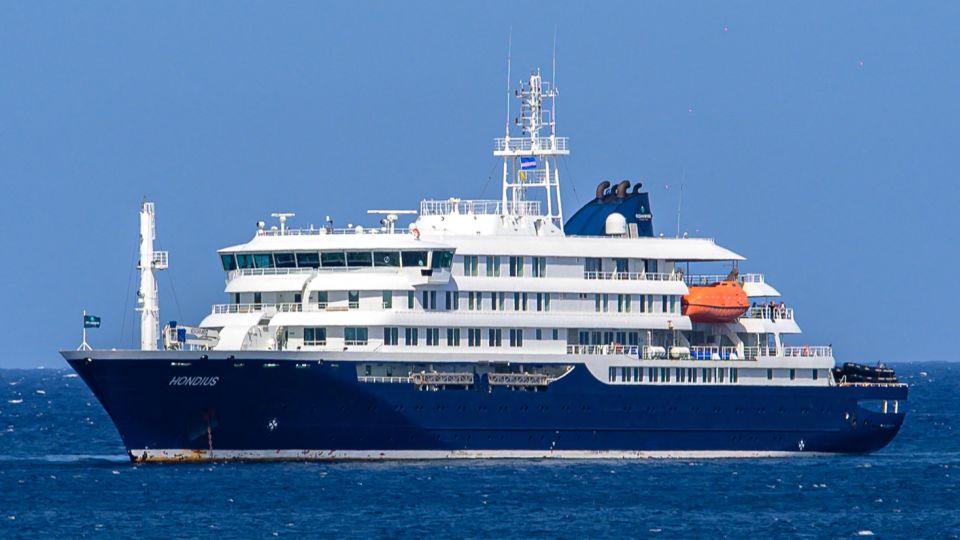
Three people are dead and at least three others are sick after a suspected outbreak of hantavirus aboard a cruise ship sailing in the Atlantic Ocean, the World Health Organization said Sunday.
The three dead were cruise passengers, said Oceanwide Expeditions, the company that operates the ship, called the MV Hondius, which is currently anchored in Praia, the capital of Cape Verde, an island nation off the west coast of Africa.
As of 11:00 p.m. CET Sunday (5:00 p.m EST), Cape Verdean authorities have not allowed passengers to disembark to seek medical care, but local health authorities have visited the ship and assessed two symptomatic crew members “requiring urgent medical care,” Oceanwide Expeditions said in its statement.
Hantavirus can cause a severe and often deadly respiratory illness called hantavirus pulmonary syndrome, which killed Betsy Arakawa, the wife of the late actor Gene Hackman, last year.
Humans can become infected through contact with rodents like rats and mice, especially with their urine, droppings and saliva, according to the Centers of Disease Control and Prevention (CDC). Human to human transmission is possible but rare, the WHO said.
Here’s what we know about the suspected outbreak on the ship.
Where had the ship been?
The MV Hondius left Ushuaia in Argentina about seven weeks ago, according to data from MarineTraffic, which identified it as a Dutch-flagged passenger cruise ship. It made stops in Antarctica and the British overseas territory of Saint Helena before anchoring Sunday in Praia, the capital of Cape Verde, according to MarineTraffic.
The vessel holds 170 passengers and 71 crew, including one doctor, according to Oceanwide Expeditions. The company told CNN it is “currently focused on the health and safety of passengers and crew” and will offer further information as it becomes available.
It is not clear how the infections occurred. The Ministry of Health of Tierra del Fuego province, where Ushuaia is located, said there has never been a reported case of hantavirus in the province.
Of the six symptomatic individuals, just one case of hantavirus infection has been confirmed in a laboratory so far, while the other five are suspected cases, the WHO said.
“Detailed investigations are ongoing, including further laboratory testing, and epidemiological investigations,” the WHO said. “Medical care and support are being provided to passengers and crew. Sequencing of the virus is also ongoing.”
What do we know about the victims?
The first victim was a 70-year-old man. He died on the ship, and his body was removed to Saint Helena, South Africa’s Department of Health said in a statement reported by the AP.
The man’s wife collapsed at an airport in South Africa while trying to fly home to the Netherlands, her home country, and died in hospital, the department said, according to AP.
Two of the deceased passengers were Dutch, a Dutch foreign ministry spokesperson confirmed to Reuters.
A British national who fell sick after the ship left Saint Helena is being treated in Johannesburg, South Africa’s health department said.
No decision has been made about whether to transfer the crew members to receive medical care, the tour operator said.
Dutch authorities have agreed to repatriate the symptomatic crew members, as well as the body of one deceased individual, to the Netherlands, Oceanwide Expeditions said.
“The priority of Oceanwide Expeditions is to ensure that the two symptomatic individuals on board receive adequate and expedited medical care,” it said.
The WHO said it is “facilitating coordination between Member States and the Ship’s operators for medical evacuation of two symptomatic passengers, as well as full public health risk assessment and support to the remaining passengers on board.”
CNN has reached out to South Africa’s Department of Health, the UK Foreign, Commonwealth & Development Office, the Dutch Ministry of Foreign Affairs and the Cape Verde Ministry of Health.
How deadly is Hantavirus?
Strains of hantavirus found in the Western Hemisphere can cause hantavirus pulmonary syndrome, which is mostly spread by deer mouse in the US, according to the CDC.
Early symptoms include fatigue, fever, muscle aches, as well as headaches, dizziness, chills and abdominal problems in some patients. Later symptoms of hantavirus pulmonary syndrome include coughing, shortness of breath, and tightness in the chest.
Hantaviruses found mostly in Europe and Asia can also lead to severe kidney disease.
There is no cure for hantavirus infection, beyond treatment of symptoms. Patients with severe breathing difficulties may need to be intubated, the CDC said.
The disease is rare but highly deadly — about 38% of people who develop respiratory symptoms may die, according to the CDC. As of the end of 2023, just 890 confirmed cases of hantavirus disease have been reported in the US since surveillance began in 1993.
Most cases occur in New Mexico, the same state where Arakawa was found dead in the home she shared with Hackman.
CNN’s Teele Rebane, Begoña Blanco Muñoz and Rocio Muñoz-Ledo contributed reporting.
For more CNN news and newsletters create an account at CNN.com